

Lithium batteries are permitted on aircraft. The regulatory framework reflects decades of safety lessons—some learned through fatal crashes, others through near-misses that never made the news. Aviation authorities tend to write rules in blood, as the saying goes in the industry.
A smartphone, laptop, or digital camera containing its battery may travel in either checked luggage or carry-on bags without restriction. Manufacturers design these devices with protective circuits, thermal management systems, and housing that collectively reduce the risk of thermal events.
Power banks are different. These portable charging devices must travel exclusively in carry-on baggage, a requirement established by China's Civil Aviation Administration in 2014 and mirrored by the United States Federal Aviation Administration. Security screening enforces this prohibition rigorously. Why carry-on specifically? The answer lies in what happens when lithium catches fire thirty thousand feet above the ground.
The Chemistry Behind Battery Fires
A lithium-ion cell stores energy through the movement of lithium ions between electrodes separated by a thin membrane. When that membrane is compromised—physical damage, manufacturing defects, overcharging, excessive heat—the electrodes can make direct contact. The resulting short circuit triggers an exothermic reaction generating temperatures exceeding 600°C (1,112°F).
Water-based fire suppressants prove ineffective against lithium fires. water can react violently with lithium metal, producing flammable hydrogen gas. Aircraft carry specialized fire containment bags and dry chemical suppressants, but these measures work best when crew members can identify and isolate the problem quickly. Flight attendants patrolling the cabin will notice smoke, smell burning electronics, or hear passengers alerting them to a device behaving abnormally.
The cargo hold offers no such surveillance.
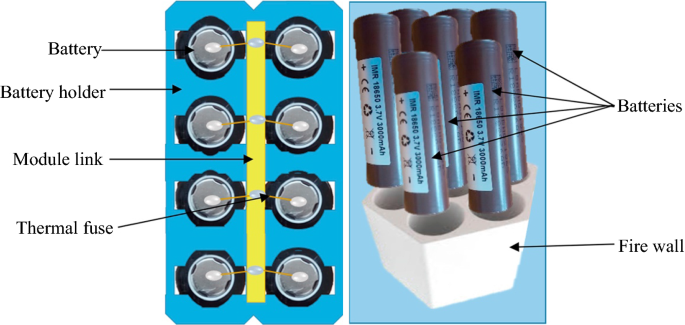
Modern lithium-ion battery cells require careful handling during air transport
A battery fire smoldering among suitcases could burn undetected until it overwhelms the hold's fire suppression system. These systems were designed for conventional fires, not the chemical inferno of cascading battery failures. The 1996 ValuJet Flight 592 disaster demonstrated what happens when dangerous goods ignite in an aircraft's cargo hold. Oxygen generators, not batteries, caused that particular crash. All 110 people aboard died. The airline eventually went bankrupt. Regulators carry the memory of such tragedies into every rule they write—whether or not the specific technology was involved.
The 100 Watt-Hour Cutoff
Regulatory frameworks universally adopt the watt-hour (Wh) as the metric for assessing battery risk. The magic number is 100 Wh.
Batteries rated below 100 Wh face no special restrictions beyond the carry-on requirement for spares. This category encompasses the vast majority of consumer electronics:
- Smartphone batteries range from 10 to 20 Wh.
- Tablet batteries fall between 20 and 40 Wh.
- Most laptop batteries contain 50 to 100 Wh.
Batteries between 100 and 160 Wh require airline approval before transport. Even with approval, passengers may carry no more than two such batteries. Professional video cameras, high-end laptops designed for content creators, and some medical devices fall into this range. Getting approval typically involves contacting the airline 48 hours in advance, though policies vary.
Batteries exceeding 160 Wh are categorically prohibited from passenger aircraft. No exceptions exist.
Converting mAh to Wh
Power bank manufacturers label their products in milliamp-hours (mAh) rather than watt-hours. Marketing departments prefer bigger numbers. Converting to watt-hours requires knowing the battery's nominal voltage—3.7V for lithium-ion cells, though the output voltage through USB ports is usually 5V.
The conversion formula:
A power bank rated at 20,000 mAh with an internal cell voltage of 3.7V contains approximately 74 Wh of energy, well under the 100 Wh threshold. Some manufacturers inflate specifications by citing the 5V output rating, making independent verification advisable for high-capacity units.
A 27,000 mAh power bank at 3.7V contains 99.9 Wh. Just under the limit. The same nominal capacity at a slightly higher internal voltage could push the battery into restricted territory. Whether this tight margin is intentional product design or coincidence remains a matter of speculation.
China's New 3C Rule
In late June 2025, China implemented one of the most significant changes to portable battery regulations in aviation history. Power banks entering Chinese airports must now display valid China Compulsory Certification (3C) marks. Units lacking certification, bearing unclear markings, or belonging to recalled batches face immediate confiscation.
This regulation retrospectively affects millions of power banks sold before August 2024, when 3C certification for portable power became mandatory.
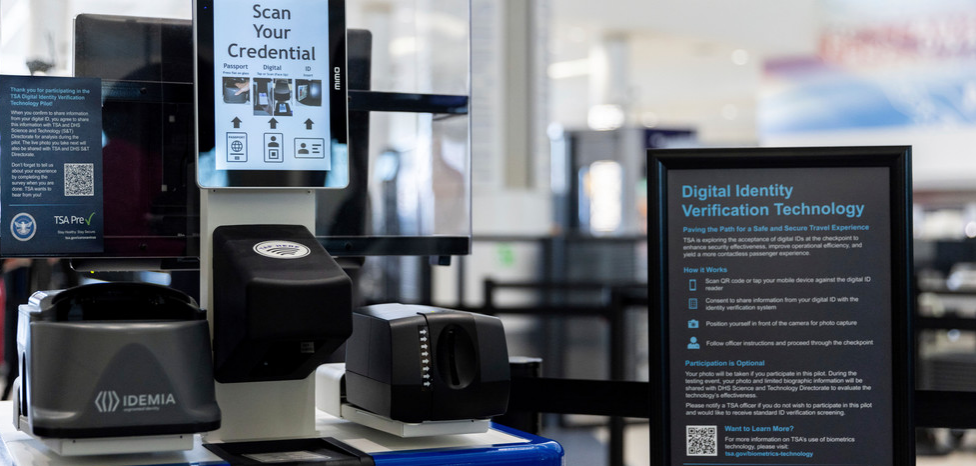
Airport security checkpoints now scrutinize battery certifications more closely than ever
Travelers who purchased devices years ago suddenly find their equipment non-compliant with no practical path to certification. Major Chinese airports including Beijing Capital, Beijing Daxing, and Shanghai Pudong have established temporary storage services allowing passengers to deposit non-compliant power banks for up to seven days. A partial accommodation at best.
The 3C requirement signals a broader trend. Authorities increasingly demand traceability and quality assurance throughout the manufacturing process, not merely compliance at the point of sale.
Different Countries, Different Rules
Aviation operates internationally. Battery regulations remain stubbornly national.
South Korea implemented stringent rules effective March 2025, prohibiting power banks from overhead compartments entirely. These devices must remain under seats or in seat-back pockets throughout flight. The measure keeps potential fire sources within passenger reach and immediate crew access. Singapore Airlines, Malaysia Airlines, and AirAsia subsequently adopted similar policies.
All jurisdictions prohibit using power banks for charging during flight. Batteries with power switches must remain in the off position from boarding through deplaning. Charging generates heat. Heat remains the primary catalyst for battery failures.
The Numbers Keep Getting Worse
Federal Aviation Administration data reveals a troubling trajectory in lithium battery incidents aboard aircraft. Between 2006 and November 2024, the FAA documented 579 events involving smoke, fire, or extreme overheating.
That aggregate figure masks a dramatic acceleration.
The FAA recorded 16 battery-related incidents across all U.S. carriers.
That number had reached 69 for the partial year alone. An incident now occurs, on average, every five days.
The four-fold increase reflects not declining battery quality but rather the explosive proliferation of lithium-powered devices. Every passenger now carries multiple batteries. Smartphone. Tablet. Laptop. Wireless earbuds. Smartwatch. Portable speaker. Portable power banks. The inventory keeps growing. Battery capacities keep increasing to meet consumer demand for longer screen time, more powerful processors, brighter displays.
What Happened on Air Busan
The January 2025 Air Busan incident crystallized the risks that regulators had long warned about.
A fire erupted on an aircraft still at the gate, before takeoff. South Korea's Ministry of Land, Infrastructure and Transport subsequently identified a portable charger as the probable ignition source. Passengers evacuated safely because the aircraft had not yet departed. Emergency responders reached the scene within minutes.
The incident prompted Korean carriers to review and tighten battery policies, with ripple effects across Asian aviation. Major regulatory changes tend to follow high-profile incidents rather than precede them.
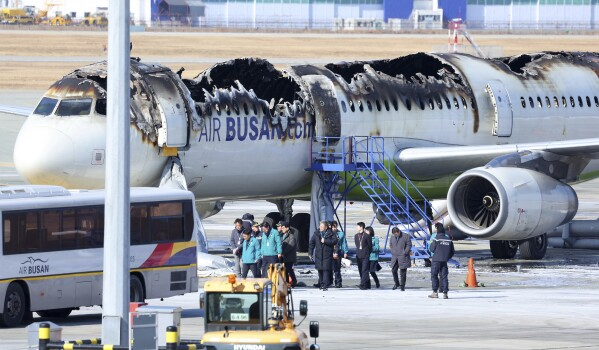
The Air Busan incident occurred while the aircraft was still at the gate
Lithium Metal vs. Lithium-Ion
Lithium-ion batteries—the rechargeable cells found in most consumer electronics—differ fundamentally from lithium metal batteries. Lithium metal batteries contain metallic lithium and are non-rechargeable. They appear in some medical devices, professional photography equipment, and specialized instruments.
Regulations classify lithium metal batteries by lithium content rather than watt-hours.
- Batteries containing less than 2 grams of lithium face no restrictions.
- Those between 2 and 8 grams require airline approval, with a two-battery maximum.
- Batteries exceeding 8 grams of lithium content cannot travel on passenger aircraft under any circumstances.
Most travelers will never encounter lithium metal batteries in capacities requiring special handling.
Things You Absolutely Cannot Bring
Certain lithium-powered devices face categorical exclusion from passenger aircraft regardless of how they might be transported.
Electric balance boards (hoverboards), electric unicycles, and electric skateboards all contain battery packs far exceeding the 160 Wh threshold. Often by multiples. A typical electric skateboard battery ranges from 200 to 400 Wh. Electric unicycles commonly exceed 500 Wh. These devices are banned from cabins, checked baggage, and cargo holds on passenger flights alike. Shipping them requires cargo aircraft with enhanced fire suppression systems—and even then, some carriers refuse.
The prohibition extends to the batteries themselves when removed from these devices. A 300 Wh battery does not become compliant simply because it is no longer attached to a skateboard.
Protecting Spare Batteries
Spare batteries—those not installed in devices—require protection against short circuits. Terminal contact with metallic objects like keys, coins, or other batteries can complete a circuit, generating heat and triggering thermal runaway.
Batteries may remain in their original retail packaging. Manufacturers design that packaging specifically to prevent terminal contact, though few travelers bother keeping those boxes. Electrical tape applied over both positive and negative terminals provides effective insulation. Alternatively, each battery may be placed in its own plastic bag or protective sleeve.
A laptop battery loose in a backpack, tumbling against zipper pulls and spare change, represents exactly the scenario that regulations aim to prevent.
Original Packaging
Keep batteries in retail packaging designed to prevent terminal contact.
Electrical Tape
Cover both positive and negative terminals with insulating tape.
Individual Bags
Place each spare battery in its own plastic bag or protective sleeve.
Avoid Metal Contact
Keep batteries away from keys, coins, and other conductive objects.
Damaged or Swollen Batteries
Batteries showing any sign of damage, swelling, or deformation must not board aircraft under any circumstances.
A swollen battery indicates internal gas generation from decomposition reactions that precede thermal runaway. The swelling itself does not cause fire, but it signals that the cell has already begun failing. Sometimes the swelling is subtle—a phone case that no longer closes flush, a laptop that rocks slightly on a flat surface.
Visual inspection before packing represents minimum due diligence. Batteries that feel unusually warm, emit unusual odors, or show discoloration of their casing should be removed from service entirely and disposed of through proper e-waste channels. Not in household trash.
If Something Catches Fire Mid-Flight
Should a device begin overheating, smoking, or burning during flight, immediate crew notification is essential. Flight attendants receive specific training for battery fire response, including access to specialized containment equipment.
Passengers should not attempt to extinguish battery fires themselves. Water proves ineffective and dangerous. Smothering may suppress visible flames while the thermal runaway continues internally.