
How Long Will a 36 Volt Lithium Battery Last?
The question of "how long" is actually quite vague. Are you asking how far you can go on a single charge, or how many years this battery will last? I'll address both.
Runtime on a Single Charge
Calculating range is simply a matter of dividing energy by consumption. The formula is straightforward:
Runtime (hours) = Available Energy (Wh) ÷ Average Power Consumption (W)
Range (miles) = Available Energy (Wh) ÷ Energy Consumption per Mile (Wh/mile)
The energy of a 36V battery is simply 36V × Ah. However, note that you can't use all the rated energy. The BMS will cut off output when voltage drops to around 30-32V to prevent over-discharge that would damage the cells—at that point, about 20% of the charge remains, but it's no longer accessible.
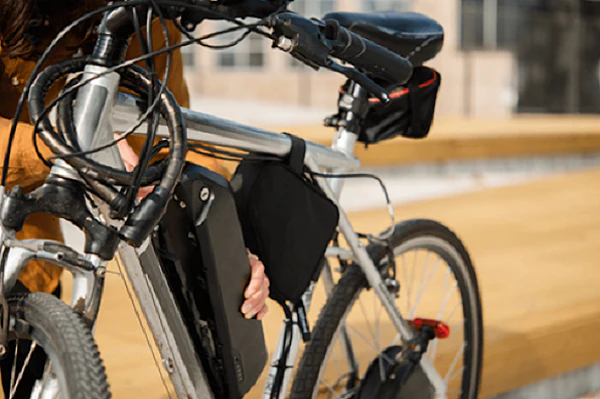
Modern e-bike systems integrate sophisticated battery management for optimal performance
Electric Bicycles — The Most Common Application
Electric bicycles are the most common use case for 36V batteries, so I'll focus primarily on this application.
Range varies significantly depending on how you ride. On flat terrain with light pedal assist and average weight, expect around 15-18Wh per mile. Switch to high assist or throttle-only mode, and consumption doubles to 25-35Wh per mile. Climbing hills with a heavy load? 50Wh per mile is entirely possible.
Using a 36V 10Ah battery as an example: under ideal conditions, you might get close to 20 miles; for typical daily commuting, 13-14 miles; under challenging conditions, just over 10 miles. This explains why manufacturers claim "up to 45 miles" while some users complain they "only get 10 miles"—both are correct, the usage conditions are just vastly different.
I came across an interesting real-world test post: a 68kg rider with a 350W hub motor and torque sensor, cruising at 25-30km/h on flat roads, covered 50km. In the comments, another rider weighing 113kg said the same battery gave him just 16km in hilly terrain riding hard.
Golf Carts and Marine Applications
I haven't researched golf carts and marine trolling motors as extensively, but briefly: golf carts typically use larger batteries of 100Ah or more, which can easily handle four to five rounds of 18 holes. For marine trolling motors, calculating by hours makes more sense—a 36V 100Ah battery with medium thrust should last an entire day of fishing, unless you're running at full speed the whole time.
Factors Affecting Range
Terrain significantly impacts energy consumption
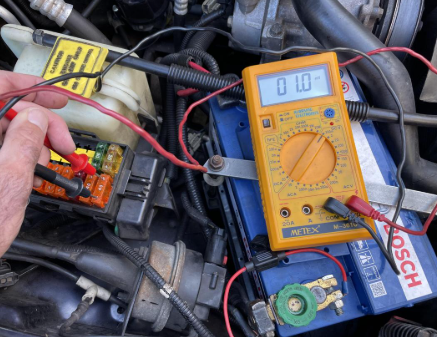
Riding style and speed affect battery drain
Body Weight
Weight impacts range more than many people realize. Rolling resistance, climbing effort, and acceleration all scale with weight. From my personal experience, gaining 20-30 pounds produces a noticeable drop in range. So if you're heavier than average, mentally discount those manufacturer range claims.
Terrain
This is probably the single biggest factor. Physically speaking, lifting a 100kg system (rider + bike) by 100 meters of elevation requires roughly 27Wh in theory. If your commute has 200-300 meters of climbing, that alone could consume several dozen Wh. I once switched to a hillier route and watched the same battery's range drop from 30 miles to under 20 miles.
Speed
Speed is also critical. Air resistance increases with the cube of velocity, so there's a massive difference between leisurely cruising at 20km/h and pushing hard at 30km/h. Headwinds make it even worse—riding into the wind feels two to three times harder than normal.
Cold Weather Effects
In cold temperatures, lithium ions move more slowly and internal resistance increases. Riding in freezing weather typically costs 20-30% of your range. However, this is temporary—once the battery warms up, performance returns to normal. One user told me their 36V 14Ah battery covers 45km in summer but barely 30km at -5 to -6°C in winter.
Battery Degradation
Batteries lose capacity over time. Comparing a new battery to one that's been used for two or three years, a 10-20% capacity difference is common. This natural aging process means your range will gradually decrease over the battery's lifespan.
Total Battery Lifespan
I've spent considerable time researching this topic because there's so much conflicting information online.
Understanding battery chemistry is key to maximizing lifespan
Cycle Life
Cycle life is the most commonly cited metric, defined as the number of charge-discharge cycles until capacity drops to 80%. NMC (lithium nickel manganese cobalt) batteries typically rate 500-1,000 cycles, while LFP (lithium iron phosphate) batteries rate 2,000-3,000 cycles. However, these numbers have limited practical meaning because laboratory testing conditions are vastly different from real-world usage.
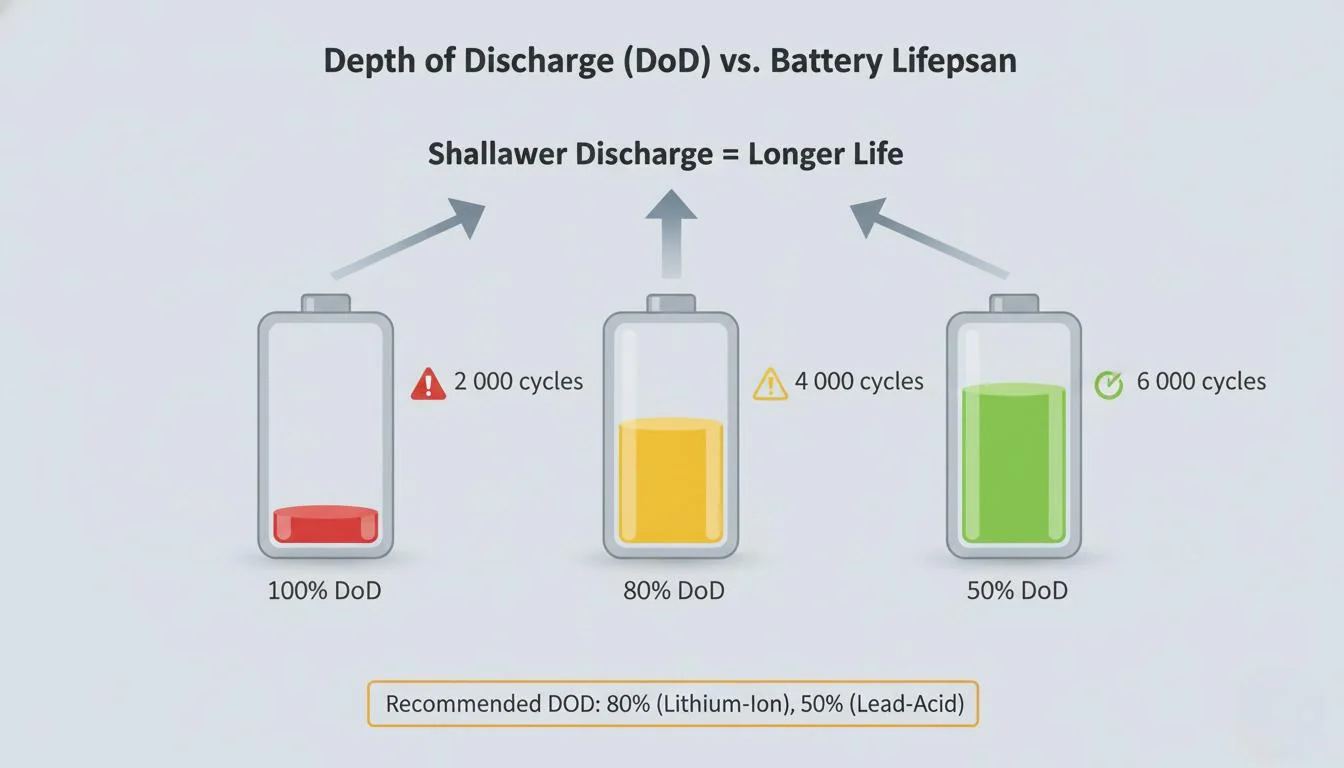
The Critical Variable: Depth of Discharge
I eventually discovered that depth of discharge is the most critical variable—something many people don't know about.
Depth of discharge refers to how much of the battery you use each cycle. Using it completely before charging is 100%; charging at 50% remaining is 50% depth. Battery University published some interesting test data: the same battery achieves about 500 cycles at 100% depth of discharge, but change to 50% depth and the cycle count jumps to around 1,500. Even though you only use half the capacity each time, the total energy delivered over the battery's lifetime actually increases.
This relationship isn't linear—it's exponential. That's why many electric vehicles default to charging only to 85%.
A Practical Example
Let's calculate a real scenario: a 36V 10Ah battery used for 200Wh daily commuting, draining just over half the battery. If you insist on fully depleting it before charging, significant degradation might show within a year and a half. Switch to charging at 50% remaining, and three to four years is no problem. Different charging habits can result in a two to three times difference in lifespan.
Calendar Aging
Calendar aging deserves mention too—batteries degrade even when not in use. This mainly depends on storage temperature and state of charge. A fully charged battery degrades much faster sitting unused than one stored at half charge. High summer temperatures make this even worse. If a battery will sit unused for extended periods, storing it at 40-60% charge is optimal—don't leave it fully charged.
Cold Weather Charging Warning
Be especially careful about cold weather charging. Charging below freezing can cause lithium plating, which causes permanent damage. In winter, warm the battery indoors before charging.
Regular commuting patterns help predict battery lifespan
Proper storage extends battery life significantly
Realistic Lifespan Expectations
Honestly, this varies greatly by individual, so I can only give rough ranges. NMC lithium batteries with daily commuting typically last 2-4 years; with good maintenance, up to 5 years. LFP batteries are much more durable at 5-8 years. Golf cart-style usage is even gentler, with 7-8 or even 10 years being possible.
Making Your Battery Last Longer
Here are a few practices I follow: Don't run the battery to empty before charging—start charging when you have 20-30% remaining. If you're not going to use it immediately, don't charge to full. Avoid leaving it in the hot sun during summer. For long-term storage, maintain around half charge and occasionally top it up.
It's really not that complicated. The core principle is simple: avoid keeping the battery at extreme states—whether fully charged or fully depleted—for extended periods, and avoid exposing it to extreme temperatures, hot or cold.
Understanding your battery is the first step toward maximizing its potential. With proper care and realistic expectations, your 36V lithium battery can serve you faithfully for years to come.