

Somewhere between 8 and 50 hours. The spread is that wide because runtime has almost nothing to do with the battery and almost everything to do with what stays plugged in.
A 13.5 kWh Powerwall feeding a house that keeps the AC running will be dead before dinner. The same battery feeding just a fridge, some lights, and a WiFi router will still be going two days later. Same hardware. Fivefold difference in outcome.
The math is a division problem. Capacity divided by load equals hours. Everything else is detail.
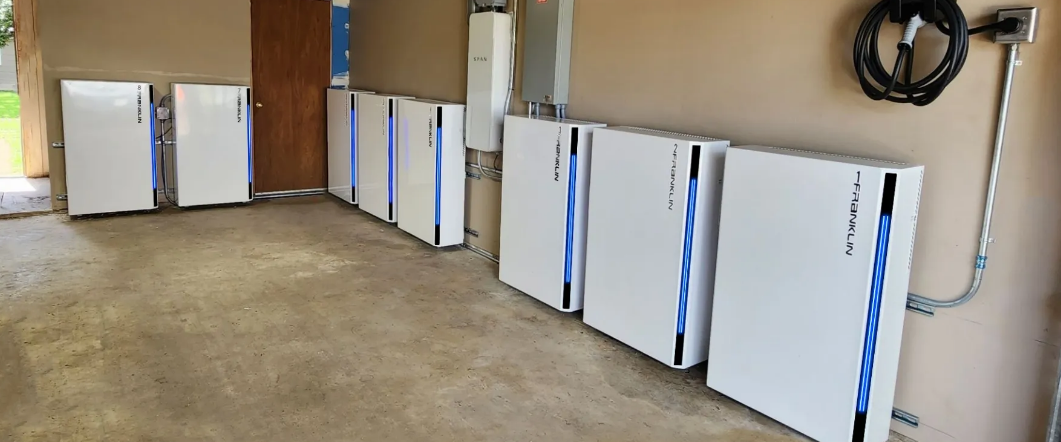
Modern home battery systems promise backup power, but runtime depends entirely on consumption habits
Load Is the Only Variable That Matters
A refrigerator pulls maybe 60 watts averaged across a day. LED lights, another 50. WiFi router, 15. Phone chargers, 20. Call it 150 watts total for bare survival. A 10 kWh battery at 150 watts lasts 66 hours. Almost three days from a battery that supposedly provides "8 to 12 hours of backup."
Now add a portable AC unit. 1,200 watts. Total load jumps to 1,350 watts. Same 10 kWh battery now lasts 7 hours.
Add an electric water heater cycling on. 4,500 watts when it runs. Even if it only runs 20 minutes per hour, that's 1,500 watts averaged in. Total load now approaches 3,000 watts. Runtime drops to 3 hours.
Three hours versus three days. Same battery.
The Powerwall product page says it provides backup for "your whole home." This is technically true and practically misleading. It provides backup for your whole home the way a gallon of gas provides transportation. How far depends entirely on what you're driving and how you're driving it.
Most buyers walk away from the installer's pitch believing they've purchased 24 to 48 hours of normalcy during a blackout. They've purchased 24 to 48 hours of potential, which will actualize as 6 hours of normalcy or 48 hours of austerity depending on choices made after the grid fails. The brochure never puts it that way.
The Air Conditioning Problem
Central AC is the reason most runtime estimates disappoint.
A 3-ton system pulls 3,000 to 3,500 watts when the compressor runs. In hot weather the compressor runs most of the time. Against a 13.5 kWh battery, that's about four hours of cooling before the house goes dark.
Every summer, people in Texas and Florida and Arizona discover this. They bought batteries expecting to ride out outages in comfort. They got four hours of comfort followed by a dead battery and a hot house. The next morning they're on Reddit asking what went wrong.
What went wrong is that nobody explained the arithmetic in terms that connected to their actual expectations. The spec sheet said 13.5 kWh. The sales conversation mentioned "whole home backup." Somewhere in a 30-page contract there was probably language about load management and runtime variability. Nobody reads page 23 of a contract when they're excited about a new purchase.
The gap between marketed capability and lived experience breeds justified resentment. These are not cheap products. A Powerwall installed runs $12,000 to $15,000 depending on region and installer. Enphase systems with comparable capacity cost more. At those prices, buyers deserve clarity about what they're getting. They rarely receive it.
Realistic backup with AC requires 30 kWh minimum. More like 40 or 50 for genuine peace of mind during a multi-day outage in August. At current installed costs that's a $35,000 to $50,000 system. Most people buying residential batteries are spending $12,000 to $18,000. The systems they're buying are survival tools, not comfort preservation tools. The marketing rarely frames them that way because survival tools are a harder sell than seamless normalcy.
What Survival Actually Looks Like
The 2021 Texas freeze clarified this for a lot of people.
Houses went dark for days. Temperatures inside dropped into the 40s, then the 30s. Pipes froze. People with battery systems faced a choice: run electric heaters and drain the battery in hours, or turn everything off except essentials and stretch the battery across days.
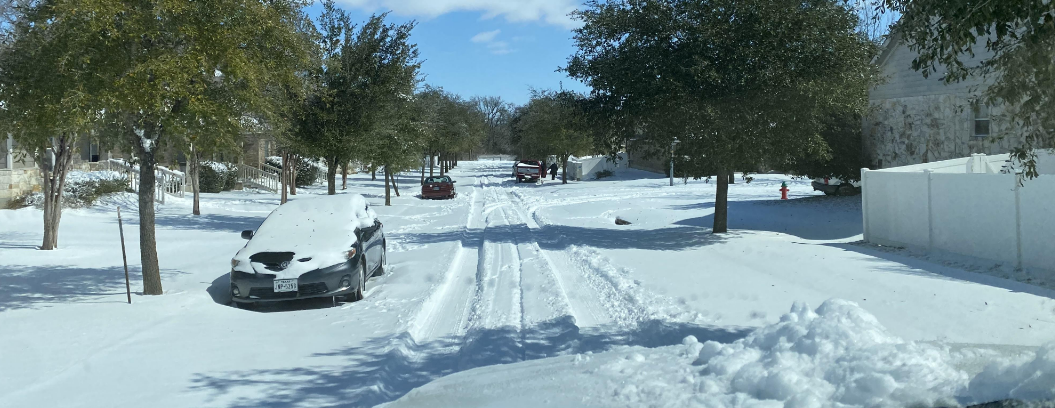
The severe cold weather in Texas in 2021
The families who made the battery last turned off the heat. They piled blankets on beds. They kept one room lit. They charged phones. They kept the fridge running so food didn't spoil. They huddled together. They were cold and uncomfortable and the experience was miserable, but they had light and communication and refrigeration throughout.
The families who tried to maintain warmth through electric resistance heating watched their battery gauges plummet. Space heaters pull 1,500 watts each. Two of them running continuously would drain a 13.5 kWh battery in under five hours. For 1,500 watts of heating. In a house that's losing heat through every wall and window faster than a space heater can replace it.
The battery couldn't solve the heating problem. No residential battery can. The physics don't work. A house in freezing weather might need 5,000 to 10,000 watts of continuous heating to maintain comfortable temperatures. That load would drain the largest commonly available residential battery in two hours. The only way to make batteries work for heating is to not use them for heating.
The houses that stayed warmest during that freeze were the ones with gas fireplaces that don't need electricity, wood stoves with seasoned fuel stacked nearby, or enough insulation and thermal mass to coast on residual heat for extended periods. The battery kept the lights on and the phones charged and the fridge cold. That was its job. That was all it could do. Expecting more was expecting the impossible.
California's fire season shutoffs tell a different story because the problem is inverted. It's not cold that threatens comfort, it's heat. And unlike heating, cooling with a battery is at least theoretically possible if loads are managed aggressively.
A window AC unit serving one room pulls 500 to 800 watts. Against a 13.5 kWh battery, that's 15 to 25 hours of cooling for a single room while the rest of the house bakes. Not comfortable in any absolute sense, but livable. One cool room to sleep in, one cool room to retreat to during the worst of the afternoon heat. The battery becomes a tool for creating a survivable microenvironment rather than maintaining whole-house comfort.
People who've been through extended summer outages learn to think this way. They learn that the battery doesn't replace the grid, it buys time and creates options. The family that accepts a hot house except for one air-conditioned bedroom gets through a 48-hour shutoff. The family that tries to cool the whole house gets 6 hours of comfort followed by 42 hours of heat and dead electronics and spoiled food.
What the Battery Actually Does
Strip away the marketing language and a home battery is a buffer. It stores energy when energy is available and releases energy when energy is needed. The amount it can store is fixed by chemistry and manufacturing. The amount it releases per hour is determined by whatever loads are connected.
A 13.5 kWh battery contains enough energy to run a 1,350-watt load for 10 hours, or a 135-watt load for 100 hours, or a 13,500-watt load for 1 hour. The battery doesn't care how the energy gets used. It just discharges at whatever rate the loads demand until it's empty.
This flexibility is both the product's strength and the source of most customer disappointment. A battery that can theoretically last 100 hours creates expectations of multi-day backup. A battery that empties in 4 hours because someone left the dryer running creates furious customers. Both outcomes flow from the same hardware depending on load.
The battery industry could solve this expectation problem by rating products in terms of runtime at specified loads rather than raw capacity. Instead of "13.5 kWh," labels could say "54 hours at essential loads / 11 hours at average consumption / 4 hours with AC." This would require agreeing on standard load profiles, which the industry has resisted, probably because smaller runtime numbers would make products harder to sell.
In the absence of honest labeling, buyers have to do their own math. Total up the wattage of everything that might run during an outage. Divide the battery's capacity by that number. The result is hours of runtime, and it's almost always smaller than buyers expect before they do the calculation.
Appliance Loads That Matter
The wattage of individual appliances varies enough that generalizations mislead. Specific numbers matter.
A modern Energy Star refrigerator averages 40 to 60 watts. An older model from 2008 might average 100 watts. Over a 48-hour outage, that's the difference between 2.4 kWh and 4.8 kWh consumed, roughly 20% of a midsize battery's capacity. Appliance age affects runtime in ways people don't think about until they start measuring.
| Appliance | Power Draw | Daily Consumption |
|---|---|---|
| Modern Refrigerator | 40-60 watts avg | 1.0-1.4 kWh |
| Chest Freezer | 30-40 watts avg | 0.7-1.0 kWh |
| WiFi Router | 10-20 watts | 0.2-0.5 kWh |
| LED Lighting (whole home) | 50-100 watts | 0.3-0.6 kWh |
| Laptop Charging | 45-100 watts | 0.5-1.2 kWh |
| Window AC Unit | 500-800 watts | 6-10 kWh |
| Central AC (3-ton) | 3,000-3,500 watts | 36-42 kWh |
| Space Heater | 1,500 watts | 36 kWh |
Chest freezers are more efficient than upright freezers because cold air doesn't fall out when the door opens. A chest freezer might average 30 to 40 watts. An upright might average 60 to 80 watts. Households with both types might consider unplugging the upright and consolidating frozen goods into the chest unit during an extended outage.
Refrigerator and freezer efficiency also depends on how often the door opens. Every opening lets cold air escape and forces the compressor to run longer. During outages, minimizing door openings extends both food preservation and battery life. Some households put coolers with ice next to the fridge during outages, transferring frequently accessed items to the cooler to reduce fridge openings.
LED lighting consumes almost nothing. A 10-watt LED produces as much light as a 60-watt incandescent. A household that switched to LEDs years ago barely notices lighting load. A household still running incandescents or halogens in some fixtures might find those old bulbs consuming meaningful power during an outage. The outage becomes a reason to finally finish the LED transition.
Electronics vary widely. A WiFi router pulls 10 to 20 watts continuously. A cable modem pulls similar. A mesh WiFi system with multiple nodes might pull 30 to 50 watts total. A laptop charging pulls 45 to 100 watts depending on model and battery state. A desktop computer pulls 100 to 400 watts depending on configuration. Gaming consoles pull 100 to 200 watts during use. Televisions range from 50 watts for a small LED set to 200 watts for a large older model.
The household that carefully audits these loads before an outage strikes knows exactly what they can run and for how long. The household that never thought about it discovers their assumptions were wrong when the battery gauge drops faster than expected.
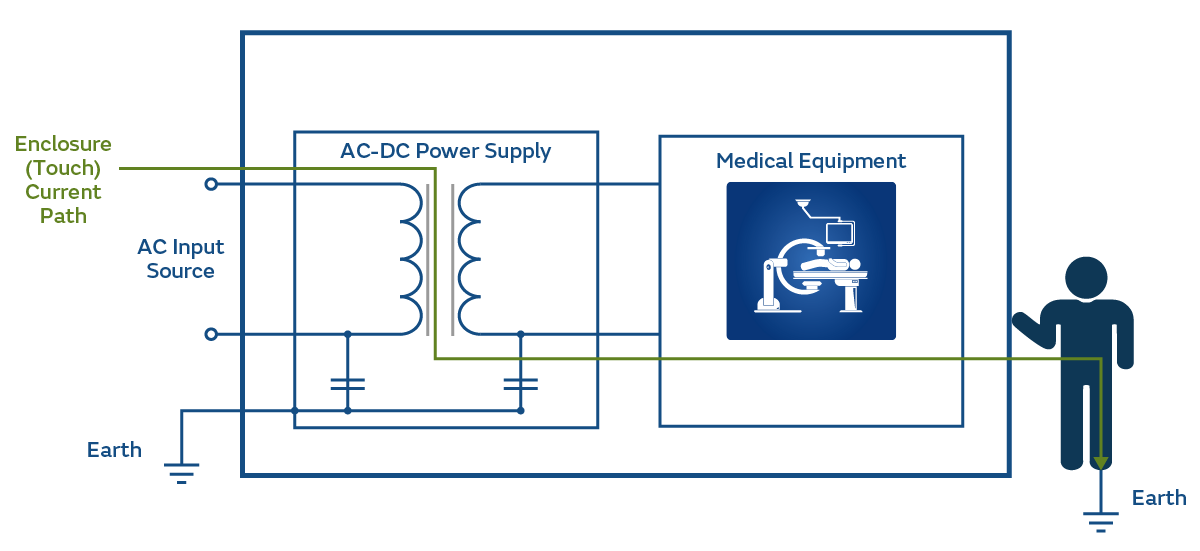
Power requirements of medical equipment
Medical equipment adds a non-negotiable constraint. CPAP machines for sleep apnea typically pull 30 to 60 watts. Home oxygen concentrators pull 300 to 500 watts. Powered wheelchairs need periodic charging at 200 to 500 watts. For households with medical equipment dependencies, battery sizing isn't about comfort, it's about health and safety. These households need to size for their medical loads first, then fit other consumption around that baseline.
Well pumps deserve special attention for rural households. A submersible well pump might pull 1,000 to 2,000 watts during operation. Homes on well water lose water pressure when power fails unless the pump has backup power. A battery system that ignores the well pump means no water for drinking, cooking, sanitation, or firefighting. A battery system that includes the well pump faces significant load during pump cycles. Some households install small pressure tanks that reduce pump cycling frequency, stretching battery life while maintaining water availability.
Solar Changes Everything
Everything above assumes the battery is on its own. Add solar panels and the calculation inverts.
A standalone battery is a tank draining toward empty. Every hour brings it closer to zero. Conservation slows the drain. Nothing refills it. The endpoint is known from the moment the outage begins: the battery will die, the only question is when.
A battery with solar is a cycle. Drain overnight, refill during the day, drain again, refill again. As long as daily generation exceeds daily consumption, the system runs indefinitely. The outage could last a week, a month, a year, and the house would still have power as long as the sun keeps rising.
This transforms the psychology of outages. A standalone battery creates anxiety that builds as the gauge drops. A solar-plus-battery system creates confidence after the first full recharge. The household wakes up on day two of an outage with a full battery and realizes they can do this for as long as necessary.
Even when generation falls short of consumption, solar extends total runtime dramatically. A battery that would last 24 hours alone might last 60 hours with solar panels contributing during daylight, even if the panels only generate half the daily consumption. Every kilowatt-hour from the panels is a kilowatt-hour the battery doesn't have to provide.
Cloudy weather breaks the cycle. Generation drops to 20% or 30% of clear-sky output. A system balanced for sunny days falls into deficit under clouds. Three cloudy days in a row can drain a battery that would run indefinitely in sunshine.
This is why sizing solar-plus-storage for backup requires thinking about worst cases rather than averages. The outage will not conveniently occur on a sunny week in May. It will occur during a heat wave when AC demand peaks and afternoon thunderstorms block the sun. Or during a winter storm when panels are covered in snow and daylight hours are shortest. Or during the autumn fire season when smoke from distant wildfires dims the sun for days at a time.
Optimistic assumptions produce systems that fail when they're needed most. Pessimistic assumptions produce systems that cost more but actually work when conditions turn hostile. The choice between these approaches is a choice about risk tolerance and budget.
Field Data From Real Outages
California's planned shutoffs during fire season generate the most useful data because they're predictable, temperatures stay moderate, and the state has the highest residential battery penetration in the country. Thousands of households have now experienced multiple 24 to 72 hour shutoffs with battery backup.
Pattern from those events: households restricting loads to essentials consistently report 24 to 48 hours of runtime from a single Powerwall-class battery. Households trying to maintain normal consumption report 8 to 14 hours. Households with solar panels and batteries report multi-day runtime with no particular stress as long as the sun cooperates.
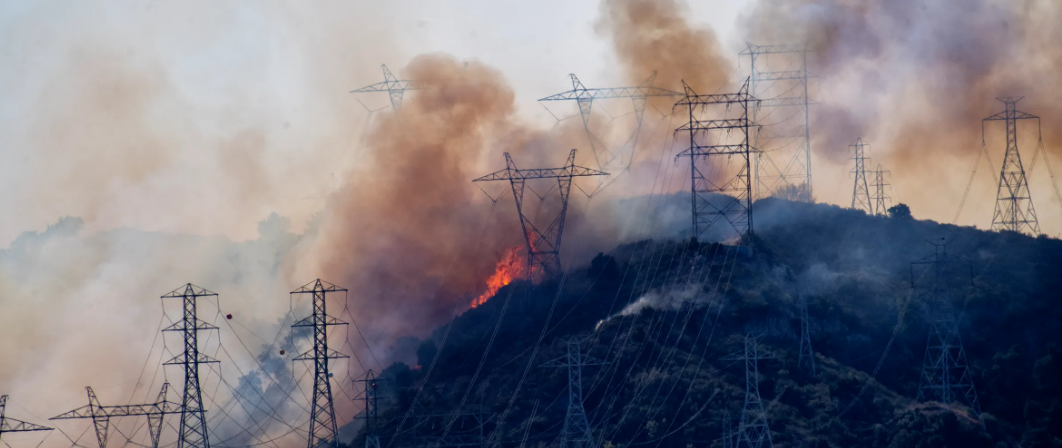
Planned power outages implemented in California during the fire season
The shutoffs have created a body of practical knowledge that didn't exist five years ago. People share what worked and what didn't on neighborhood social media groups. Which loads to cut first. Which circuits to leave on. How to manage the fridge to minimize compressor cycling. How to keep one room cool without draining the battery. This practical knowledge supplements the theoretical understanding that comes from spec sheets and calculators.
Florida hurricanes show a sharper divide because the stakes are higher and the conditions are harsher. Storms knock out power for days, not hours. Heat and humidity make life without AC genuinely miserable rather than merely inconvenient. Generator noise fills neighborhoods for a week after major storms.
Battery owners in Florida report a clear pattern. Households that accepted the loss of AC and focused on essentials got 30 to 40 hours from their batteries. Households that tried to maintain cooling got 4 to 8 hours. There's not much middle ground because AC loads are so large relative to everything else.
The Texas freeze data tells a third story. Extreme cold, extended outage, heating loads that batteries can't meaningfully address. Households that tried to heat electrically ran out of power fast. Households that gave up on electric heat and used the battery for lights, communication, and refrigeration made it through. The lesson from Texas isn't about battery sizing. It's about understanding what batteries can and can't do. They can't heat houses in freezing weather. Planning as if they can leads to worse outcomes than planning around that limitation.
The Products
The residential battery market has consolidated around a handful of products worth considering and dozens of products not worth the time to evaluate.
Tesla Powerwall dominates market share for reasons that have as much to do with brand recognition and sales channel as with product quality. Tesla's direct-to-consumer model and solar integration makes purchasing straightforward in a way that traditional electrical distribution channels don't match. The product itself is fine. 13.5 kWh capacity, 11.5 kW peak output, integrated inverter, decent app, firmware updates that occasionally improve features and occasionally introduce bugs. The Powerwall 3 represents a meaningful upgrade over earlier versions with higher output power that handles motor starting loads better.
Enphase makes batteries that work particularly well with Enphase microinverters, which represent the most common residential solar configuration in the United States. The modular architecture means multiple smaller batteries rather than one big one. This has some resilience advantages and some cost disadvantages. Enphase systems tend to run 15% to 25% more expensive than Powerwall at similar capacity. Whether the premium buys meaningful value depends on existing equipment and installer relationships.
Everything else is harder to generalize about. BYD makes good batteries at competitive prices but has minimal North American market presence and support infrastructure. Generac leverages its generator brand recognition to sell batteries to backup-focused customers who don't care about solar optimization. Sonnen targets the premium segment with German engineering and aggressive warranty terms and prices that only make sense for specific situations.
The honest truth is that product selection matters less than load management. A household with a mediocre battery and excellent outage discipline will outlast a household with a premium battery and poor consumption habits. The energy in the battery is the energy in the battery. What happens after that is behavior.
Calculating Personal Runtime
The useful exercise for any prospective battery buyer is calculating their own expected runtime rather than relying on averages.
Step one: identify critical loads. Refrigerator, freezer, minimal lighting, WiFi, phone charging, medical equipment if any. Add up the wattages. For most households this lands between 150 and 400 watts.
Step two: identify comfort loads. Additional lighting, television, laptop, fans. Add these to critical loads. The total typically lands between 400 and 800 watts.
Step three: identify the loads that kill runtime. Air conditioning, electric heating, water heating, well pumps, electric vehicle charging. Each of these individually may exceed the total of all other loads combined.
Step four: multiply each load scenario by 24 to get daily consumption. Critical loads at 300 watts times 24 equals 7.2 kWh per day. Comfort loads at 600 watts times 24 equals 14.4 kWh per day. Adding AC at 1,500 watts average times 24 equals 36 kWh on top of other consumption.
Step five: divide battery capacity by daily consumption. A 13.5 kWh battery lasts 1.9 days at critical loads, 0.9 days at comfort loads, about 6 hours if AC runs continuously.
This arithmetic is sobering for most people doing it the first time. The battery that seemed large in the sales presentation looks small against actual consumption. The good news is that the arithmetic also reveals the leverage points. Turning off AC extends runtime by multiples. Switching from comfort loads to critical loads roughly doubles duration. Small changes in behavior produce large changes in outcome.
The Answer
8 to 12 hours running the house normally. 24 to 48 hours running essentials only. Potentially indefinite with solar as long as generation keeps up with consumption. Longer in mild weather, shorter in temperature extremes, and completely dependent on whether someone decides to run the air conditioning or plug in a space heater.
The battery is a fixed quantity of energy. The number on the spec sheet doesn't lie, it just doesn't tell the whole truth. How long it lasts is a question about behavior as much as hardware. Two households with identical systems will get wildly different results depending on what stays plugged in.
Anyone asking how long a battery will power their house should start by asking a different question: how little power can the household live on when it has to? The answer to that question determines the answer to the first one.