

Best Batteries for Airport Ground Support Equipment
When it comes to batteries for airport ground support equipment, it all boils down to one thing: LFP. This might sound categorical. After spending enough time in this industry, watching procurement teams agonize between NMC and LFP, watching those "hydrogen fuel cells are the future" PowerPoints eventually become pilot equipment collecting dust in warehouses, watching the penny-pinching lead-acid purchases turn into three-year replacement cycles . The complexity isn't in technology selection; it's in convincing the finance department to accept higher upfront procurement costs.

Equipment Requirements
Baggage Tractors
Baggage tractors are the only category worth spending time researching. Other equipment—belt loaders, passenger boarding bridges, ground power units—either have low usage volumes or the technology is mature enough that there's virtually no chance of choosing wrong. Baggage tractors are different. They're the hardest-working equipment at airports, running dozens of trips daily, hauling over 10,000 pounds of cargo while switching between 40°C heat and -20°C cold.
Spec sheets say 80V, 88kWh . What spec sheets won't tell you is: how much does voltage drop when this vehicle is pulling a fully loaded baggage cart uphill? Voltage sag is the key metric that separates good batteries from bad ones, and most suppliers' datasheets don't even mention it.
TLD's JET-16 uses a 22kWh modular design to solve this problem. it allows the battery pack to maintain voltage stability under high loads. Ask other suppliers for voltage sag data, and nine out of ten won't be able to provide it. Those who can't answer? Pass on them immediately.
Pushback Tractors
Pushback tractors present even more extreme conditions. Small ones serving general aviation need just 24V. The big machines pushing widebody aircraft require 72V or even 80V, with extremely high instantaneous current demands—they have to overcome the inertia of aircraft weighing tens of tons at startup. Lektro uses dual 36V batteries in series to achieve 72V and 440Ah, a design that offers advantages in current output. Single battery pack architectures tend to struggle under these conditions.
Catering Trucks
Catering trucks are an outlier. Mallaghan's CT6000E uses a 609V high-voltage platform with a 210kWh battery pack. Delta put it into service at Boston in January 2025—North America's first fully electric widebody catering truck. High voltage means lower current at equivalent power, resulting in lighter cables and less heat generation.

De-icing Vehicles
De-icing vehicles? Depends on climate. Nordic airports use electric de-icing vehicles at -30°C without issues. Just don't expect to maintain room-temperature range in those conditions. Lead-acid loses 50% capacity; LFP loses 10-20%. The difference is that LFP continues working stably after losing that 20%, while lead-acid essentially becomes useless after losing 50%.
As for ground power units and belt loaders—the technology has matured to the point where they're not worth spending paragraphs on. Buy from major manufacturers, don't chase bargains, confirm after-sales service network coverage. End of story.
Why LFP Is the Only Correct Answer
NMC has higher energy density—that's a fact. LTO has longer cycle life and faster charging—also a fact. In the specific environment of airports, these advantages are all overshadowed by one factor: thermal stability.
LFP begins thermal decomposition at 270°C; NMC at 210°C. A 60-degree gap might not sound like much, but in a system where internal short circuits can trigger chain reactions within seconds, those 60 degrees are the difference between whether the battery management system has time to intervene.
Airport environments have zero tolerance for thermal runaway. Equipment operates next to aviation fuel, near enclosed cargo holds, beside passenger boarding bridges. NMC's failure probability might only be one in ten thousand, but one incident could terminate an entire airport's electrification program. The risk-reward calculation simply doesn't balance out.
Textron uses Samsung SDI NMC cells for the TUG ALPHA 1 pushback tractor, wrapped in steel casings and fire blankets. What does this tell us? That Textron themselves know NMC requires additional safety engineering. Textron has the resources for this level of safety design. If you're buying retrofit battery packs for old equipment, does your supplier implement the same level of thermal management? Probably not.
The cycle life math also needs to be clear. LFP can achieve 3,000 to 6,000 cycles at 80-100% depth of discharge. Lead-acid only manages 500-1,000 cycles at 50% depth of discharge, and airport operations simply can't limit discharge to 50%. Discharging to 80% is the norm, and lead-acid degrades extremely fast at this depth.
One set of LFP batteries lasts through an equipment's 11-14 year lifespan. Lead-acid needs to be replaced four or five times. Each battery replacement isn't just battery cost—downtime, labor, disposal fees, procurement processes, these costs add up to more than the batteries themselves.
Lead-acid charging efficiency is 75%; LFP exceeds 96%. For every 100 kWh pulled from the grid, lead-acid wastes 25 kWh as heat. For a fleet of fifty vehicles, the annual electricity cost difference runs to five figures.
One more point rarely mentioned: lead-acid battery rooms require special ventilation because charging releases hydrogen gas. Fire codes mandate specific air change rates and explosion-proof electrical equipment. LFP charging generates almost no heat and releases no gases. Some airports have converted their former lead-acid battery rooms to other uses—that reclaimed indoor space is also money.
The LTO Exception
Saying LFP is the only correct answer has one exception: LTO for ultra-high utilization scenarios.
LTO charges to 80% in just 6-10 minutes. Cycle life of 10,000-30,000 cycles. Operating temperature range from -40°C to +60°C, no heating or cooling systems needed. No other chemistry comes close to these numbers.
The trade-off: Energy density of only 60-120Wh/kg, priced at $150-200/kWh. More expensive than LFP, stores less energy.
Do the math: a pushback tractor at a major hub airport runs 18 hours daily. Between flights, there are only a few minutes for charging windows. Standard lithium batteries can't charge much in that time—either keep more vehicles in reserve or accept utilization gaps. LTO eliminates this limitation entirely: charge fully in minutes, online around the clock.
Suppliers
TLD Is Overrated
This might be controversial. TLD is indeed the market leader—they're discontinuing internal combustion GSE by end of 2025, their iBS battery system's modular design is solid, and it runs in Middle Eastern heat without active cooling.
But TLD's pricing reflects brand premium, not technological exclusivity. Modular design isn't a TLD patent. Their battery life management strategy involves cascading old batteries from high-intensity to light-load applications—sounds clever, but execution requires a complete asset management system to support it. Most operators can't pull this off.
Flux Power Is Underrated
A pure battery supplier that doesn't sell vehicles has shipped over 20,000 battery packs. Delta is their customer. The GSE Pack series covers 16.8 to 50.4kWh, with a 10-year warranty.
That 10-year warranty deserves special mention. Battery degradation is inevitable; the question is who bears the degradation risk. Most suppliers' warranties are 3-5 years, and only when capacity drops below 70% is it covered. Flux Power offers 10 years, effectively transferring degradation risk from operators to the supplier. These commercial terms matter far more than technical specifications.
ITW GSE
ITW GSE dominates the ground power unit niche. Their 7400 series' instant-start capability—power on, immediate output, no 15-minute diesel warm-up—is hugely valuable during flight delays and compressed turnaround times. The $390,000 lifecycle cost savings come mainly from fuel and maintenance; the scheduling flexibility from instant-start is hard to quantify.
Green Cubes
Green Cubes is worth considering if your airport environment is harsh. IP65 protection rating, -40°C to +50°C operating temperature. Alaska or Middle East, these specs matter. Temperate climate airports don't need to pay this premium.
Charging: Easier to Get Wrong Than the Batteries
Buy the right batteries, mess up charging, and the whole project fails.
Lead-acid era charging logic was "centralized warehouse charging." Drive vehicles back at night, charge for 6-8 hours, cool for another 8 hours, use the next day. Each vehicle needs two or three rotating battery sets.
Lithium batteries enable "opportunity charging." Charge during lunch, charge between flights, utilize fragmented time. One vehicle might only need one battery set. This directly cuts battery procurement costs and the complexity of battery swapping labor.
Opportunity charging requires chargers everywhere. Charger placement becomes strategic decision-making. Position them next to break rooms, near flight dispatch areas, in corridors between terminals—make charging happen where equipment naturally pauses.
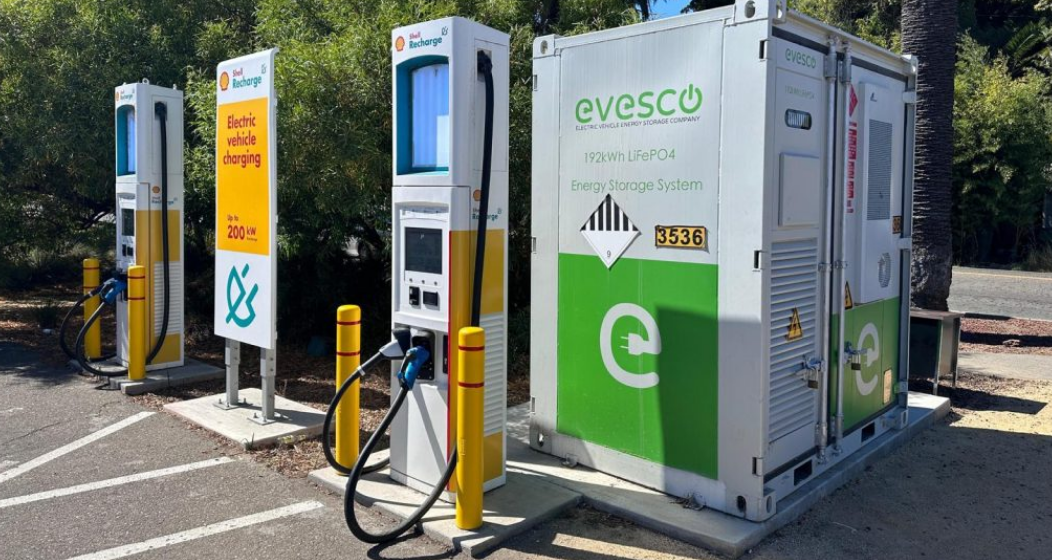
JBT's AmpCart mobile charging platform solves the remote stand problem. Tow it wherever charging is needed. For many airports, this is essential. Remote stands, cargo areas, maintenance facilities often lack fixed charging infrastructure . Mobile charging carts work from day one.
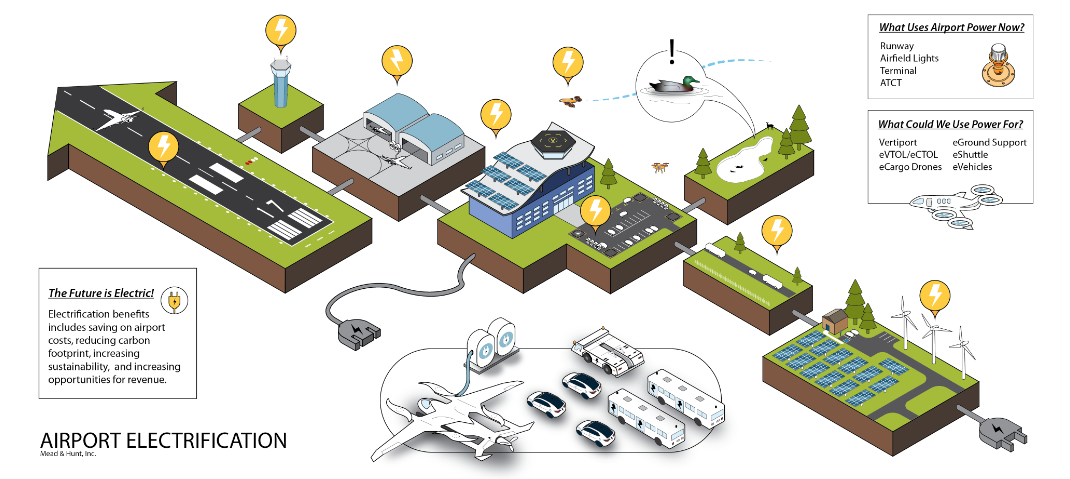
Grid capacity is the most easily overlooked bottleneck. Enterprise Mobility's analysis predicts large airports will see 4-5x power demand growth by 2050, with eGSE charging accounting for 44%. New substations take 4-8 years from planning to operation. Start planning now, and capacity arrives in the early 2030s. Don't plan now, and when vehicles are bought and chargers installed, the grid can't handle it.
Seattle-Tacoma Airport's 400+ eGSE saves $2.8 million in fuel annually and reduces 10,000 tons of greenhouse gas emissions. That scale took years of power infrastructure upgrades to achieve. Grid upgrades must precede vehicle procurement .
Financials
LFP battery packs now cost $70-84/kWh; lead-acid costs $150-250/kWh. On purchase day, lead-acid looks half as expensive.
Lead-acid needs replacement every three years; over an 11-14 year equipment lifespan, that's four or five replacements. LFP needs zero replacements.
A baggage tractor's battery: lead-acid $8,000 per pack, LFP $15,000 per pack. Day one savings: $7,000. Three years later, spend another $8,000 for replacement; six years, another $8,000; nine years, another $8,000; twelve years, another $8,000. Four replacements total $32,000, plus the first pack's $8,000, equals $40,000 total. LFP: buy once for $15,000, done.
This doesn't even count the downtime, labor, disposal fees, and management effort consumed by procurement processes for each battery replacement.
Electric GSE costs 30-35% more than diesel. That premium buys 90-95% drivetrain efficiency (diesel is only 30-35%). Energy costs drop 80%, maintenance costs drop 40% (no oil changes, regenerative braking reduces brake wear, fewer parts). A baggage tractor running 3,000 hours annually saves five figures in fuel and maintenance. Over 10-14 years, savings are several times the initial premium.
VALE subsidies cover up to 90%. Small hubs get 90%, medium and large hubs get 75%. As of October 2023, 141 projects at 58 airports have been funded. Money exists; it's about applying for it. VALE pre-application deadline is November 1st annually. California also has EnergIIZE and Carl Moyer programs; SCE has the Charge Ready Transport program. Stack these together, and some airports' electrification net costs are lower than buying diesel equipment.
Don't Wait
CARB's 2034 zero-emission mandate is already counting down. Equipment purchased now will still be in service when the mandate takes effect. Buy diesel now, and you either retire early or pay for retrofit. Both paths lose money.
California airport GSE is now 33% zero-emission. The remaining 67% must transition within ten years. There's no time left for "pilot projects."
Europe's EU Green Deal, Fit for 55, ACI Europe's 2050 net-zero commitment—pressure flows through airline sustainability reporting obligations to ground handling contractors. GSE electrification is already a competitive factor in ground handling tenders.
Sodium-ion batteries might enter the GSE market around 2027-2030. Solid-state batteries need another 5-7 years. Equipment purchased now will complete its service life before these technologies mature .
Battery technology is already sufficient. Supplier capacity is already sufficient. Subsidy funding is already in place. What remains is purely an organizational commitment issue.