

LiFePO4 is lithium. The question itself is wrong. Same electrochemistry, different cathode material.
Most people should buy LiFePO4.
NCM looked better on paper. Higher energy density. More range per kilogram. Phone makers wanted thin devices. Tesla wanted range numbers for marketing. The whole industry chased density like it was the only metric that mattered.
It was not.
Moss Landing burned in January 2025. A storage facility in California, something like 3GWh, running NCM technology that the industry had been installing for years without much questioning. Burned for days while firefighters rotated through shifts and pumped water and waited. That fire changed how a lot of people think about battery chemistry because it demonstrated failure modes that specification sheets and marketing materials had glossed over or mentioned only in passing.
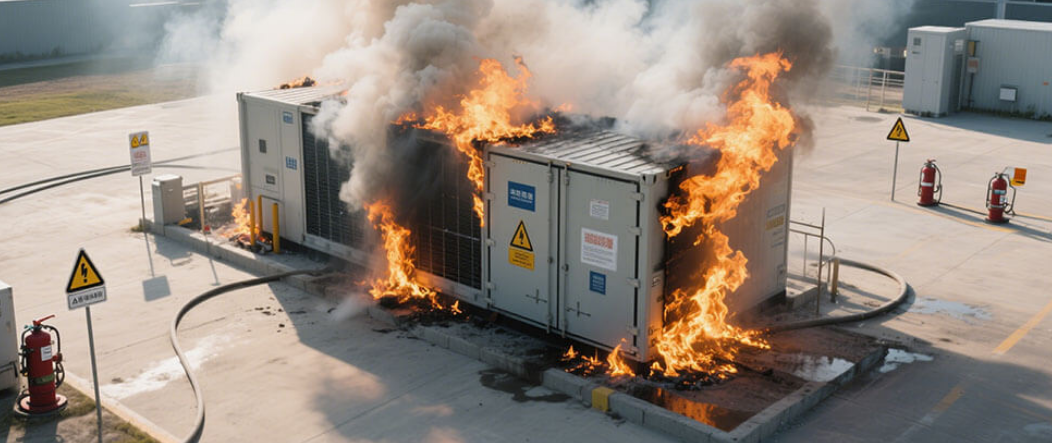
Insurance adjusters started asking questions they should have asked before writing policies. Fire departments started asking before they approved permits for new installations. Building inspectors started asking about setback distances and containment requirements. The questions should have been asked years earlier when the installations were going up, and the fact that they were not asked reflects how the industry prioritized deployment speed over systematic risk assessment.
NCM releases oxygen when it overheats, and this fact gets underweighted in most battery comparisons. The layered cathode structure decomposes somewhere past 200°C and dumps oxidizer directly into the cell interior where it feeds combustion regardless of external oxygen availability. You cannot smother a fire that makes its own oxygen, which is something that firefighters trained on conventional fires had to learn through direct experience with battery incidents that behaved unlike anything in their previous training.
Tens of thousands of gallons of water for a single vehicle because the goal is cooling rather than smothering and because thermal runaway can propagate from cell to cell faster than suppression can catch up. Response times measured in days for storage facilities because the heat migrates through pack structures and cells that look stable can reignite hours later as temperature redistribution continues. Some departments now plan for controlled burns as a last resort because full suppression sometimes proves impossible with available resources and water supply.
LiFePO4 holds its oxygen because the olivine crystal structure bonds iron, phosphorus, and oxygen in configurations that remain stable under conditions that would completely destroy layered NCM cathodes. BYD filmed nail penetration tests that looked fake because NCM packs erupted at temperatures past 700°C while their Blade Battery cells barely got warm, and the videos went viral because people could not believe the chemistry difference could be that stark until they understood what olivine stability actually means in practice.
The thermal runaway threshold tells the story in numbers. LiFePO4 loses control somewhere past 270°C. NCM811 starts cascading between 100°C and 160°C depending on formulation. Manufacturing defects and dendrite growth can push cells past 100°C without any external heat source involved. NCM operates with margins that shrink as energy density increases and as cells age and develop internal issues. Iron phosphate has headroom that provides margin for error that NCM lacks.
Phone batteries carry acceptable risk because the energy content stays small. Home storage sitting in garages next to cars and gas lines operates at scales where fire consequences extend to structures and lives. Grid installations at gigawatt scale make thermal stability the primary consideration. Buses full of passengers make it non-negotiable.
Cycle life follows from the same structural differences that drive the safety gap, and the connection is not coincidental because both outcomes trace to how lithium ions interact with cathode materials at the atomic level. Lithium ions moving through electrodes cause mechanical stress as crystal structures expand to accommodate them during charging and contract as they leave during discharge. NCM cathodes with their layered sheets experience this expansion and contraction every cycle, and repeated cycling creates microcracks that accumulate over time and gradually degrade the ionic pathways that allow the battery to function efficiently.
The olivine structure of LiFePO4 handles lithium insertion and extraction differently. The crystal lattice accommodates the dimensional changes with less strain because the geometry distributes stress more evenly. Less strain per cycle means fewer microcracks means slower capacity fade means more total cycles before the battery needs replacement. The physics predict this outcome and real-world data from millions of deployed cells confirms the theoretical advantage over thousands of charge-discharge cycles in conditions ranging from laboratory testing to field deployment.
Published numbers suggest 5,000 cycles for LiFePO4 versus 1,500 for NCM under comparable test conditions, and while real-world numbers vary with temperature and depth of discharge and charging speed and a dozen other factors, the ratio between chemistries holds across most comparisons. CATL offers 15-year warranties covering 1.5 million kilometers on commercial LiFePO4 packs because they have enough field data to know the cells will last and because the warranty economics work at that duration. No NCM manufacturer matches that coverage because the chemistry cannot support warranties that long without unacceptable claim rates.
The industry spent a decade chasing energy density when most applications needed safety and longevity and low cost.
Degradation curves matter as much as total cycles when planning installations and budgets. Iron phosphate fades in a nearly straight line that makes extrapolation straightforward. Measure capacity at year three, project to year fifteen with confidence. NCM follows a different pattern: rapid capacity loss during the first few hundred cycles as the cell stabilizes, then a plateau period where degradation slows, then sometimes a sudden cliff near end of life where capacity drops faster than the earlier trend would have predicted. Storage operators have reported packs that looked fine on monitoring dashboards, showed healthy metrics, gave no warning, and then suddenly lost capacity in ways that disrupted backup power calculations and forced unplanned replacements.
Tesla tells LiFePO4 owners to charge to 100% regularly. NCM owners hear warnings about 20-80%. That difference shapes daily ownership in ways that specification comparisons between chemistries never quite capture because they focus on maximum capacity rather than usable capacity in typical usage patterns.
Cold weather is the weak point and I am not going to bury it at the end or minimize it because honesty about limitations is worth something. Capacity drops at low temperatures because lithium ion mobility through the olivine structure slows as thermal energy decreases, and the one-dimensional channels that provide stability become bottlenecks when the ions lose the kinetic energy needed to move efficiently. At minus 20 Celsius, capacity drops to roughly half of rated values while NCM with its two-dimensional pathways through layered cathodes holds 70-80% of capacity under the same conditions.
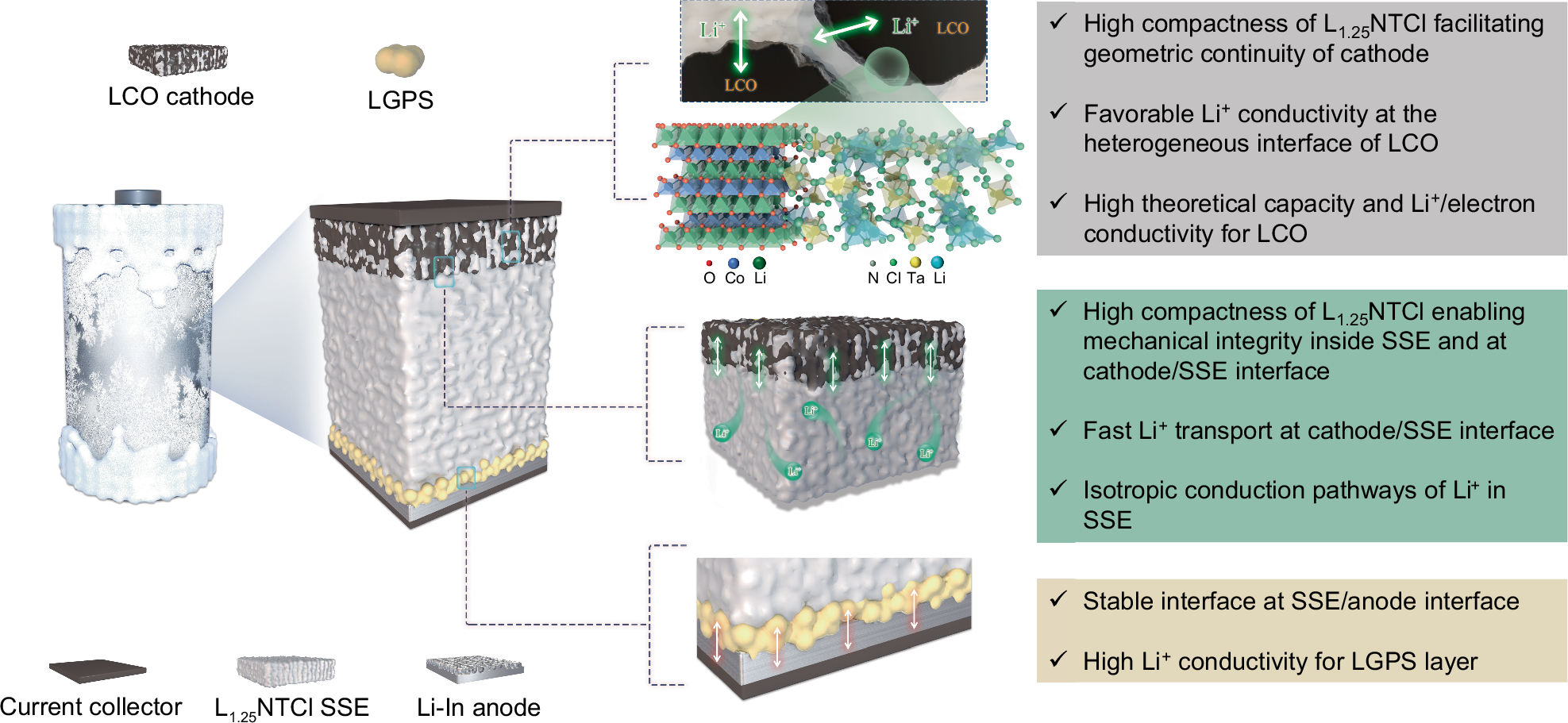
Charging locks out below freezing entirely because LiFePO4 cells cannot safely accept lithium below 0°C. When a cold cell is forced to charge, lithium ions plate onto the anode surface instead of intercalating properly into the graphite structure, and that plated lithium forms dendrites that can eventually pierce the separator and cause internal shorts that defeat the entire safety advantage of the chemistry. The battery management system enforces the lockout automatically, which means cars and storage systems simply refuse to charge when temperatures drop low enough, and owners discover this when they park somewhere cold and return to find the system will accept no charge until it warms up.
Self-heating systems address this by using stored energy to warm the pack before charging, and they work well for people who plan ahead or keep vehicles in heated garages or remember to precondition before leaving for work. For someone parking outside through a Minnesota January and forgetting to precondition, the charging lockout creates practical problems that specification comparisons never mention because they measure performance at room temperature.
I recognize this is a real limitation that affects real buyers in real climates. Alaska, northern Canada, Scandinavia, parts of the northern United States, Russia, northern China—these regions represent cases where LiFePO4 requires accommodations that NCM does not. Heated garages. Preconditioning discipline. Battery blankets. Planning around temperature. For buyers in those climates who cannot or will not make those accommodations, NCM handles conditions that LiFePO4 simply cannot match without external help.
Most buyers do not live in those climates. Most buyers live where winter means occasional cold snaps rather than sustained deep freeze, where temperatures dip below freezing sometimes and stay there continuously almost never. For those buyers, the cold limitation weighs less than the safety and longevity and cost advantages that compound over years of ownership. The tradeoff math changes depending on geography in ways that universal recommendations cannot capture.
Price crossed over around 2022 after years of LiFePO4 costing more than NCM, and the crossover happened because of manufacturing investment decisions made years earlier that nobody outside the Chinese battery industry anticipated at the time. LiFePO4 runs roughly $80-85 per kWh now at the pack level for large installations. NCM averages $120-130. The gap represents billions of dollars in cumulative investment in iron phosphate production capacity by Chinese manufacturers who recognized something Western manufacturers missed.
| Specification | LiFePO4 | NCM |
|---|---|---|
| Price per kWh | $80-85 | $120-130 |
| Cycle Life | 5,000 cycles | 1,500 cycles |
| Cost per kWh per Cycle | ~$0.02 | ~$0.085 |
| Energy Density | 90-160 Wh/kg | 180-280 Wh/kg |
Chinese battery makers saw that LiFePO4 production scales faster because supply chains run simpler and manufacturing processes tolerate more variation than high-nickel NCM requires. Quality control for NCM811 demands tight tolerances at every step because small variations in nickel-cobalt-manganese ratios or contamination levels can create cells that pass initial testing and fail months later. LiFePO4 forgives more variation. Yields run higher. Production costs drop faster with scale when manufacturing processes tolerate wider variation windows.
Western manufacturers chased energy density records because that was what their customers said they wanted and because range anxiety dominated early EV discourse and because nobody expected fire safety to become a differentiator. The density race seemed like the right bet in 2015. By the time Moss Landing burned and insurance premiums started reflecting chemistry differences and storage developers ran levelized cost calculations, the production capacity gap had already locked in pricing advantages that take years and billions of dollars to match.
Iron costs almost nothing and exists everywhere. Cobalt comes from the Democratic Republic of Congo under labor conditions that generate persistent controversy and supply chain scrutiny that battery manufacturers would prefer to avoid. Nickel prices swing with Indonesian export policy in ways that make long-term forecasting unreliable and that introduce volatility into procurement planning. LiFePO4 supply chains run simpler with fewer geopolitical complications and with raw materials that do not carry ethical baggage that eventually finds its way into consumer purchasing decisions.
Levelized cost divides pack price by expected cycles to produce a cost per kWh per cycle that captures total ownership economics better than upfront price alone. LiFePO4 lands around $0.02 per kWh per cycle. NCM around $0.085. The fourfold difference compounds over installation lifetime and explains why storage developers who run spreadsheets before signing purchase orders have moved toward iron phosphate even when upfront costs were higher and even before the manufacturing crossover made LiFePO4 cheaper on initial price too.
Energy density stays with NCM because physics favors layered cathode structures for packing energy into tight spaces and no amount of marketing or manufacturing optimization can overcome fundamental thermodynamic limits. LiFePO4 cells achieve 90-160 Wh/kg depending on design choices around electrode thickness and cell format. NCM reaches 180-280 Wh/kg with the higher end representing cells optimized aggressively for density at some cost to longevity. NCA pushes even higher with Tesla's 4680 cells targeting numbers that LiFePO4 cannot approach. The gap exists at the cell level and compounds at the pack level because lower cell density means more cells for the same total capacity which means more housing and more cooling hardware and more battery management overhead per kWh stored.
Phones and laptops will keep using high-density chemistries because device makers face volumetric constraints that leave no room for batteries twice as thick and because consumers consistently demonstrate through purchasing behavior that they care more about device thinness than battery longevity when they replace devices every two or three years anyway. The consumer electronics market represents applications where LiFePO4 simply cannot compete and will not compete for the foreseeable future regardless of how manufacturing costs evolve.
The Tesla Model 3 with LiFePO4 gets around 270 miles of EPA-rated range. The same vehicle with NCA pushes past 350 miles. The 80-mile difference affects road trip planning and affects buyers who experience range anxiety and affects buyers without home charging who depend on public infrastructure. It weighs less for buyers who commute under 50 miles daily and plug in at home every night and start each morning with a full battery regardless of total capacity. Which set of buyers represents the larger market depends on assumptions about charging infrastructure deployment and about how consumer psychology around range anxiety evolves as EV ownership becomes more common.
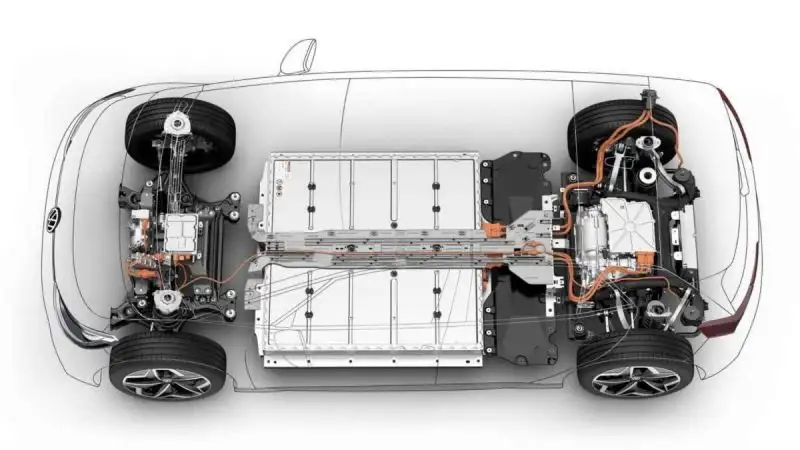
Pack engineering has narrowed system-level gaps even while cell-level differences persist because clever structural design can recover some of the density loss through efficiency gains in how cells fit together. Cell-to-pack architectures eliminate intermediate module housings that added weight and volume without adding energy. BYD's Blade Battery uses long prismatic cells as structural members of the pack itself, which means the cells carry mechanical loads that would otherwise require separate structural elements. CATL's Qilin architecture claims similar integration benefits. System-level density reaches around 160 Wh/kg for advanced LiFePO4 packs versus around 255 Wh/kg for NCM using equivalent architecture, and while the gap persists, it has shrunk from when iron phosphate was dismissed as fundamentally unsuitable for passenger vehicles by engineers who assumed energy density would remain the primary constraint on EV adoption forever.
LMFP adds manganese and pushes toward 230-240 Wh/kg while keeping safety and longevity. CATL has production running. Tesla uses it in some Chinese vehicles. The density gap keeps narrowing.
Home storage went LiFePO4 years ago. Indoor installation demands fire safety. Daily cycling demands longevity. Powerwall switched from NCM without much announcement. BYD buses run LiFePO4 worldwide because fleet operators care about batteries lasting vehicle lifetime and because nobody wants a bus fire.
Consumer electronics stay with NCM because density constraints leave no alternative. Power tools stay with NCM for discharge rates.
Market share shifted from 10% in 2020 to nearly 50% in 2024. Chinese markets past 75%. Storage past 85%. Volkswagen announced LiFePO4 production in Europe. Ford switched some models.
The industry spent a decade chasing energy density when most applications needed safety and longevity and low cost. The market eventually figured this out. Information ecosystems lag market behavior. Installers trained when NCM was cheaper sometimes quote it by default. Review sites weight density heavily because they built frameworks around it years ago.
Buyers without legacy assumptions see current pricing and safety records and warranty terms. They see Moss Landing. They see CATL offering 15-year warranties on iron phosphate while NCM manufacturers offer less. The questions changed. Ten years ago buyers asked why pay more for LiFePO4. Now the questions run the other direction.
The answer depends on application. Phones need density and nothing else currently provides it. Alaska needs cold performance. These are real constraints for real buyers in real situations.
Most applications need safety, longevity, and low cost. Most applications point to LiFePO4. The industry spent a decade pretending otherwise and the market eventually corrected the pretense. The correction is not complete and probably will not be complete for years as information ecosystems catch up to purchasing behavior, as installers update their default recommendations, as review frameworks adjust their weighting toward factors that real buyers demonstrate they care about through actual purchasing decisions.