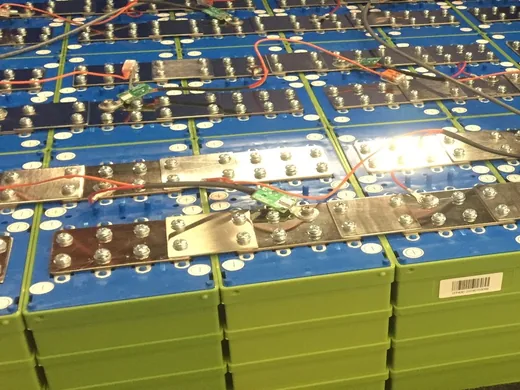
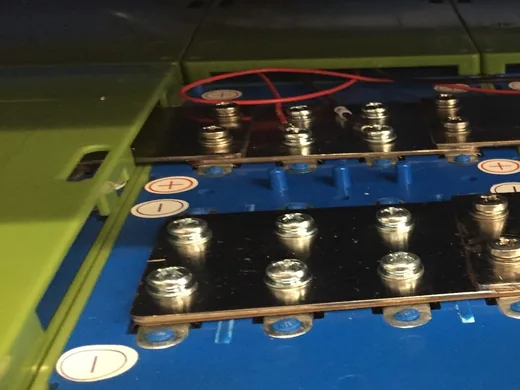
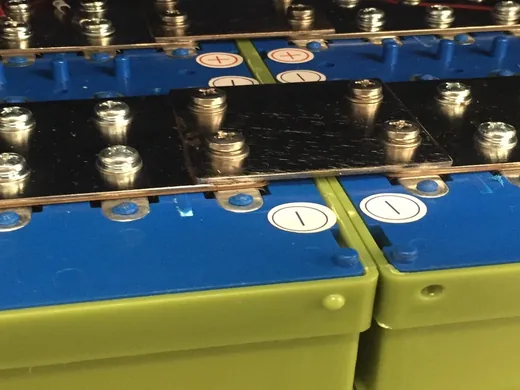
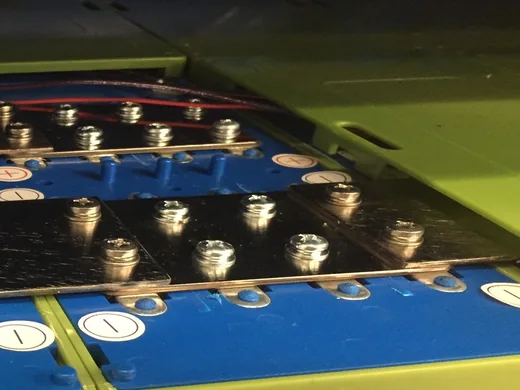

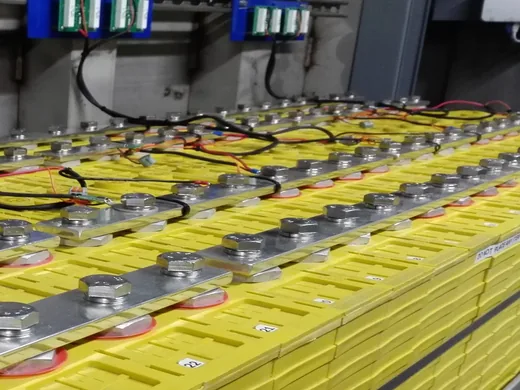
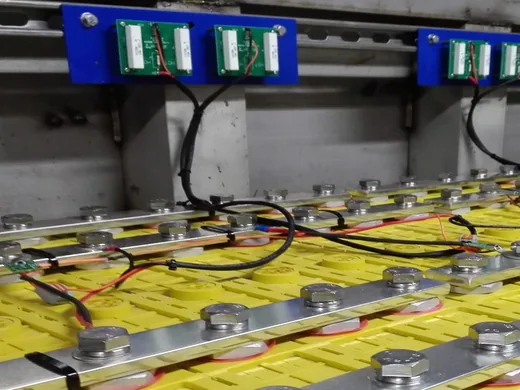
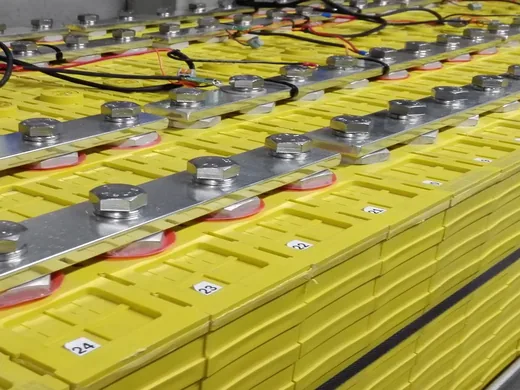
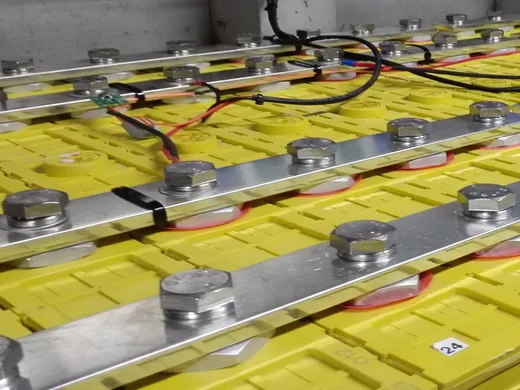


The question sounds simple enough. One is bigger, one is smaller. One goes in factories, one goes in office buildings.
Except the deals keep failing in ways that the size explanation does not predict. A developer who built a successful portfolio of commercial rooftop-solar-plus-storage installations pivots to industrial projects and suddenly cannot close anything. An infrastructure fund that knows how to underwrite 100 MW grid-scale batteries looks at a 15 MW behind-the-meter industrial deal and cannot figure out why the risk profile feels so different. A battery manufacturer watches the same product succeed wildly in one segment and struggle in the other.
Something else is going on.
What Actually Separates These Markets
The customer buying an industrial battery and the customer buying a commercial battery are solving fundamentally different problems, even when they use the same words to describe what they want.
The industrial customer says "we need to reduce our demand charges." What they mean is "a voltage sag last March shut down our coating line for six hours and cost us $400,000 in spoiled product, and if that happens again during our peak season someone is getting fired." The demand charge savings are real, they will show up in the financial model, but they are not why the check gets written. The check gets written because operations cannot tolerate another outage.
The commercial customer says "we want energy resilience." What they mean is "our utility bill is $23,000 a month and our CFO wants it lower." Resilience sounds better in the press release. The decision runs on arithmetic.
Same vocabulary. Different problems. The difference propagates through everything that follows: how you size the system, what chemistry you pick, how much you spend on controls, how you structure the deal, who you hire to install it, what happens when something goes wrong.
On the Question of Size
The 1 MW boundary shows up everywhere. Tax code thresholds. Utility interconnection tariffs. Market research segmentation. It is a convenient line, and like most convenient lines, it obscures more than it clarifies.
Plenty of commercial installations exceed 1 MW. A warehouse distribution center with a massive refrigeration load might install 2 MW to manage demand charges. It is still a commercial project. The customer cares about the electricity bill. The system runs a simple daily cycle. The installer is a local solar company that added storage to their offerings.
Plenty of industrial installations come in under 1 MW. A precision machining shop with $3 million CNC equipment might install 500 kW specifically to ride through voltage sags. It is still an industrial project. The customer cares about production continuity. The system needs millisecond response times. The installer better understand power quality or they will not get the job.
Size is a correlation, not a definition.
The Chemistry Question Is Mostly Settled, Except Where It Is Not
LFP won. Lithium iron phosphate owns something like 75 to 80 percent of new stationary storage installations and the share keeps climbing. Safer than NMC. Longer cycle life. Costs came down faster than anyone expected. Case closed.
Except.
I still see NMC showing up in commercial projects where the battery has to fit in a space that was never designed for it. Converted electrical closets. Basement corners. Rooftop mechanical penthouses with strict weight limits. NMC packs more energy into less volume. When the alternative is "this project does not happen because there is physically nowhere to put an LFP system," the chemistry debate reopens.
And I still see LFP creating problems in industrial projects that everyone thought were solved. A manufacturing client in the Southeast installed a large LFP system for demand management and backup. Summer temperatures in the battery room ran higher than the thermal model predicted. The cooling system could not keep up. Cells spent months operating above optimal temperature. Two years in, the capacity fade is tracking 40 percent ahead of the warranty curve. The system still works, but the 15-year economics now look like 11-year economics, and somebody has to explain that to the board.
The chemistry question is mostly settled. The installation question is not.
Interconnection, or Why Industrial Deals Take Forever
Commercial storage connects behind the meter at 480 volts, talks to the utility through a revenue-grade meter and a simple relay, and in most jurisdictions can get approved in a few months. California's Rule 21 fast-track process, when it works, closes in weeks. The project risk is execution risk: can you install the thing properly and make it run?
Industrial storage connects at medium voltage. Talks to the grid through protection systems that have to coordinate with utility infrastructure the developer does not control. Requires impact studies that model what happens when the battery injects power during a fault, or absorbs power during a voltage excursion, or oscillates in ways that interact badly with other equipment on the circuit.
A 20 MW industrial project filed for interconnection in PJM territory in 2021. The system impact study came back 14 months later identifying $6 million in required network upgrades. The developer contested the cost allocation. The dispute took another 11 months. By the time the interconnection agreement was signed, the original equipment quotes had expired, the tax equity partner had recycled their capital into other deals, and the project economics no longer worked. The site sits undeveloped.
This is not an unusual story. This is the modal outcome for large behind-the-meter industrial projects in congested grid territories.
Anyone who tells you industrial and commercial storage are the same business has not tried to interconnect a 10 MW system in New Jersey.
Sizing Philosophy
There is a slide that shows up in almost every storage pitch deck. It shows a building load profile, overlays the utility rate structure, identifies the demand charge peak, and calculates the battery size needed to shave that peak down to some target level. The math is clean. The visual is compelling. The slide is wrong about half the time.
It is wrong because it assumes the problem being solved is "reduce the demand charge." For commercial customers, that is usually true. For industrial customers, it is usually not.
Industrial sizing starts from a different question: what is the worst thing that can happen to this facility if the grid misbehaves, and what battery capability is needed to prevent it? The answer might be "we need 2 MW for 30 seconds to ride through a voltage sag while the backup generator starts." Or it might be "we need 10 MW for 4 hours to keep the clean room pressurized during an extended outage." Or it might be "we need enough capacity to ramp down the extrusion line gracefully instead of crashing it."
These are engineering problems with engineering answers. The demand charge optimization happens afterward, layering revenue-generating functions onto a capacity base that was already determined by something else.
I have seen industrial projects where the economically optimal battery size was 3 MW and the installed size was 8 MW. The difference was not a mistake. The difference was insurance.
The Control System Gap
Here is something that surprised me when I first encountered it: the software running a commercial battery and the software running an industrial battery are often completely different products, even when they come from the same vendor.
Commercial control systems optimize for simplicity. Charge when electricity is cheap. Discharge when electricity is expensive. Shave peaks when they appear. Maybe respond to a demand response signal a few times per year. The algorithm does not need to be sophisticated because the value stack is not sophisticated. A well-tuned rule-based controller captures most of the available value.
Industrial control systems have to juggle objectives that actively conflict. Right now, should the battery be holding state of charge in case the grid faults, or should it be chasing a frequency regulation signal that pays well but drains the reserve? Should it prioritize today's demand charge target or tomorrow's, given the weather forecast and the production schedule? Should it cycle hard to capture a price spike, knowing that aggressive cycling accelerates degradation?
These trade-offs require predictive optimization. Load forecasting. Price forecasting. Degradation modeling. State estimation. The good platforms incorporate machine learning trained on facility-specific patterns. The great platforms update their models continuously as conditions change.
The performance gap between basic control and advanced control can reach 20 to 30 percent on the same hardware. That gap is almost entirely an industrial phenomenon. Commercial value stacks do not have enough complexity to reward sophisticated optimization.
Money
The commercial storage financing market has matured considerably. Equipment loans. Operating leases. C-PACE financing through property tax assessments. Power purchase agreements adapted from the solar model. Energy-storage-as-a-service contracts where a third party owns the battery and the customer pays a monthly fee. A commercial customer with decent credit can find capital without too much difficulty.
The industrial market is harder.
Industrial projects are bigger, which should attract more capital, but the idiosyncratic risks make lenders nervous. What if the customer's production declines and the load profile changes? What if the customer decides to move the facility? What if the battery's power quality functions turn out to conflict with the customer's own equipment in ways that nobody anticipated? What if the customer goes bankrupt and the battery becomes a stranded asset bolted to someone else's property?
These risks are not imaginary. I know of a $12 million industrial storage installation where the customer filed Chapter 11 eighteen months after commissioning. The battery lender spent two years trying to figure out how to recover an asset that was physically integrated into a facility they did not own and could not access.
Industrial storage capital exists, but it prices risk conservatively and moves slowly.
Insurance Has Become a Gating Factor
The battery fire incidents of the past several years changed the insurance market in ways that are still working through the system.
Large containerized systems on industrial land can generally get covered. Underwriters understand the risk profile. The container provides fire containment. Setbacks provide separation. Suppression systems provide mitigation. The premium reflects the risk, but coverage is available.
Commercial systems in occupied buildings face a different market. Underwriters are nervous about lithium-ion batteries sharing space with people. The loss scenarios are worse. The liability exposure is higher. Coverage is available but the terms have tightened. Premiums up. Deductibles up. Exclusions multiplying.
New York City now requires independent engineering review for lithium-ion installations above minimal thresholds. The review process adds cost and time. Some projects that penciled out before the new requirements no longer pencil out after.
I have seen commercial storage deals fail at the last stage because the insurance quote came in 3x higher than the pro forma assumed and there was no way to make the numbers work.

The Installers Are Different
Commercial storage installation has become a commodity service. The same contractors who install rooftop solar, backup generators, and EV chargers can install a commercial battery. Training programs exist. Best practices have been documented. Permitting pathways are established. A competent electrical contractor can figure it out.
Industrial installation is specialist work. The systems are larger, the voltages are higher, the integration with facility infrastructure is more complex, the consequences of mistakes are more severe. The contractor needs to understand medium-voltage switchgear, protection coordination, power quality analysis, industrial control system integration. The talent pool is smaller. The qualified firms charge accordingly.
I have watched developers who built successful commercial portfolios try to execute industrial projects with their existing contractor relationships. It usually goes badly. The commercial installer does not know what they do not know until something fails.
The Point
Fifteen years into the modern battery storage industry, people still talk about "C&I storage" as if it were one thing. It is not.
Industrial storage is infrastructure. It solves engineering problems. It requires patient capital, specialist contractors, sophisticated controls, and tolerance for long development timelines.
Commercial storage is equipment. It solves accounting problems. It requires efficient execution, creative financing, simple controls, and the ability to close deals quickly at modest scale.
The technology is the same. The markets are not. Anyone who conflates them is going to learn the difference the expensive way.