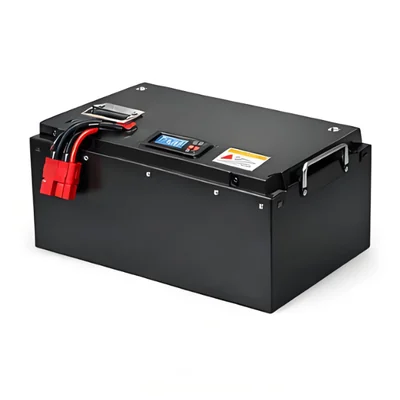
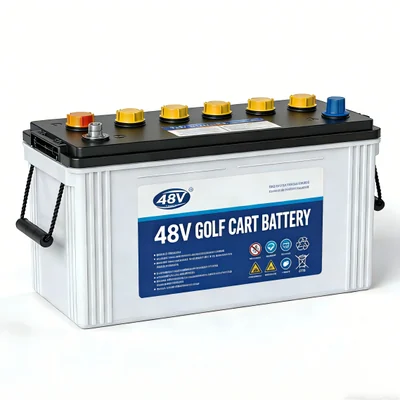
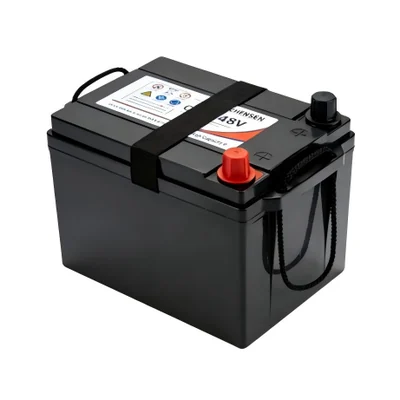
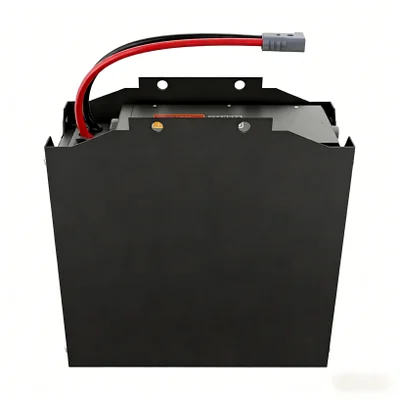


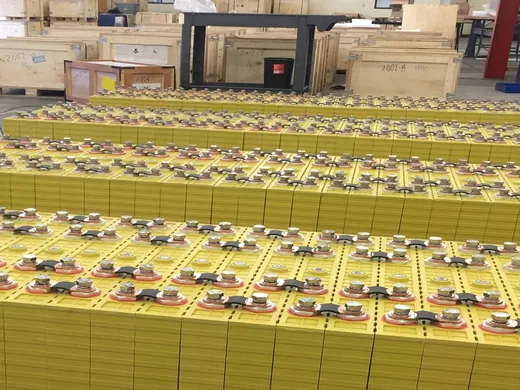

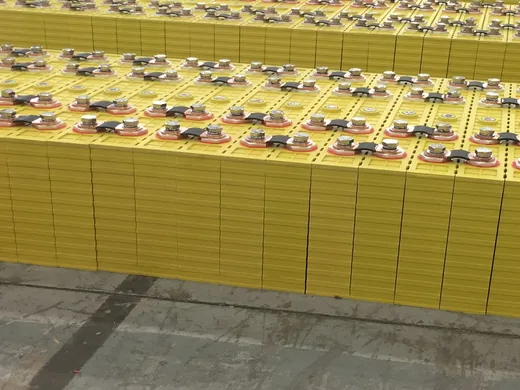
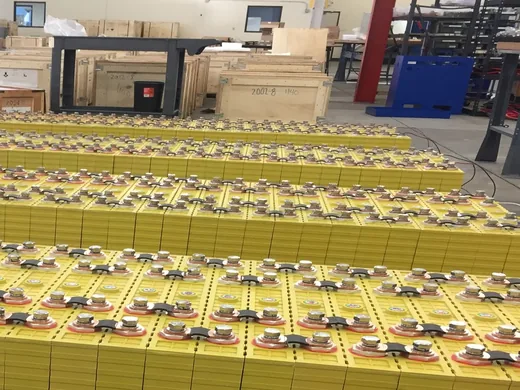
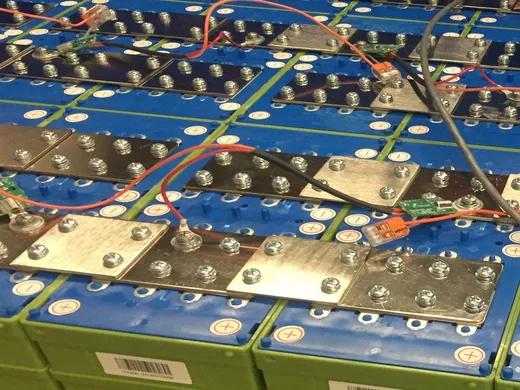

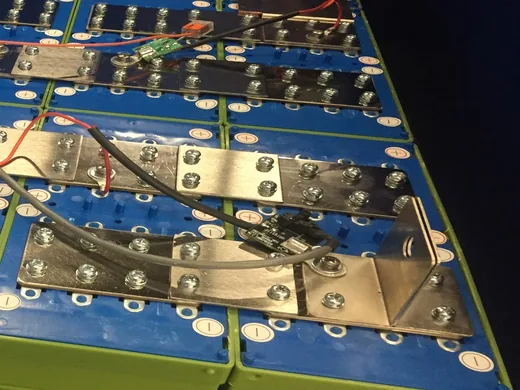
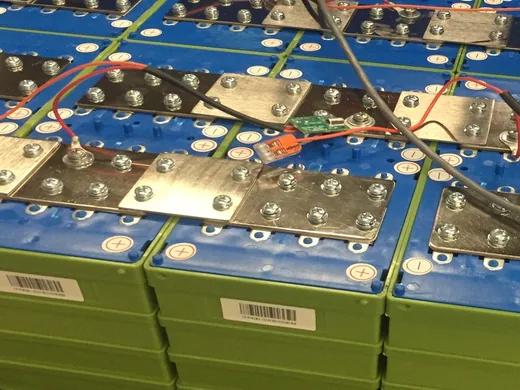


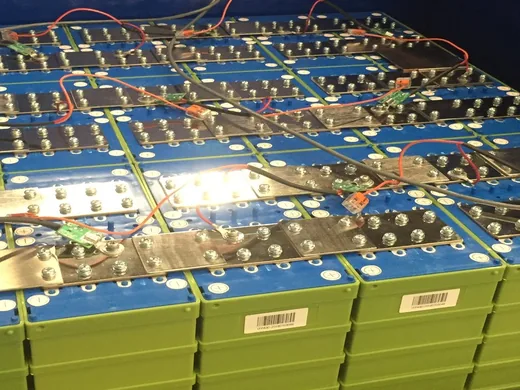

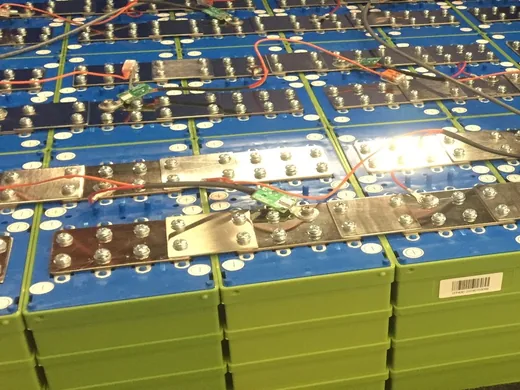
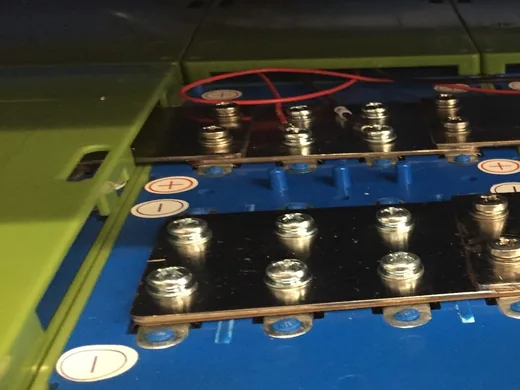
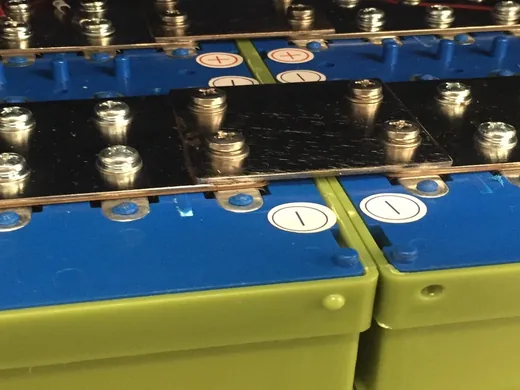
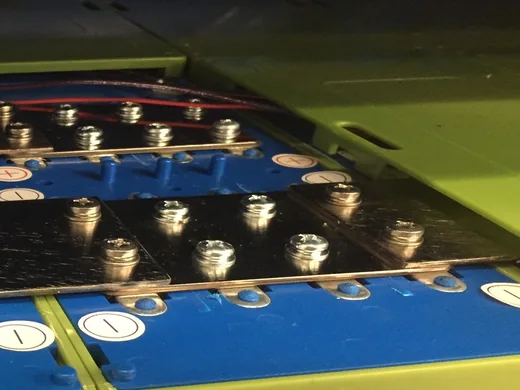
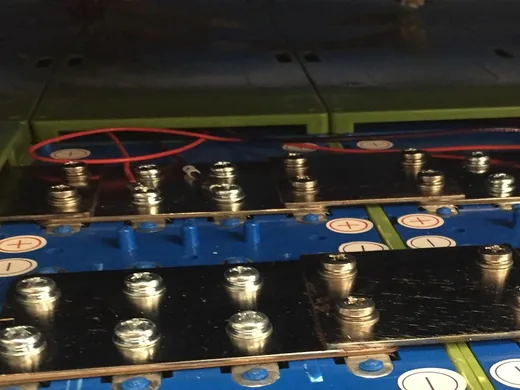
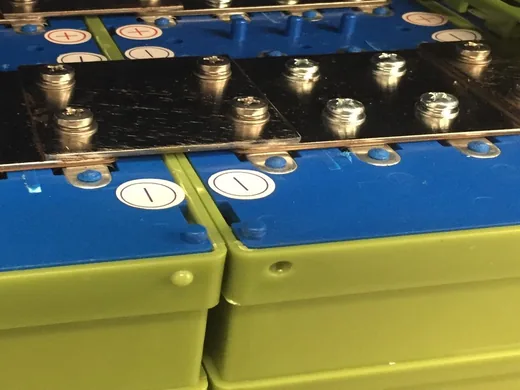





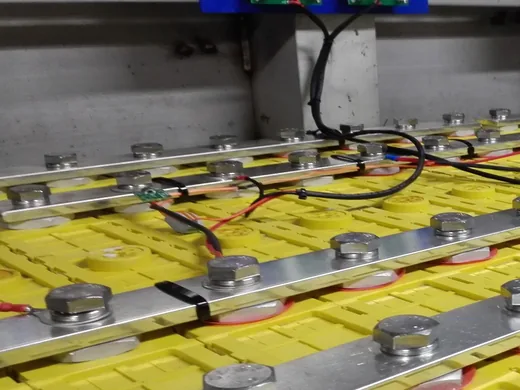
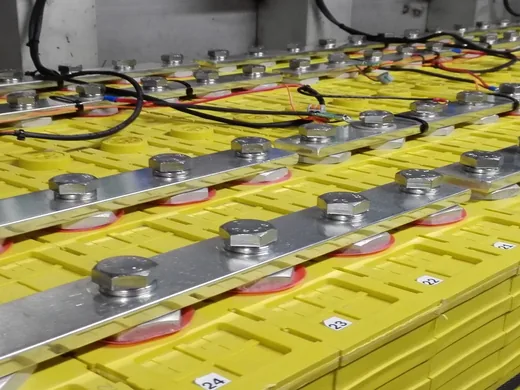
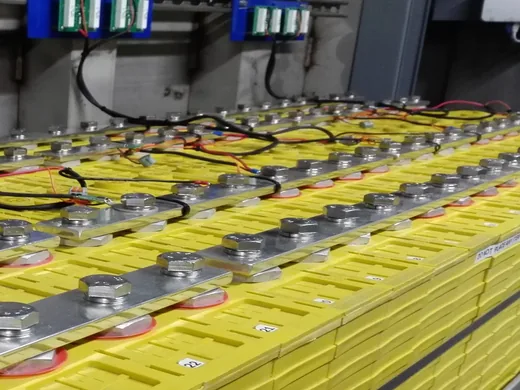
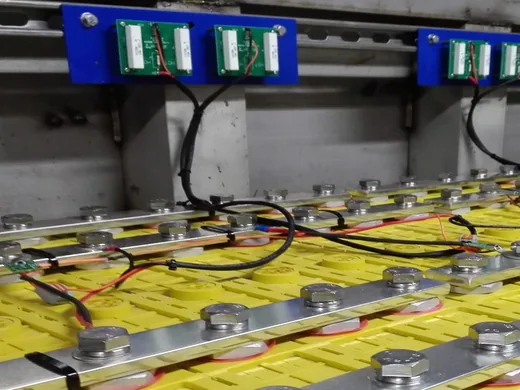
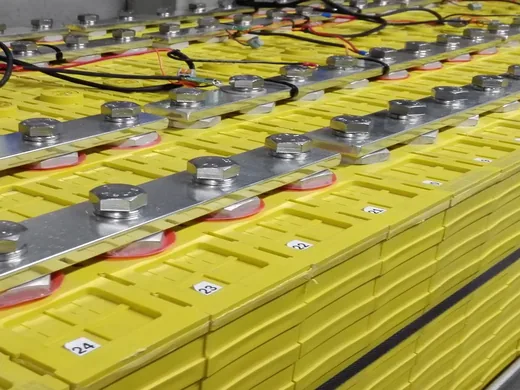
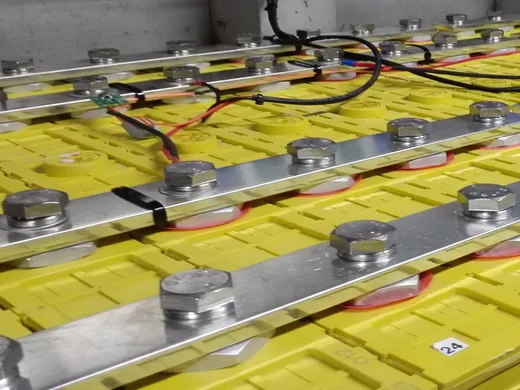



Commercial energy storage is batteries that businesses use to avoid paying high electricity bills.
That sentence explains the concept adequately. The more interesting question is why this market exists at all, and why anyone should care about it now after decades of batteries being too expensive to matter.
The answer has almost nothing to do with technology. The answer is a billing mechanism that most people outside the electricity industry have never heard of.
Demand Charges Are the Whole Business
Walk into any commercial building in America. Find the facilities manager. Ask what keeps them up at night.
Somewhere in the conversation, demand charges will come up. They always do, once the facilities manager trusts that the person asking actually understands electricity billing.
Here is how demand charges work. Commercial electricity bills have two components. The first is the familiar volumetric charge for total consumption, billed in cents per kilowatt-hour. The second is a demand charge for peak power draw during the billing period, billed in dollars per kilowatt based on the highest 15-minute average recorded.
Think about what this means. A manufacturing plant runs steadily at 400 kW most hours. But when the morning shift starts and production lines power up simultaneously, draw spikes to 800 kW for twenty minutes. That twenty-minute spike sets the demand charge for the entire month. At $15 per kW, the spike costs an extra $6,000 that month, regardless of what happens the other 29 days.
The utility's logic makes sense from their perspective. Transmission and distribution infrastructure must be sized for peak load. The capacity has to exist even if it only gets used occasionally. Demand charges recover some of that fixed infrastructure cost from the customers who drive peak demand.

From the customer's perspective, demand charges can be brutal. A cold storage facility with synchronized compressor cycles might pay more in demand charges than in actual energy consumption. The compressors all kick on together after defrost cycles, creating a load spike that persists on the bill all month.
Talk to a facilities manager at a supermarket chain and the frozen food aisle comes up. Defrost cycles run automatically, usually overnight when energy prices are low. But when twenty freezer cases defrost simultaneously, the compressors restart together. The load spike doubles normal draw for an hour. That one hour determines the monthly demand charge.
Some customers have tried behavioral fixes. Stagger equipment startup times. Install variable frequency drives on big motors. Coordinate defrost schedules across refrigeration units. These approaches help but only go so far. A hospital cannot delay CT scans until off-peak hours because the demand charge would be lower.
Storage fixes this problem more completely than behavioral changes can. A battery system monitors building load in real time. When approaching load spike is detected, the battery discharges to supplement grid power. The spike appears smaller on the utility meter. Monthly demand charges drop.
The arithmetic is simple enough that building owners can calculate it themselves without consultants. Monthly demand charge savings times twelve, minus annual equipment cost including financing and maintenance, equals net value. When that number turns positive, storage makes economic sense. When that number is substantially positive, storage becomes an obvious capital allocation choice.
The threshold where economics start working is somewhere around $15 per kW in demand charges. Below that, equipment costs dominate and payback periods stretch too long. Above $20 per kW, the math usually works for buildings with even modest peak-shaving opportunity. Above $25 per kW, storage becomes nearly irresistible for buildings with spiky load profiles.
Industry reports cite numbers like "5 million addressable commercial customers" above relevant demand charge thresholds. These figures appear in vendor presentations and market sizing exercises. Whether they are accurate deserves skepticism. The figures usually originate from utility rate database analysis combined with assumptions about building load profiles. The assumptions could be wrong in either direction.
What seems obvious from conversations with industry participants: every facilities manager facing high demand charges already knows about storage. The concept stopped being novel several years ago. Trade publications, utility programs, vendor outreach, peer conversations at industry events. The information has spread. The decision point for most potential customers is not awareness of storage but rather timing and capital allocation priority.
This matters because commercial storage market growth depends on conversion of aware-but-not-yet-committed customers rather than discovery of customers who have never heard of the concept. The sales process is different. The competitive dynamics are different. The market structure resembles commercial HVAC replacement more than technology adoption curves for new product categories.
The Software Question Nobody Talks About
A commercial storage system contains more software than most buyers realize. Battery management systems monitor thousands of individual cells and make continuous decisions about charging rates, discharge limits, and cell balancing. Power conversion systems require control logic for grid synchronization and response to utility commands. Thermal management systems adjust cooling based on operating conditions and ambient temperature. Dispatch optimization software decides when to charge and when to discharge to maximize economic value.
The quality of this software determines actual project performance more than most buyers appreciate.
Consider battery management. A commercial installation might contain two or three thousand individual cells. Each cell is a separate electrochemical reactor with slightly different characteristics: internal resistance, capacity, aging rate. Manufacturing tolerances create variation. Position within the pack affects thermal exposure and therefore aging. Over hundreds of charge-discharge cycles, these differences compound.
Without active management, weaker cells get pushed harder. They charge to higher voltages and discharge to lower voltages than their neighbors. This stress accelerates degradation, which makes them weaker, which pushes them harder still. The positive feedback continues until weak cells fail entirely and drag down pack capacity.
Battery management software fights this degradation. Real-time monitoring tracks voltage, current, and temperature at the cell level. Balancing algorithms redistribute charge between cells to keep them within acceptable ranges. Electrochemical models estimate remaining capacity and health state. Protection mechanisms trigger when anomalies appear.
The sophistication of these algorithms varies enormously between vendors. Two storage systems using identical cells from the same manufacturer can show 20% capacity divergence after three years if one has better battery management software. This divergence does not show up during commissioning. Fresh packs perform the same regardless of software quality. The difference emerges over years of operation, when the customer discovers their system has degraded faster than expected.
Dispatch optimization presents similar challenges. A storage system must decide when to charge and when to discharge. Simple peak shaving requires predicting load profiles to position the battery optimally for demand charge reduction. Adding arbitrage or grid services requires forecasting market prices and responding to dispatch signals. Adding solar-plus-storage requires managing interactions between generation and storage assets.
Optimization quality directly affects economic returns. A system that mispredicts load patterns might exhaust its stored energy before the actual daily peak, missing the demand charge reduction it was supposed to capture. A system that responds too slowly to market signals might miss arbitrage opportunities or fail to qualify for grid service payments.
Tesla markets Autobidder, its dispatch optimization platform, as a differentiator. Fluence markets its "Fluence IQ" platform similarly. Both companies position software capabilities as sources of value beyond hardware commodities. This positioning reflects recognition that software can create returns that justify premium pricing even as cell and pack costs fall toward commodity levels.
Smaller integrators typically license third-party energy management systems rather than developing proprietary platforms. The quality varies. Some licensable platforms have extensive optimization capabilities developed through years of operational feedback. Others are relatively primitive.
Buyers often focus on hardware specifications because hardware is easier to evaluate. Rated capacity, power, efficiency: these appear on spec sheets and can be compared directly. Software capabilities are harder to assess without technical expertise and operational track records that may not exist for newer vendors.
This creates information asymmetry that sophisticated buyers can exploit and unsophisticated buyers suffer from. A facilities manager evaluating storage for the first time may not know to ask about battery management algorithm sophistication or dispatch optimization methodology. They may accept vendor claims at face value. They may discover years later that their system underperforms because software quality was never evaluated.
January 16, 2025
On the afternoon of January 16, 2025, fire broke out at the Moss Landing battery storage facility on California's coast south of Silicon Valley.
The fire started in Phase 1, a 300 MW array of nickel manganese cobalt batteries manufactured by LG Energy Solution and housed inside a building that had been a turbine hall in the 1950s when Moss Landing was a conventional power plant. By evening, flames shot hundreds of feet into the air. Smoke was visible for miles. Highway 1, the Pacific Coast Highway connecting coastal communities, closed in both directions. Over a thousand residents evacuated. Governor Newsom issued calls for investigation.
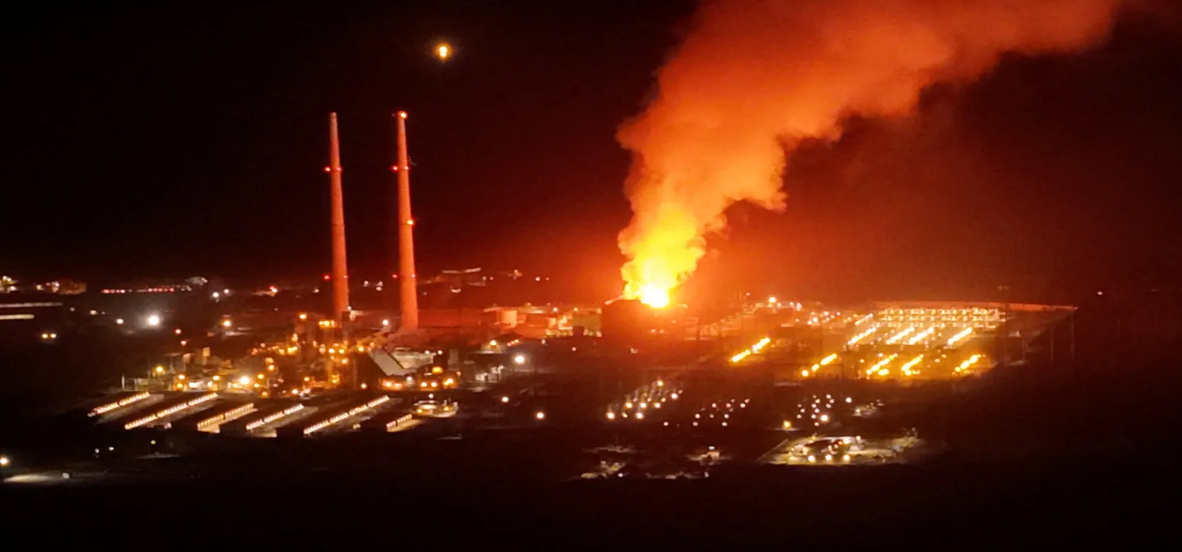
The fire burned for days. Responders did not attempt to extinguish it with water, following protocols developed after earlier battery fires demonstrated that water can react dangerously with certain lithium battery chemistries. Instead, they let it burn while monitoring air quality and protecting surrounding structures.
When the fire finally subsided, most of Phase 1 was destroyed. Roughly 55% of the approximately 100,000 battery modules in that building were damaged beyond recovery, according to EPA documentation from the cleanup effort that continues into 2026.
The investigation into what caused the fire remains ongoing as of this writing. Early reports contained errors, including confusion between the Vistra facility that burned and an adjacent Tesla-owned facility that was unaffected. Some reports incorrectly attributed the fire to Tesla batteries. Preliminary findings suggest a fire suppression system within one of the battery racks failed, allowing the fire to spread, but root cause has not been publicly established.
Moss Landing was not the first battery incident at that location. Phase 1 experienced overheating events in September 2021 and February 2022, both characterized as thermal incidents that did not result in open flames. The adjacent Tesla Elkhorn facility had a single Megapack fire in September 2022 that was quickly contained.
The January 2025 fire was categorically different in scale and consequence.
Monterey County Supervisor Glenn Church called it "a worst-case scenario" and compared it to Three Mile Island, the 1979 nuclear plant incident that effectively killed new nuclear construction in the United States for decades. California Assemblymember Dawn Addis demanded "transparency and accountability" and said she was "exploring all options for preventing future battery energy storage fires."
The Three Mile Island comparison is probably overblown. Nuclear and battery storage have different risk profiles, different regulatory structures, different political valences. But the comparison reflects real sentiment among local officials and community members who lived through evacuation orders and air quality warnings.
Industry response has been swift. Insurance underwriters have pulled back from NMC battery projects or imposed substantially higher premiums. Procurement specifications from utilities and corporate buyers increasingly specify LFP chemistry by name, excluding NMC even in configurations where NMC might have technical advantages.
The California Public Utilities Commission moved within two months of the fire to establish new safety standards for battery storage facilities and increase oversight of emergency response plans.
Whether these reactions are proportionate to the actual risk is debatable.
Moss Landing Phase 1 was unusual in several ways that may not generalize to other battery installations. The building was a repurposed turbine hall from the 1950s, not a purpose-built battery facility. The project predated current fire codes for large-scale battery storage, which were updated multiple times after the Arizona battery explosion in 2019 and subsequent incidents. The battery-in-building configuration is rare in modern grid storage, which predominantly uses outdoor containerized formats that provide physical separation between modules.
One industry analyst noted that Moss Landing was "incredibly unique globally" in its construction, combining legacy building infrastructure with battery technology in ways that created risks distinct from standard modern designs.
The NMC chemistry used in Phase 1 does have different thermal characteristics than LFP chemistry that now dominates the market. NMC thermal runaway onset occurs at lower temperatures, around 200°C versus roughly 400°C for LFP. NMC releases more energy when it fails. But attributing the Moss Landing fire purely to chemistry rather than building design oversimplifies the failure mode.
What seems undeniable: NMC will be much harder to deploy in stationary storage applications going forward, regardless of whether the technical concerns are fully justified by the evidence. Market perception matters. Insurance pricing matters. Procurement preferences matter. NMC may remain viable for electric vehicles where energy density advantages outweigh concerns about thermal runaway. For stationary storage, LFP has effectively won.
The insurance market reaction deserves particular attention because it affects project economics directly.
Before Moss Landing, battery storage insurance was available from multiple carriers at rates that project developers considered manageable, typically adding 1-2% to annual operating costs. Coverage terms varied but generally provided protection against fire damage, business interruption, and liability claims.
After Moss Landing, some insurers exited the battery storage market entirely. Others continued writing policies but imposed new conditions: higher premiums, larger deductibles, chemistry restrictions, site design requirements, operational constraints. NMC projects became particularly difficult to insure at any reasonable price.
The insurance market functions as an informal regulatory mechanism. Even when formal regulations permit certain technologies or configurations, insurance availability and pricing determine what actually gets built. A project that cannot obtain affordable insurance cannot secure project financing. Banks and tax equity investors require coverage as a condition of investment.
This creates a situation where the insurance industry's risk assessment, which may or may not accurately reflect actual risk, shapes technology adoption more than engineering analysis or regulatory requirements.
LFP chemistry has benefited from this dynamic. Insurers appear more comfortable with LFP thermal characteristics, even though the evidence base for relative risk is limited. Few large-scale LFP fires have occurred, but few large-scale LFP projects have been operating long enough to provide statistical confidence about fire rates. The insurance market may be extrapolating from laboratory safety testing and small-sample field experience in ways that prove either overly optimistic or overly pessimistic.
Project developers have adapted by designing around insurance requirements. Outdoor containerized formats with physical separation between units are now nearly universal for new builds, regardless of whether indoor configurations might be more space-efficient in specific applications. Fire suppression systems are specified more aggressively than minimum code requirements. Chemistry selection defaults to LFP unless compelling technical reasons require alternatives.
These adaptations may represent appropriate risk management. They may also represent overreaction to a single dramatic incident that does not generalize to modern storage designs. The industry will discover which interpretation is correct through accumulated operating experience over the coming decade.
The Chinese Price Problem
Tesla claims roughly 40% of the North American commercial and grid storage market. Their Megapack product has become the default specification in many utility procurement processes. The energy division reported 26% gross margins in 2024, higher than the automotive business.
Those numbers represent remarkable achievement. Hardware manufacturing typically trends toward commodity pricing as markets mature and competitors enter. Tesla has maintained premium positioning through vertical integration, software bundling, and brand recognition that gives procurement committees comfort when they lack expertise to evaluate alternatives.
The margin sustainability question looms.
Seven of the ten largest battery storage system integrators globally are Chinese companies. CATL alone commands roughly 35% of global battery pack assembly. BYD, Sungrow, and other Chinese manufacturers are expanding into international markets as Chinese domestic demand growth moderates.
Chinese suppliers can undercut American and European competitors on price by 30% or more for comparable specifications. The reasons are well documented: labor cost advantages, supply chain integration, scale economies from serving the Chinese domestic market, and government support that may not comply with international trade rules.
Federal policy attempts to counter Chinese pricing advantages through a combination of carrots and sticks. The carrot: tax credit bonuses for domestic content, worth roughly 10% of project cost when all requirements are met. The stick: restrictions on components from "foreign entities of concern," which can disqualify projects from certain incentives if they use cells from designated Chinese manufacturers.
The policy arithmetic creates tension. A 10% domestic content bonus does not offset a 30% Chinese price discount. Developers facing that math make rational choices: buy Chinese cells, forfeit the domestic content bonus, still come out ahead on total project cost.
Some industry participants describe this openly. One developer, quoted in trade coverage without attribution, explained: "I can get a 10% adder for domestic content, but domestic cells cost 30% more. The tax credit does not cover the spread. I take the Chinese cells and forfeit the adder."
Policy advocates who want both rapid storage deployment and domestic manufacturing may have to choose. The goals appear incompatible at current cost differentials. Chinese suppliers can maintain margins at prices American manufacturers cannot match while remaining profitable.
Tesla is better positioned than most American competitors because they manufacture at scale. But even Tesla faces pressure as Chinese competitors move upmarket from budget offerings toward products that compete directly on performance and reliability.
Predicting how this plays out requires views on geopolitical scenarios, trade policy evolution, and manufacturing cost changes that extend well beyond the storage market. Tariffs could shift the arithmetic overnight. So could supply chain disruptions from conflict or policy retaliation.
What seems probable: Tesla's 40% market share and 26% margins will not persist simultaneously over a five-year horizon. Either share declines as Chinese competitors take volume, or margins compress to compete on price, or some combination. The specific outcome depends on variables that are difficult to forecast.
What Remains Unknown
Most writing about commercial storage treats the technology as well-understood and the economics as settled. That framing understates real uncertainty across multiple dimensions.
Battery degradation projections are based on extrapolation from accelerated laboratory testing, not operational field data over actual project lives. Storage projects are financed with 15-year assumptions about capacity fade and cycle life. The technology has not existed at commercial scale for 15 years. Actual year-10 and year-15 capacity could be better or worse than projections suggest.
The testing methodology creates particular uncertainty. Accelerated testing subjects cells to elevated temperatures and aggressive cycling to simulate years of aging in months. Extrapolation assumes the failure mechanisms observed during accelerated testing match those that occur during real-world operation. This assumption may or may not be correct.
Field data that does exist comes primarily from grid-scale installations rather than commercial behind-the-meter systems. Operating patterns differ. Duty cycles differ. Thermal environments differ. Whether grid-scale degradation data generalizes to commercial systems is an open question.
Some vendors offer performance warranties that guarantee minimum capacity at specific points in project life. These warranties provide contractual protection but do not eliminate physical uncertainty. A vendor might honor warranty obligations through cash settlement rather than equipment replacement if actual degradation exceeds projections. The warranty protects economic value to some degree but does not ensure the battery performs as originally expected.
Wholesale market revenue assumptions have proven unreliable in the markets where they can be tested. ERCOT in Texas looked like an ideal arbitrage market through 2022 and 2023. Price volatility created opportunities. Battery revenues were high. Then capacity flooded in, attracted by those same high revenues. By 2024, ERCOT battery revenues from ancillary services and arbitrage had collapsed, falling roughly 78% from the prior year according to industry analyses. Projects financed on 2022 revenue assumptions are now struggling with returns far below expectations.
California appears to be following a similar pattern. So does NYISO. The dynamic is straightforward: storage capacity enters markets, competes for the same revenue streams, and compresses the spreads that made those revenue streams attractive in the first place.
Projects that survive this pattern are those that underwrite conservatively. Peak shaving revenue from demand charge reduction is predictable because it depends on regulated tariff structures rather than market dynamics. Everything else, arbitrage, ancillary services, capacity payments, belongs in upside scenarios rather than base case projections.
Long-duration storage, defined as anything requiring more than 8 hours of discharge, remains commercially unproven. Lithium-ion economics work well for 2-4 hour systems. Beyond 8 hours, lithium costs become prohibitive because the battery capacity required scales linearly with duration.
Form Energy, backed by over $1.2 billion in venture and strategic funding, claims its iron-air batteries will deliver 100-hour discharge duration at roughly one-tenth the cost of lithium for equivalent storage. The chemistry is conceptually simple: iron rusts (oxidizes) during discharge, releasing electrons; the rust is reduced back to iron during charging. Iron is cheap and abundant.
Form is building an 85 MW project in Maine that, upon completion, will be the largest battery storage facility in the world by energy capacity due to its multi-day duration. Additional projects totaling approximately 14 GWh have been announced with partners including GE Vernova, Great River Energy, and Georgia Power.
If iron-air works at commercial scale with claimed economics, applications that lithium cannot economically serve become addressable. Grid resilience during multi-day weather events. Seasonal renewable energy balancing. Industrial backup requiring more than overnight duration.
Iron-air has been attempted before without commercial success. Form believes its engineering innovations solve the problems that plagued earlier attempts. Whether that belief proves correct will be tested in Maine and subsequent projects over the coming years.
Interconnection queue backlogs represent a bottleneck that could constrain growth regardless of economics or technology. Federal data shows over 2,500 GW of generation and storage capacity sitting in interconnection queues, waiting for studies and approvals that stretch into multi-year timelines. Historical completion rates, meaning the percentage of projects that enter queues and ultimately reach commercial operation, run somewhere between 10% and 20%.
FERC Order 2023 attempted procedural reforms: cluster studies rather than first-come-first-served processing, financial deposits to discourage speculative applications, deadlines with penalties for transmission owner delays. Whether these reforms clear the backlog remains to be seen. The underlying problem is physical infrastructure inadequacy, which procedure cannot solve.
Supply chain concentration in China creates geopolitical vulnerability. China controls roughly 70% of global lithium processing and over 85% of certain battery component manufacturing stages. Domestic American manufacturing is ramping but remains years away from meaningful scale.
A supply chain disruption from conflict, policy retaliation, or natural disaster could spike battery costs overnight with no ready alternative supply. This risk is difficult to quantify and impossible to hedge fully. It exists as background uncertainty for every storage project with multi-year development timelines.
Ending Without False Confidence
Commercial storage has reached a stage where the technology works, the economics make sense for identifiable applications, and policy support exists to accelerate deployment beyond pure market economics.
Growth will continue. Costs will continue falling. Some percentage of the 5 million or however many commercial customers facing high demand charges will install storage.
But projections of explosive growth assume favorable outcomes across multiple uncertain variables: stable policy support, resilient supply chains, manageable interconnection timelines, technology performing as expected over project lives measured in decades.
Some of those assumptions will prove wrong. Which ones and to what degree cannot be predicted with confidence.
For building owners evaluating storage, the relevant question is local and specific. What are the demand charge rates? What does the load profile look like? What incentives are available? What can a contractor actually deliver at what price with what warranty terms? Generic industry analysis provides context but does not answer these questions.
The evaluation process has become easier over time. Five years ago, assessing storage economics required hiring consultants, collecting months of interval meter data, and building custom financial models. Now software platforms automate much of this analysis. Upload utility bills, receive a preliminary assessment within hours. These tools are imperfect but lower the barrier to initial evaluation.
The harder question is contractor selection. Storage is a young industry with many participants. Some contractors have extensive experience, strong warranties, and track records of successful projects. Others are new entrants without operational history. Evaluating contractor quality requires industry knowledge that most building owners lack.
This creates agency problems. Building owners rely on contractor representations they cannot independently verify. Contractors have incentive to oversell capabilities and understate risks. The information asymmetry favors sellers over buyers.
Due diligence practices that protect buyers include: requiring performance guarantees backed by creditworthy parties, specifying liquidated damages for capacity shortfalls, demanding references from comparable completed projects, and negotiating warranty terms that cover not just equipment defects but actual performance relative to specifications.
Many buyers skip these protections because they add negotiation complexity and may increase quoted prices. They then discover years later that their systems underperform and their recourse is limited.
For investors considering the sector, the growth is real but so are execution risks. The winners will be those who underwrite conservatively, maintain supply chain flexibility, and resist the temptation to chase marginal projects on optimistic revenue assumptions. The losers will be those who mistake a favorable macro environment for protection against project-level mistakes.
The capital markets have matured. Five years ago, storage was too novel for most institutional lenders. Today, standardized underwriting frameworks exist. Tax equity investors have figured out how to structure deals that efficiently capture federal incentives. Debt providers have grown comfortable with storage collateral.
This maturation is positive for the industry but creates its own risks. Standardized underwriting tends toward standardized assumptions. When those assumptions prove wrong across many projects simultaneously, the consequences propagate through interconnected financial structures. The 2008 mortgage crisis offers a cautionary analogy, though the scale and complexity differ substantially.

Storage is becoming part of how commercial buildings interact with the electricity grid. Whether that constitutes a revolution or merely an incremental evolution depends on perspective and timeline. Over a decade, the change will be substantial. Within any given year, it will feel gradual.
The policy environment adds urgency for those who want to participate. Federal tax credits exist through at least 2032, with phase-downs scheduled after that. State programs have finite funding. The window of maximum policy support is open now and will eventually close.
Some observers argue that storage economics are strong enough to sustain deployment even without subsidies. That may prove true in the most favorable applications. For marginal projects, subsidy removal would tip economics from viable to unviable. The volume implications of policy changes are significant even if the directional trend remains positive.
The honest assessment: storage is a real market serving real needs, growing at rates that exceed most infrastructure categories, supported by policy that may or may not persist, facing risks that may or may not materialize. Anyone claiming more certainty than that is either selling something or lacks understanding of the complexity involved.
That is probably the most accurate conclusion, even if it lacks the clean narrative arc that readers expect and writers prefer to deliver.