Cost Comparison Between Lithium Batteries and Lead-Acid Batteries
Marcus Chen
January 11, 2025
Initial Upfront Cost
As of early 2026, upfront prices for common deep-cycle batteries (e.g., 12V 100Ah models used in solar, RV, marine, or off-grid applications) have converged significantly due to falling lithium prices.
Example total energy delivered over life (12V 100Ah, conservative DOD):
LiFePO4: 4,000 cycles × 1.0 kWh usable = 4,000 kWh. At $250: ~$0.0625 per kWh delivered.
AGM lead-acid: 800 cycles × 0.6 kWh usable = 480 kWh. At $250: ~$0.52 per kWh delivered.
Lithium TCO is typically 64–75% lower than AGM/Gel lead-acid.[Source]
Large-Scale Storage and EV Applications
In 2025–2026, lithium-ion battery pack prices averaged $108/kWh (down 8% from 2024), expected to fall further in 2026, widening the gap with lead-acid.[BloombergNEF Report]
Start with depth of discharge. A 100Ah lead-acid battery does not give you 100Ah. Discharge past 50% and you accelerate sulfation. Lead sulfate crystals form on the plates during every discharge, normally reversible during charging. But deep discharge produces larger, denser crystals. These resist reduction. They accumulate. Your 100Ah battery becomes 80Ah, then 60Ah. The spec sheet number is a lie the moment you need more than half of it.
The electrochemistry is worth understanding because it determines why the economics are what they are. During discharge, PbO2 at the positive plate and spongy Pb at the negative plate both convert to PbSO4. Charging reverses the reaction. At shallow discharge, the sulfate crystals are small, loosely attached, easy to reduce back to active material. Deep discharge changes the morphology. Crystals grow larger. They recrystallize into more stable forms. The overvoltage required to break them down exceeds what standard chargers deliver. They stay.
Temperature accelerates the crystallization. A battery that tolerates occasional deep discharge at 25°C degrades rapidly at 35°C. The activation energy for crystal growth follows Arrhenius kinetics. Warmer climates are hostile to lead-acid in ways that spec sheets, generated in climate-controlled labs, do not capture.
Modern energy storage systems represent a shift in how we capture and deploy electricity.
Lithium has no equivalent failure mode. LFP cathodes use an olivine crystal structure. Lithium atoms intercalate into the lattice during charge, deintercalate during discharge. The crystal structure accommodates this without damage. No phase change at the electrode surface. No irreversible precipitation. After 3000 cycles, the cathode looks structurally similar to day one.
Lithium degradation happens through other mechanisms: SEI layer growth on the anode, lithium inventory loss, electrolyte decomposition. These proceed slowly, predictably, linearly with cycle count. Nothing like the sudden capacity cliff when sulfation crosses a threshold in lead-acid.
So to get 10kWh usable storage: 20kWh lead-acid nameplate, or 12kWh lithium nameplate. Already the math shifts before you compare prices.
Then cycle life. The brochure says 500 cycles for lead-acid, 4000 for lithium. These are laboratory numbers. Field performance diverges, and not randomly. Temperature hurts lead-acid far more than lithium. The Arrhenius relationship cuts lead-acid cycle life in half for every 10°C above 25°C. Phoenix, Singapore, Dubai, anywhere with summer heat: your 500 cycles become 250. Maybe 125 in an uncooled warehouse. Lithium holds rated performance to 45°C.
Maintenance matters too. Those 500 cycles assume monthly equalization charging, regular electrolyte checks, terminal cleaning. Skip any of it and you get 300 cycles, possibly 200. Lithium needs nothing. Keep the BMS powered. Done.
Real-world outcome: lead-acid delivers 40-60% of rated cycles, lithium delivers 80-100%. The 8x theoretical advantage becomes 10-15x in practice.
Efficiency compounds the gap invisibly. Lead-acid round-trip efficiency runs 80-85%. Lithium runs 95-98%. The difference hides in electricity bills, not procurement invoices. A 10kWh system cycling daily at $0.12/kWh loses an extra $70/year to lead-acid inefficiency. Over a decade, $700. For a battery that cost $1500, almost half the purchase price leaks away as heat.
Where does the 15-20% go?
Several places. The overvoltage required to drive the Pb/PbSO4 reaction at useful rates dissipates as heat. Internal resistance in plates, separators, and electrolyte converts current to heat. Gassing near full charge, when water electrolyzes into H2 and O2, represents energy leaving the battery as gas rather than stored chemically. Electrolyte stratification, where acid concentration varies with height in the cell, increases resistance and reduces efficiency.
Lithium batteries face some of these losses at smaller magnitudes. Lithium-ion reactions operate closer to equilibrium potentials. Electrode materials have higher electronic conductivity. No gas evolution under normal operation. BMS controls charging precisely to avoid inefficient regions of the charge curve.
The efficiency loss also generates heat that must be removed. A lead-acid installation running 85% efficiency while cycling 10kWh daily dumps 1.5kWh per day into the battery room. Across a year, 550kWh. Air conditioning to remove that heat consumes additional electricity, compounding the penalty.
Nobody tracks this. It just happens.
The price argument used to be simple: lead-acid costs less upfront, and that premium buys you lower lifecycle cost with lithium. The premium has evaporated.
BloombergNEF 2025 data: lithium-ion pack prices average $108/kWh globally. LFP chemistry hits $81/kWh. Storage applications see $70/kWh, with Chinese suppliers quoting $50/kWh for volume orders. Lead-acid sits at $100-200/kWh, same as five years ago, same as ten years ago.
The curves crossed. Lithium costs the same or less than lead-acid upfront in most segments. Before you factor in any lifecycle advantage.
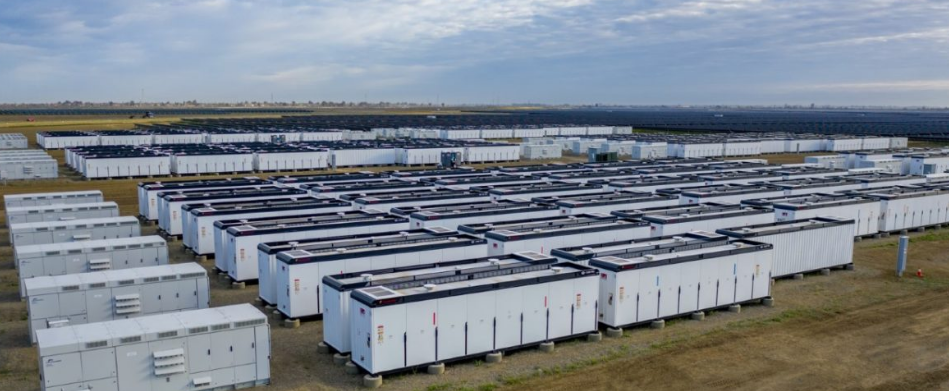
Grid-scale energy storage installations have overwhelmingly chosen lithium technology, driven by superior lifecycle economics and Wright's Law cost reductions.
Wright's Law explains the divergence. Every cumulative production doubling drops lithium costs 20-28%. Production doubled repeatedly through the EV boom: 30GWh in 2014 to over 1000GWh in 2024. Each doubling came faster than the last. Lead-acid, manufactured for 165 years, has no remaining doublings to capture. Its cost tracks lead commodity prices, which follow mining cycles rather than learning curves.
Understanding Wright's Law matters because it predicts where costs go next. The law operates on cumulative production, not calendar time. When markets are small, doublings take years. When markets explode, doublings compress into months. The EV market provided that explosion.
A single Tesla Model 3 contains 60kWh of batteries. A single iPhone contains 12Wh. One electric vehicle equals 5000 phones. The smartphone market drove initial lithium scale. EVs overtook phones around 2017 and have dominated the trajectory since.
Lead-acid cannot replicate this dynamic. Cumulative production is already astronomical after a century of automotive starting batteries. Doublings would require demand growth that no application can provide. And lead-acid demand is contracting as applications migrate to lithium. There is no scenario where Wright's Law helps lead-acid. There are scenarios where reverse scale effects hurt it.
The gap will widen. Projections put lithium at $32-54/kWh by 2030. Lead-acid will still be $100-200/kWh because no process innovation can reduce the mass of lead per kWh, and lead is dense and lead costs money.
Some projections go further. If production continues at current growth rates, achieving roughly 8 doublings by 2030 with each doubling dropping costs 25%, the endpoint is cell costs around $8/kWh. Packs below $20/kWh. At that price point, battery storage becomes so cheap it changes the economics of the entire electricity grid. Lead-acid becomes irrelevant not just for batteries but possibly as a recycled material source as demand collapses.
Not all lithium participates equally in the cost collapse.
NMC cathodes contain nickel ($15,000/ton), cobalt ($30,000/ton), lithium ($15,000/ton). Material costs floor around $40-60/kWh regardless of manufacturing efficiency. And the supply chains carry risk. Nickel concentrates in Indonesia and the Philippines. Cobalt concentrates in the Democratic Republic of Congo, with well-documented supply chain concerns. Price volatility is high. Geopolitical exposure is real.
LFP cathodes contain iron ($100/ton), phosphate ($200/ton), lithium ($15,000/ton). The non-lithium materials cost nearly nothing. Floor sits at $10-15/kWh. Iron and phosphate are among the most abundant materials on Earth. Supply chains are stable. Price volatility is minimal.
Chinese manufacturers understood the asymmetry early and bet accordingly. BYD's Blade Battery redesigned cell geometry to eliminate module-level packaging, cutting costs beyond cell-level improvements. CATL pushed energy density to 200Wh/kg, closing the range gap that had historically favored NMC. By 2024, BYD quoted LFP cell costs at $44/kWh.
That number deserves attention. $44/kWh for cells approaches what NMC batteries pay just for cathode materials. LFP has won on cost and competes on performance for most applications.
At 160Wh/kg, LFP could not compete with NMC at 250Wh/kg for vehicles where range anxiety drove purchasing. At 200Wh/kg, LFP supports 400km range on a single charge. Most drivers do not need more. For the premium segment that does, NMC remains available at a price premium. For everyone else, LFP.
For stationary storage, energy density never mattered anyway. Buildings do not care what the battery room weighs. Grid operators care about cost per kWh and cost per cycle. LFP dominates on both. Nearly 100% of new grid storage installations globally use lithium, predominantly LFP.
Maintenance costs get buried in operating budgets where nobody connects them to the original procurement decision.
Lead-acid maintenance is not optional. Skip it and cycle life collapses. The requirements: electrolyte level checks and deionized water additions for flooded cells, monthly equalization charging, terminal corrosion cleaning, cell voltage monitoring. Budget 2-4 hours monthly for any serious installation.
Also: a ventilated battery room, because charging releases hydrogen. At 4% concentration hydrogen becomes explosive. Battery rooms need forced ventilation, explosion-proof electrical fixtures, gas detection alarms. The real estate cost in dense urban areas can exceed the battery cost.
Also: safety equipment, because sulfuric acid. Gloves, goggles, face shields, neutralizing agents, emergency wash stations. Training on acid handling. Incident reporting protocols.
Also: trained technicians, increasingly scarce as the technology fades from new installations. The labor pool is aging. Young technicians learn lithium. Lead-acid expertise commands premiums and becomes harder to source each year.
Also: hazardous waste handling for spent batteries. Lead-acid recycling is mature and economical, which helps on disposal cost. But the batteries still require licensed transport, regulatory paperwork, chain-of-custody documentation.
Lithium maintenance: annual visual inspection. That's it. No liquids to check. No corrosive acid. No explosive gas. No specialized training. No dedicated room beyond reasonable fire safety provisions.
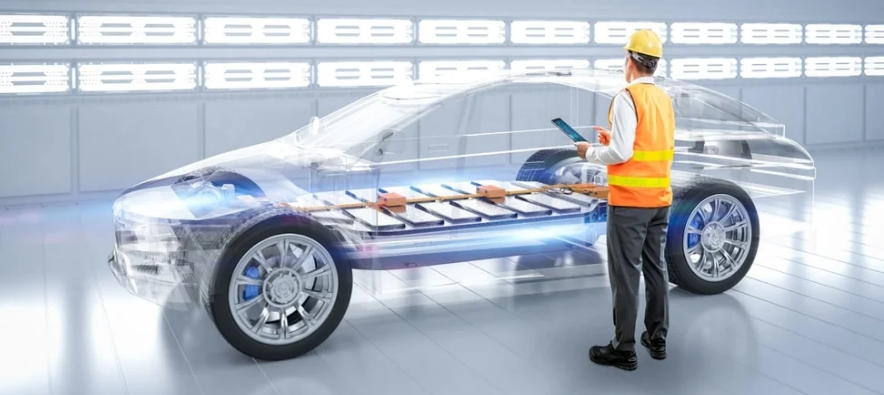
The electric vehicle has accelerated lithium battery production, driving unprecedented cost reductions through Wright's Law.
The labor cost difference alone often exceeds the purchase price difference within two years. A 100kWh lead-acid installation might see $3000-5000/year in maintenance labor. The same capacity in lithium sees perhaps $200/year in inspection time. Over a decade, $28,000-48,000 in labor savings, on a system that might have cost $10,000-15,000 to purchase.
Temperature sensitivity creates geography-dependent economics that procurement analyses typically ignore. Lead-acid lifespan halves for every 10°C above 25°C. A 100kWh installation in Singapore or Miami needs climate control or accepts accelerated degradation. Climate control for that installation runs 5kW continuous cooling, perhaps $4000/year in electricity. Over ten years, $40,000 in hidden costs attributed to "facilities" rather than "batteries."
LFP maintains rated performance to 45°C. Natural ventilation suffices in most climates. In truly hot environments, modest ventilation handles the load. The climate control infrastructure that lead-acid requires simply does not exist for lithium in most applications.
Daily cycling applications are already decided. Residential solar storage, commercial demand management, grid frequency regulation: lithium everywhere, lead-acid nowhere. Daily cycling destroys lead-acid in 1-2 years. A 10kWh lead-acid system cycling daily exhausts 400 cycles in 27 months, then needs replacement. Repeat four times over a decade: $6000 in batteries alone, ignoring labor. A lithium system lasts the full decade on one battery at lower purchase price.
The numbers are stark enough that the analysis barely requires calculation. Daily cycling is lithium's territory. Full stop.
UPS and backup power looks closer but still favors lithium for any installation planning to exist in five years. Lead-acid calendar life runs 3-5 years regardless of cycling. Replacement scheduling drives cost even when the batteries rarely discharge. Lithium lasts 10-15 years. Data centers have shifted to lithium UPS because the replacement cost savings at megawatt scale dwarf any purchase premium.
The UPS transition is interesting because it happened in the segment where lead-acid's low cycling use case should have been strongest. But calendar life matters. A data center with 20-year facility planning horizons faces 4-6 lead-acid replacements versus 1-2 lithium replacements. At megawatt scale, each replacement costs millions in batteries plus labor plus downtime risk. The math overwhelms the purchase price difference.
Industrial motive power illustrates how battery economics extend into productivity. Lead-acid forklift batteries need 8 hours charging plus 8 hours cooling per cycle. Two-shift warehouses need two battery sets per forklift, dedicated swapping equipment, trained swap crews, 15-30 minutes of downtime per swap. Lithium accepts opportunity charging during breaks. One battery per forklift, no swapping infrastructure, 85% equipment utilization instead of 60%. The productivity gain often exceeds the direct cost savings.
A warehouse operations manager calculating forklift battery ROI needs to include not just battery costs but forklift utilization, labor for battery swaps, floor space for charging infrastructure, and the capital tied up in extra battery sets. When all factors enter the calculation, lithium payback often falls under 18 months.
The same dynamic plays out in AGVs and automated warehouses. Opportunity charging fits naturally into automated workflows. Battery swapping does not.
Where does lead-acid still make sense?
Truly extreme cold. Lithium needs heating below -20°C because lithium plating during cold charging damages the anode. Lead-acid accepts charge at -30°C. For unheated arctic installations, polar research stations, remote northern infrastructure, lead-acid may be the only viable option. This represents a tiny fraction of global battery demand.
Emergency backup systems that discharge once annually and face replacement in 2-3 years anyway. If the installation will be decommissioned before lithium's lifecycle advantage manifests, upfront cost wins. Short-term deployments, temporary facilities, equipment with known short remaining service life.
Severely cash-constrained organizations trading higher lifetime cost for lower immediate expenditure. This is a financing decision, not a technology decision. The tradeoff is explicit: pay more later to pay less now. Sometimes organizational cash constraints make this rational even when lifecycle analysis does not.
These categories shrink each year as lithium prices fall. The cold category was never commercially significant. The short-term category is small by definition. The cash-constrained category converts to lithium as purchase prices equalize.
Sodium-ion batteries approach commercialization, projected 2026-2028. Sodium abundance exceeds lithium 1000x. Sodium carbonate costs $300/ton versus lithium carbonate at $15,000/ton. Manufacturing uses lithium-ion equipment with minor modifications.
Energy density around 160Wh/kg already, comparable to early LFP. Cold performance exceeds lithium, charging normally at -20°C. The chemistry uses Prussian blue analogs for cathodes, hard carbon for anodes. Neither material involves scarce elements.
CATL and BYD have announced production lines. First commercial volumes expected 2026.
When sodium-ion reaches scale, the material cost floor drops below $30/kWh for packs. For stationary storage where energy density does not matter, sodium-ion may undercut even LFP while matching lifecycle performance.
For lead-acid, sodium-ion represents extinction. A chemistry with lithium's lifecycle advantages and lead-acid's cold tolerance at near-zero material cost leaves no scenario where lead-acid makes economic sense. Nothing.
Lead-acid production will contract. Not slow growth. Actual contraction.
EVs eliminate starting batteries, the largest lead-acid market. Internal combustion vehicles use 12V lead-acid for starting, lighting, ignition. EVs do not. As EV penetration grows, starting battery demand falls proportionally. Storage and motive power migrate to lithium. Grid storage is already lithium. Forklift manufacturers increasingly offer lithium standard. Remaining applications cannot sustain current volumes.
Manufacturing investment has already shifted: no major producer builds new lead-acid capacity. Plants close or convert. Industry employment shifts.
Falling volumes raise unit costs as overhead spreads thinner. Fixed costs (equipment, facilities, engineering, compliance) divide across fewer batteries. Environmental compliance costs rise independently as lead regulations tighten.
The CRT monitor parallel applies. CRT monitors remained available long after flat panels dominated, but prices rose rather than fell as manufacturers exited. A shrinking supplier base with reduced competition charges more, not less. Lead-acid may follow the same path.
Organizations choosing lead-acid today should consider whether replacement supply will exist at reasonable prices in ten years. Lithium supply is guaranteed by scale and growth. Lead-acid supply is not.
The calculation is straightforward.
Usable capacity: nameplate times depth of discharge (50% lead-acid, 80-90% lithium).
Lifetime energy: usable capacity times realistic cycle count times efficiency.
Total cost: purchase plus replacements plus installation labor plus maintenance labor plus climate control energy.
Cost per kWh delivered: total cost divided by lifetime energy.
A 10kWh lead-acid system at $150/kWh with 50% DOD, 400 field cycles, 82% efficiency delivers 1640kWh lifetime. Purchase cost alone: $0.91/kWh delivered.
A 10kWh LFP system at $100/kWh with 80% DOD, 4000 cycles, 96% efficiency delivers 30,720kWh lifetime. Cost: $0.033/kWh delivered.
Lead-acid costs 28x more per delivered kWh before maintenance, before climate control, before replacement labor.
Why do organizations keep buying lead-acid for applications where lithium saves money?
Procurement optimizes for purchase price because procurement budgets measure annual spend, not lifecycle cost. The person approving the PO does not pay the electricity bill or the maintenance labor or the replacement in year five.
Technical staff who understand battery economics lack purchasing authority. Purchasing staff who have authority lack technical understanding.
Vendor relationships create switching costs. Procurement knows the lead-acid suppliers, their lead times, their contracts. Lithium means qualifying new vendors, learning new supply chains.
These are organizational failures, not analytical errors. The battery market is transitioning fast enough that legacy frameworks produce especially poor outcomes.
The question is not which chemistry wins on economics. That is already answered. The question is how long until procurement processes incorporate the answer.