72V/80V LFP Battery — Our Journey
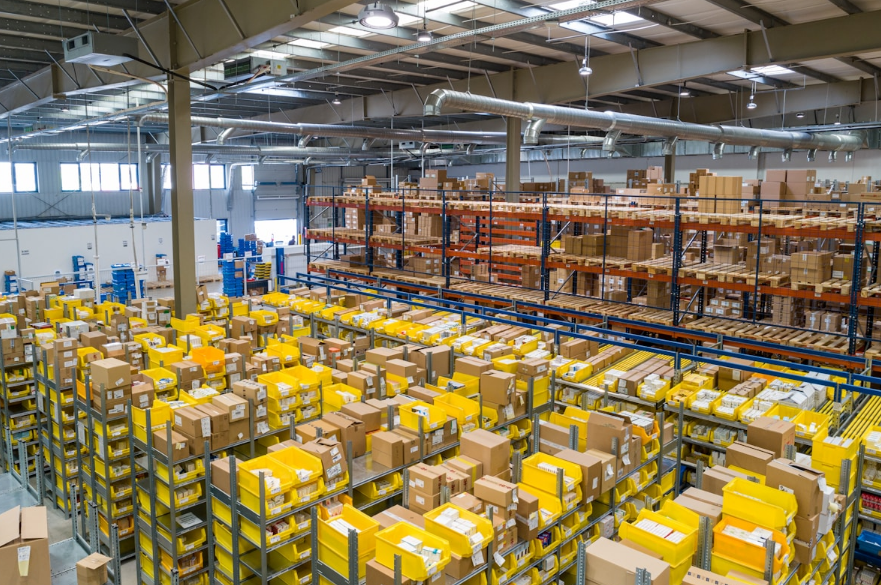
Battery manufacturing facility
2009 Company Founded
38 Employees
65% Revenue from 72V/80V
5 Years In LFP Batteries
🏭
3,000 Monthly Capacity
💰
40M+ Annual Revenue (¥)
72V-80V Core Products
🔋
50-400Ah Capacity Range
🚀

How We Started

Our company started the battery business in 2009. Back then, we mainly made lead-acid batteries, supplying electric tricycles and low-speed electric vehicles. Our factory was in Changxing, Zhejiang — we rented a 1,200 square meter facility with 12 employees.

Profit margins on lead-acid batteries were razor thin. A 48V20Ah battery pack had a factory price of 380 yuan, and we could make about 40 yuan on it. But the payment cycle was long — dealers typically required 60-day terms, some even 90 days. In 2011, we almost went under due to cash flow issues.

Electric vehicle trade show

In 2014, lithium batteries started appearing in the market. I attended an electric vehicle exhibition in Tianjin and saw several companies promoting lithium iron phosphate batteries. The price was more than three times that of lead-acid, but the weight was only one-third, and they claimed cycle life of over 2,000 times. I stood at the exhibition for an entire day, and on my way back, I couldn't stop thinking about this.

🔄

The Transition to Lithium

In 2015, we decided to transform and make lithium batteries. We invested 800,000 yuan in equipment and spent another 300,000 yuan to hire two engineers. Our first product was a 48V LFP battery pack, supplying a local electric vehicle manufacturer.

Only after we started did we realize that lithium batteries and lead-acid are completely different things. The BMS was the biggest headache. Our first batch of products shipped out, and within three months, we had an 8% return rate. The main issue was a defect in the balancing circuit design, causing the voltage differences between cells to grow larger and larger. Customers called to yell at us, and I could only drive out myself to handle the after-sales service.

From 2016 to 2018, we were basically paying tuition. We changed BMS solution providers three times, revised the PACK process countless times, and even switched cell suppliers twice. I lost 15 pounds during those years.

Battery cells
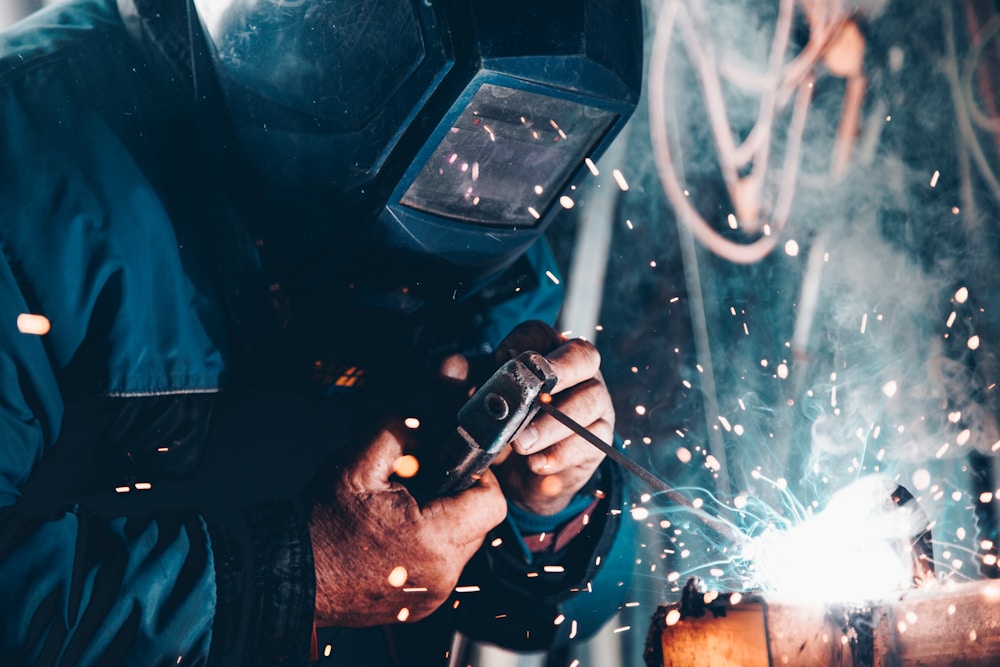
Battery manufacturing
Electric vehicle
💡
🎯

The Turning Point — 72V

Something happened in 2019. A customer who made elderly mobility scooters found us and asked if we could make 72V LFP batteries. He said their vehicles originally used lead-acid batteries with only 60km range, and customers kept complaining. He wanted to switch to lithium but had asked several manufacturers — either they didn't make 72V, or the price was too high.

72V is not a mainstream specification. The market has mostly 48V and 60V; demand for 72V is small, and few manufacturers are willing to make it. We hadn't made it before either.

But I did some calculations. A 72V battery pack requires 24 cells in series, 60V needs 20 in series, and 48V needs 16 in series. The more cells in series, the more complex the BMS, and the higher the cost. Small factories don't want to make it, and big factories think the volume is too small. This might actually be our opportunity.

Voltage Specifications Comparison Technical
48V Battery Pack 16 cells in series
60V Battery Pack 20 cells in series
72V Battery Pack 24 cells in series
80V Battery Pack 25-26 cells in series

We spent four months developing the 72V product. During this time, we encountered a problem: there were very few ready-made 24-series BMS solutions on the market. The BMS manufacturer we found said customization was needed, with a minimum order of 5,000 units, and the unit price would be 30% higher. At that time, I only had orders for 800 battery packs.

The Decision
Developing Our Own BMS
In the end, I made a decision — develop the BMS ourselves. Hired a hardware engineer, and from R&D to prototyping to testing, it took about five months total. The first version had problems — the charging cutoff voltage wasn't accurate. The second version improved, but low-temperature performance was poor. The third version was basically stable.
Early 2020
72V LFP Battery Mass Production
Our 72V LFP battery officially went into mass production. The first customer was that elderly mobility scooter manufacturer. Their first order was 500 units.
🔋
🏗️

Expanding to 80V — Forklift Market

That summer, another thing happened. A customer making electric forklifts came asking about 80V batteries. The forklift industry uses different voltage levels than electric vehicles — traditionally they use 48V and 80V lead-acid batteries. 80V requires 25 or 26 cells in series, even more than 72V.

I hesitated for a long time. We were completely unfamiliar with the 80V market, and forklift customers' requirements were also different from electric vehicle customers. They wanted large capacity, high-rate discharge — a single battery pack often needed to be 200Ah or even over 300Ah. The largest we had made at that time was 100Ah.

But the forklift market has an advantage: customers are relatively concentrated, payment is more standardized than the electric vehicle industry, and they're not as price-sensitive. An 80V200Ah battery pack can sell for over 20,000 yuan at the end-user price, with much larger gross margins than electric vehicle batteries.

In the second half of 2020, we started developing 80V products. This time we learned our lesson — instead of making big investments right away, we first found two forklift customers to do small-batch trials. We gave each 10 battery packs and had them use them for three months while we tracked the data.

🌡️
Harsh Environment
Forklift working conditions are harsher than electric vehicles — more vibration, more dust, and more drastic temperature changes.
💨
Dust Intrusion
Our original enclosure designed for electric vehicles had insufficient protection rating — two battery packs got dust inside.
📉
Accelerated Degradation
Cell cycle life showed accelerated degradation. Later traced to inadequate temperature rise control during high-current discharge.
Improvements We Made
New Enclosure Design
Redesigned and re-molded the enclosure, upgrading protection rating from IP54 to IP67.
Temperature Management
Added temperature management function to the BMS — automatic current limiting when exceeding 45°C.
New Cell Supplier
Switched to a supplier specializing in power batteries with better high-rate performance.

In June 2021, our 80V LFP battery officially launched in the forklift market.

📊
Our Current Product Line
Every specification has undergone at least six months of testing and customer validation. We're not in a hurry to release new products.
72V Series
72V 50Ah Electric Tricycles
72V 100Ah Elderly Scooters & Low-speed Four-wheelers
72V 150Ah Logistics Vehicles
80V Series
80V 200Ah 1.5-2 Ton Forklifts
80V 300Ah 2.5-3 Ton Forklifts
80V 400Ah 3.5+ Ton Forklifts
📈

Where We Are Today

Today, 72V and 80V LFP batteries have become our main product lines. In 2023, these two specifications accounted for 65% of our total sales. We still make 48V and 60V, but their share is getting smaller and smaller.

Looking back now, I think that customer who made elderly mobility scooters finding us in 2019 was a turning point. If he hadn't asked about 72V, we might still be struggling in the red ocean of 48V and 60V.

🔮
🎯 2024 Plans
01
Expand Production Capacity
Our current monthly capacity is 3,000 units, and customer orders are already backed up two months out. We've basically accumulated enough profits over the past two years for the expansion.
02
Explore Energy Storage
Several customers have asked if we can make residential energy storage batteries. We're still evaluating this — the market is hot, but competition is fierce. Whether a small factory like us can survive in it, I'm not sure. We'll make a decision before year-end.

I'm writing this because recently several new customers have been asking about our company's background. Rather than typing explanations on WeChat every time, I figured I'd write it all down here.

We're not some big company. Currently 38 employees, annual sales of over 40 million yuan. But for 72V and 80V LFP batteries, we've genuinely been doing this for five years now, and we've probably stepped in more pitfalls than many of our peers.

If you have questions, feel free to contact me directly. My WeChat ID is the same as my phone number.

38 Employees
40M+ Annual Revenue (¥)
5 Years 72V/80V Experience
3,000 Monthly Capacity
滚动至顶部