Industrial Vehicle Batteries — Twenty Years in the Field
LFP Battery Categories
By Application
Forklift LFP Battery AGV/AMR LFP Battery Tow Tractor LFP Battery
By Feature
Standard Charging LFP Battery Fast Charging LFP Battery Low Temperature LFP Battery Swappable LFP Battery
Industry Insight · Technical Analysis

Industrial Vehicle Batteries

Twenty years in this business. The field has changed so much that the things I learned when I started are basically useless now.

I've been in the industrial vehicle battery business for nearly twenty years. When I entered the field in 2006, things were simple. Lead-acid batteries dominated everything. Nobody was asking when lithium could be used in forklifts.

I remember very clearly, at the ProMat trade show in Chicago in 2007, a Japanese manufacturer exhibited a lithium battery forklift prototype. Several colleagues and I stood there watching for a long time. We all thought there was no way this thing could be commercialized within ten years. The battery cost was too high—at the time, a 48V lithium battery pack was quoted at eight times the price of the same spec lead-acid. Eight times. We all laughed and said this was something only companies with money to burn could play with.

We were all wrong.

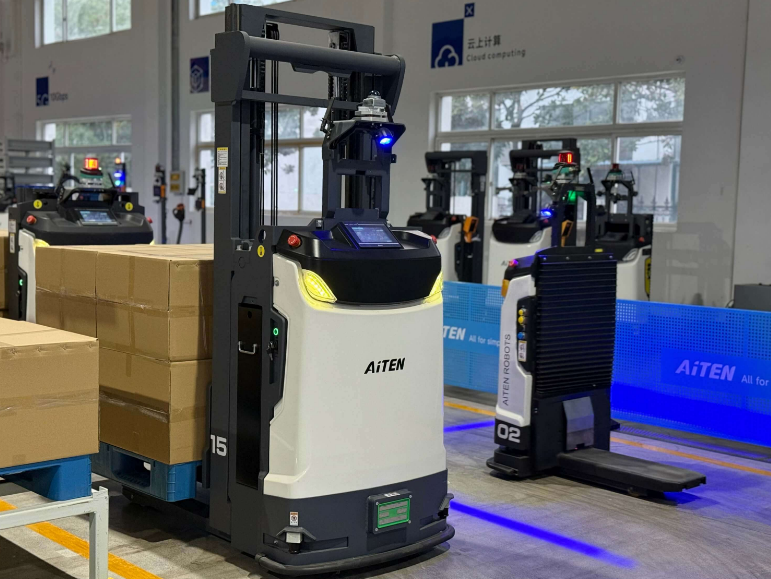
Industrial forklift in warehouse

2007: Eight times the price. 2024: Less than twice.

Around 2015, lithium battery prices started dropping, faster than anyone had predicted. By 2018, the price gap had narrowed to about three times. Then the pandemic hit, supply chains went haywire, lead-acid battery raw materials shot up, while lithium costs continued to fall due to economies of scale from the EV industry. Now the price difference is roughly 1.8 to 2.2 times, depending on the specs you need.

The reason I remember these numbers so clearly is that I've been doing customer consulting since 2010. Customers ask me what to buy before purchasing batteries, and I have to crunch the numbers for them. Lead-acid is cheap but requires water refilling, maintenance, and has a shorter lifespan. Lithium is expensive but basically maintenance-free with more charge cycles. There's no standard answer to this calculation—it completely depends on the customer's use case.

Speaking of use cases, there's way too much to know. I've seen too many customers get misled by sales reps and buy things completely unsuitable for their needs.

Case Study: Cold Storage Disaster

Last year, a customer doing cold storage logistics came to me saying they'd just bought a batch of lithium electric forklifts, but in winter the battery capacity dropped so much they couldn't even last one shift. I asked if the sales rep had told them about low-temperature performance issues before purchase. He said no. I asked what temperature their cold storage stays at year-round. He said minus 18 degrees Celsius.

Minus 18 degrees. Standard lithium iron phosphate batteries can lose 40% or even more capacity at this temperature. This isn't some secret—anyone who's worked in this industry for a few years knows this. That sales rep either genuinely didn't know, or deliberately didn't say. I'm inclined to believe it was the latter.

This kind of thing is too common. Sometimes I feel like there's a serious problem with sales training in this industry. They only teach how to sell things, not how to help customers choose the right things. Short-term, the performance numbers look good. Long-term, the reputation is destroyed. I know several manufacturers who ran themselves into the ground exactly this way.

Battery cells close-up

Three chemistries, vastly different applications

The Technical Side

There are mainly three categories of industrial vehicle batteries on the market now: traditional lead-acid (including flooded and AGM), lithium iron phosphate (LFP), and ternary lithium (NMC). There are some niche ones too, like lithium titanate, but the volume is too small to discuss separately.

I won't say much about lead-acid batteries. The technology is as mature as it gets, pricing is transparent, suppliers are everywhere. The only thing to watch out for is that some manufacturers, to cut costs, are using thinner and thinner plates. The rated capacity looks the same, but actual lifespan varies a lot. I generally advise customers to ask about plate thickness when buying batteries. Be cautious if it's below 4.5mm. This number is from my own years of observation—it may not be 100% accurate, but the general direction is right.

Battery Types Comparison
Lead-Acid
✓ Low cost, mature tech
✓ 95%+ recycling rate
✓ Wide supplier base
✗ High maintenance
✗ Shorter lifespan
✗ Heavy weight
LFP (Iron Phosphate)
✓ Safe chemistry
✓ 3000+ cycles
✓ Low maintenance
✗ Poor cold performance
✗ Flat SOC curve
✗ 20-30% recycling rate
NMC (Ternary)
✓ High energy density
✓ Lighter weight
✓ Better cold performance
✗ Thermal runaway risk
✗ Fire/explosion hazard
✗ Not for enclosed spaces

Lithium iron phosphate is now the mainstream choice. Good safety, long cycle life (reputable manufacturers can achieve 3,000+ cycles), not afraid of overcharging or over-discharging (within reasonable limits). The downside I mentioned earlier—poor low-temperature performance. There's also an issue many people don't know about: LFP has a very flat SOC curve, meaning the relationship between voltage and charge level isn't obvious, so charge estimation can easily be off. I've seen several cases where a forklift showed 20% remaining charge, then suddenly died. This isn't a battery quality issue—it's an inherent characteristic of this chemistry.

Ternary lithium has high energy density, smaller volume and lighter weight for the same capacity, and better low-temperature performance than LFP. Sounds perfect, right? The problem is safety. The risk of thermal runaway in ternary lithium is considerably higher than LFP. Once something goes wrong, it's fire or even explosion. In a warehouse environment, this risk factor needs to be weighted heavily. I personally don't recommend large-scale use of ternary lithium battery industrial vehicles in enclosed indoor environments, especially places with flammable materials. But this is just my conservative opinion—it doesn't mean ternary lithium absolutely can't be used.

Charging Infrastructure

I need to discuss charging infrastructure separately.

Many companies switching to lithium electric vehicles only calculate the cost of the vehicle and battery, completely ignoring the charging infrastructure upgrades. Lead-acid battery chargers have completely different current curves from lithium batteries—they can't be mixed. And lithium fast charging has much higher grid capacity requirements than lead-acid.

¥470K
Grid expansion and charging station installation cost for 20 lithium forklifts (2019 project). This wasn't in the client's original budget at all.

In 2019, I did an upgrade plan for a customer. Their facility was switching to 20 lithium forklifts, and just the grid expansion and charging station installation alone cost 470,000 yuan. This money wasn't in their budget at all.

Looking back now, that project went relatively smoothly because the customer cooperated and was willing to listen to advice. But I've also encountered plenty of customers who thought I was just trying to squeeze more money out of them and wouldn't believe anything I said. Later when the equipment came back and couldn't be used, they came back to me, and by then the upgrade costs were actually higher because they had to rush the timeline.

After working in this field for a long time, you'll find that technical problems often aren't the hardest part. The hardest part is dealing with people.

After working in this field for a long time, you'll find that technical problems often aren't the hardest part. The hardest part is dealing with people.

A few years ago, when lithium batteries first started becoming popular in industrial vehicles, I spent a lot of time writing educational articles, posting them on the company website and some industry forums. I hoped to help customers understand these basics, avoid being misled, and buy things truly suited to their needs.

How effective was it? Somewhat. Every year I get several dozen emails saying they read my articles and avoided pitfalls. That makes me feel it's still worth continuing to write.

Warehouse with forklifts

Every facility has unique requirements. No standard answer exists.

But in recent years, the online information environment has changed. Everywhere there are SEO garbage sites using AI to mass-generate content that looks professional but is actually all nonsense. If you search "how to choose industrial forklift batteries," probably 70% of the first two pages of results are this kind of thing. They'll praise every brand, offend nobody, and give you zero valuable information.

I've seen an article that listed the energy density of lithium iron phosphate as 350Wh/kg. This number doesn't exist—the highest mass-production level right now is around 160-180. But that article ranks very high in search results. I don't know how many people have been misled by this kind of information.

This is the core problem I want to address today: When it comes to industrial equipment procurement, the information sources you can trust are becoming fewer and fewer. You can't fully trust manufacturers—they want to sell things. You can't trust those articles of unknown origin online—many are garbage cobbled together by AI. You can't even fully trust salespeople—they have performance pressure.

So who do you trust?

I don't have a standard answer. The advice I can give is: find people who are willing to tell you the product's shortcomings. People willing to say "this thing might not be suitable for your situation." People willing to tell you "this cheap option will work, but you might need to replace it in three years."

These people still exist in this industry. Not many, but they exist.

Battery Recycling

One more thing about battery recycling. This is a problem many people overlook.

95%+
Lead-acid recycling rate
20-30%
Lithium recycling rate
3 months
To find a recycler (2021)

The lead-acid battery recycling system is very mature. In China, the recycling rate can reach over 95%. When you buy new batteries, you can turn in the old ones and get a credit. This model has been running for decades and is very stable.

Lithium battery recycling is a different story. Currently the recycling rate is only about 20-30%, and recycling costs are high. Many small recyclers simply can't handle them. In 2021, I helped a customer dispose of a batch of scrapped LFP battery packs. It took three months of hassle to find a legitimate recycler willing to take them, and in the end we had to pay the shipping ourselves. The situation has improved somewhat in the past two years, but it's still far from the mature system that lead-acid has.

Practical Advice

When you buy lithium equipment, it's best to ask the supplier in advance: what happens when the batteries are scrapped in five or eight years? Are there recycling channels? This is a practical problem you'll have to face sooner or later.

■ ■ ■
IV

An Industry Consultant

In industrial batteries since 2006. Still crunching the numbers. Still writing the articles nobody reads. Still answering the emails.

滚动至顶部