
RISC-V MCU Maturity
The Production Maturity of RISC-V MCUs
RISC-V crossed from a research curiosity into parts you can buy by the reel a few years ago, and the open instruction set at the bottom of it is now the least interesting thing about the decision. What matters for a real design is whether a given RISC-V part has the supply, the toolchain, and the surrounding code to carry a product, and the answer swings hard depending on which part and which job. Ask whether RISC-V is ready and every vendor gives a different answer, and each of them is telling the truth about their own corner of it.
What production-ready has to mean
The open ISA gets the attention and settles almost none of the engineering. A free instruction set lowers the cost of designing a chip; it does nothing for the team picking one off a distributor’s shelf. Whether a RISC-V MCU is ready for production in 2026 turns on the same things any MCU does: a part you can buy in volume, a build that works, and code already written to stand on.
Maturity is not one quality but several, and they ripen at different rates. The silicon can be in full production while the debugger support is half-finished. The toolchain can be solid while the part itself comes from one vendor with one fab slot behind it. A part is ready when those line up, and much of the lingering doubt about RISC-V lives in the gap between a chip that works on a bench and an ecosystem that holds up a product. A team that scores a candidate on a single axis, price more often than not, meets the other axes later, during bring-up, when the schedule is least able to absorb them.
The honest answer in 2026 is that the question has split in two. For the cheapest commodity roles, where a RISC-V part stands in for an 8-bit MCU or a low-end Cortex-M, the parts are here, in volume, and have been for a couple of years. For a complex design that leans on a mature real-time operating system, a deep middleware stack, and a polished debugger, the ecosystem is closing the distance but has not closed it. The first is a commodity purchase, and price settles it. The second is a platform bet on a vendor still being there in five years to back the part.
That split is the useful way to read every claim about RISC-V being ready. A claim is only ever true for a class of design, and the smart move is to ask which class the speaker has in mind before taking the word either way.
There is also a way to test the claim from a desk. Pull the errata sheet for the candidate part and read its revision history, because a part that has been through volume production carries a documented trail of silicon bugs and fixes, while a part that has not looks suspiciously clean. Check the pace of commits and the speed of issue replies on the vendor’s SDK repository, since a stale repository tells you in advance how the vendor will treat a bug filed mid-production. Ask the FAE which customers ship the part and in what volumes, and listen for categories rather than names. None of this is specific to RISC-V, but on a young architecture the spread between vendors runs wider, so the same hour of checking pays back more than it does on a settled one.
The parts already shipping in volume
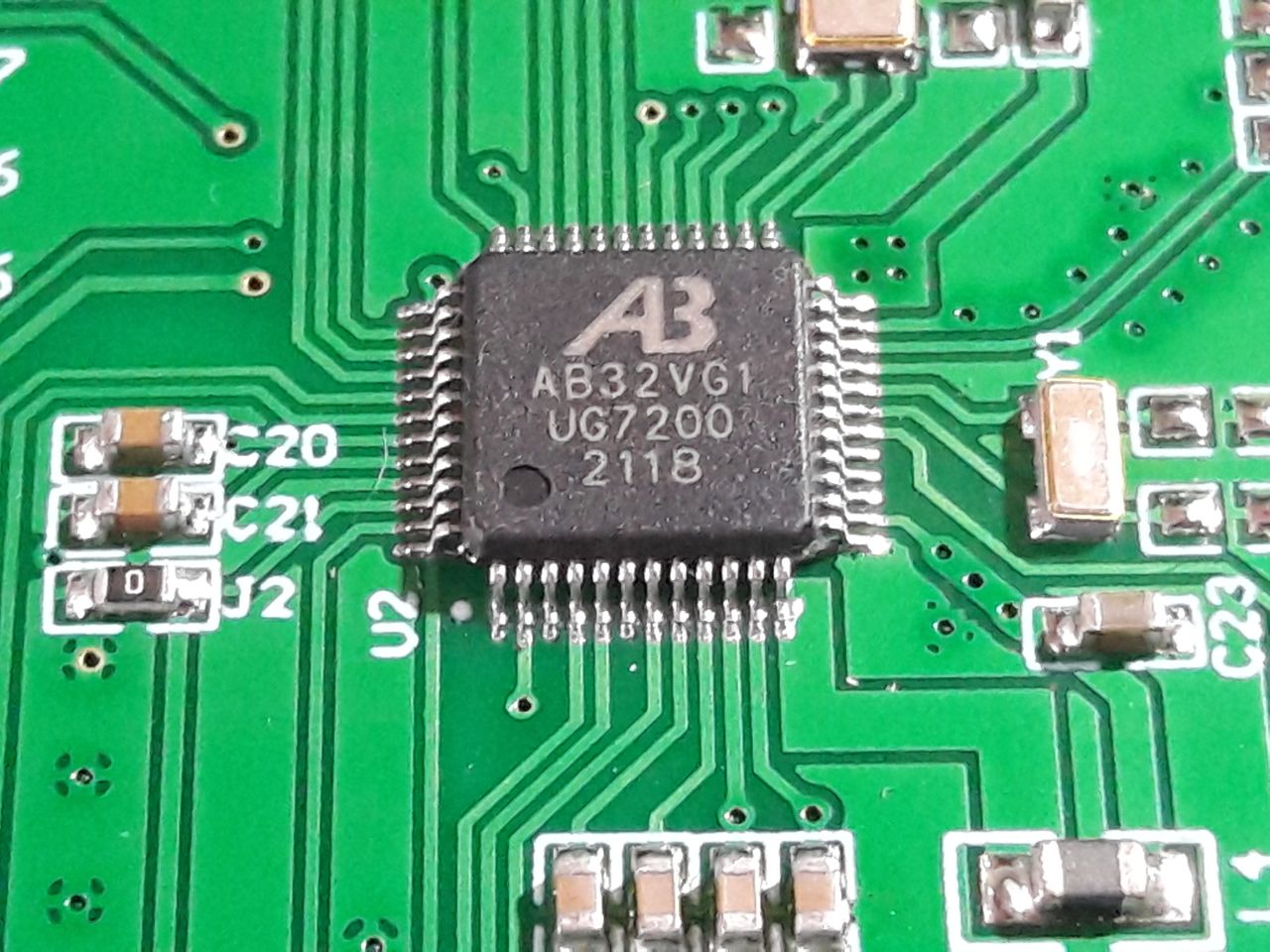
The volume leaders in RISC-V are not the names from the conference slides. They are cheap Chinese MCUs that quietly displaced 8-bit parts in cost-driven designs. The standout is the WCH CH32V003, a 32-bit RISC-V part priced at a fraction of what many 8-bit parts cost, which turned the usual logic of reaching for 8 bits to save money on its head. Sizing up the WCH CH32V against a low-cost STM32 is a real line item in a cost-down review now, and what the part gives up to hit that price belongs in the comparison. The point that matters here is the category it proved: 32 bits no longer carries a price premium over 8, and a tier of cost-driven designs moved on that alone.
GigaDevice took a parallel road. Having built a business on STM32-compatible parts in their GD32F line, they put a RISC-V core in the GD32V family and aimed it at the same boards. The case for it rests less on the core and more on whether the GD32V has the stock and the ecosystem maturity to be designed in with confidence, which is the kind of question a second source has to settle before it goes onto a board. The pitch lands because the rest of the board barely has to change.
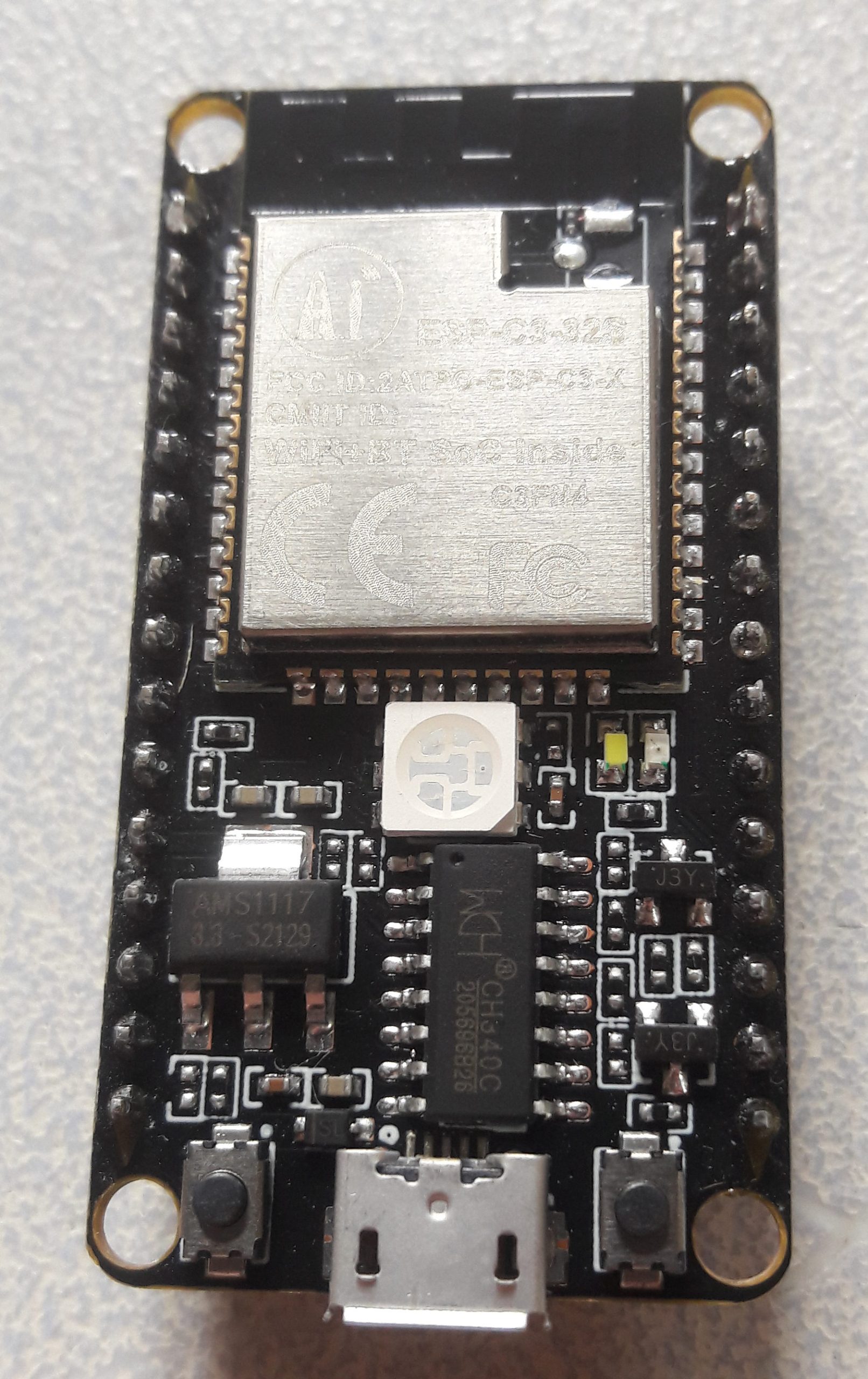
The widest deployment of all wears a different badge. Espressif moved its connected parts onto RISC-V cores, and the ESP32-C3 and C6 in IoT designs put a RISC-V core next to WiFi and Bluetooth in tens of millions of devices. The radio is the reason they get chosen, since the part settles the WiFi-against-low-power-radio question in one package, and the core inside it came along for the ride. Espressif’s SDK carries the weight there; the core underneath changed and the API the team writes against did not. For a great many designers, their first shipping RISC-V product was an ESP32-C3 they picked for its radio without thinking about the ISA at all. That scale shows up downstream as cheap modules, certified antennas, and reference designs a small team can copy.
This is the quiet way an architecture reaches production maturity: not through a flagship part that everyone evaluates and debates, but through cheap parts that solve a narrow problem so well, at a price so low, that they end up in a build before anyone stops to call the choice a RISC-V decision. The CH32V003 went into toys and chargers and white goods the same year it launched, and the volume that came with that did more for the toolchain and the community than any roadmap promise could, because real bugs got filed and fixed against real production runs. The errata pages on those parts read like a production diary, which is what a thick errata sheet becomes once a part has been through someone’s line. Community answers piled up the same way, not as tutorials written to promote the part but as fixes posted by people who had a deadline and hit the hole first. Cheap evaluation boards followed, then third-party programmers, then footprints in the standard CAD libraries, each one lowering the cost of the next design that tries the part. A part that ships by the million pulls its own ecosystem along behind it, since the people shipping it cannot afford to wait for the tools to be perfect and so they fix what they need. The maturity followed the volume rather than leading it, which is the reverse of how the established vendors tell the story, and it is why a survey of RISC-V readiness that only looks at the high-end cores misses where the architecture grew up. None of that shows up in a core’s specification, and all of it decides whether a part survives contact with a production line. An independent distributor stocking these parts sees the shift before the press does, in the order book.
Where it still trails the Cortex-M
The distance left to cover is in the ecosystem, not the silicon. Two decades of Cortex-M have piled up debuggers, real-time operating systems, driver libraries, and a community that has answered the common questions twice over. Setting the RISC-V and Cortex-M ecosystems side by side is the honest way to see how far the younger one has to go, and it is a different gap for a hobby project than for a safety-certified product. On the Arm side, certified compilers and certified RTOS ports sit in catalogues as line items; on the RISC-V side the list is shorter and has to be checked part by part. A consumer gadget never notices that list, but for an industrial controller headed for an audit it decides whether the part is usable at all.
The toolchain is the part that improved fastest. GCC and the open debuggers handle RISC-V cleanly now, so standing up a RISC-V MCU toolchain is a solved problem for a team willing to work the way the open tools expect. The polish a commercial IDE brings, the one-click configuration and the vendor-blessed middleware, is thinner and less even across vendors, which is felt hardest by teams used to that hand-holding. Hardware trace is the sharpest single example: instruction trace on Arm parts has shipped through standard debug blocks for years, while the RISC-V equivalent is newer and unevenly fitted across the parts on sale.
Higher up the performance range the picture thins out. SiFive and a few others license and sell the heavier cores, and sourcing SiFive embedded cores in Asia is its own exercise, closer to lining up an application processor than buying an MCU off a reel. The deeper a design reaches into RISC-V, the fewer drop-in alternatives sit behind the part it lands on. That thinness is a sourcing fact as much as an engineering one: when the one part that fits has no close neighbor, the design carries a single-source risk no paperwork can dress up, and the buyer’s leverage on price goes with it. An MCU off a reel can be judged on its datasheet and its price; a licensed core is judged on the vendor’s roadmap, the support contract, and how long both will hold, which is a different purchase made by different people.
Why it is on roadmaps anyway
The push behind RISC-V is not chiefly about saving a license fee, and it helps to be clear-eyed about that. The pull is that an open instruction set cannot have its license pulled. An Arm core ships under a license that a vendor holds at the pleasure of one company and, behind that company, export rules written in other capitals, and the past few years have made that a board-level worry rather than an abstract one. Picking up RISC-V as an ARM alternative under export controls is how a growing set of sourcing teams have answered it, hedging a long-lived design against a decision made somewhere outside the company.
That motive is strongest in China, where the exposure is sharpest, which is part of why the volume parts came from there first. The same logic reaches any team building a product meant to ship for a decade without betting its supply line on a license staying in place.
The per-part answer
RISC-V is production-ready where the job is cheap and simple, and a fair way along everywhere else. The part decides it, not the architecture.