Why Africa Is the Next Frontier for Lithium Battery Energy Storage
Energy & Infrastructure

Why Africa Is the Next Frontier for Lithium Battery Energy Storage

February 25, 2026 / Long-Form Analysis

Nigeria spends something like $14 billion a year on diesel and petrol for private generators. The World Bank has tried to pin this number down through fuel import data and generator penetration surveys; the Bank's own researchers admit the informal generator economy is too large and too opaque to measure precisely. The Financial Times and Nigerian outlets like Punch and BusinessDay reported that after the naira devaluation following the June 2023 subsidy removal, businesses across Lagos saw fuel costs double within months. A shop owner in a Lagos commercial district burning 15 to 20 liters of diesel a day to keep a 10kVA generator running through eight hours of grid outage. Monthly fuel bill exceeding rent. IRENA's 2022 off-grid statistics put diesel electricity costs above $0.60 per kilowatt-hour at remote sub-Saharan sites. At urban commercial locations the number runs $0.30 to $0.50, assuming decent fuel quality, which is generous in markets where adulterated diesel is common enough to be a recognized operational hazard rather than an exception. Contaminated fuel damages injectors and cuts thermal efficiency, which means per-kilowatt-hour figures from clean-fuel laboratory testing understate what businesses actually pay. Generator mechanics are among the most reliably employed tradespeople in West African cities.

Ghana, Senegal, Tanzania, Cameroon, Uganda, the DRC, Mozambique all run their own versions of this. Nobody has produced a credible continent-wide aggregate diesel expenditure number. The data infrastructure to do so does not exist.

Fuel Supply
Fuel Supply

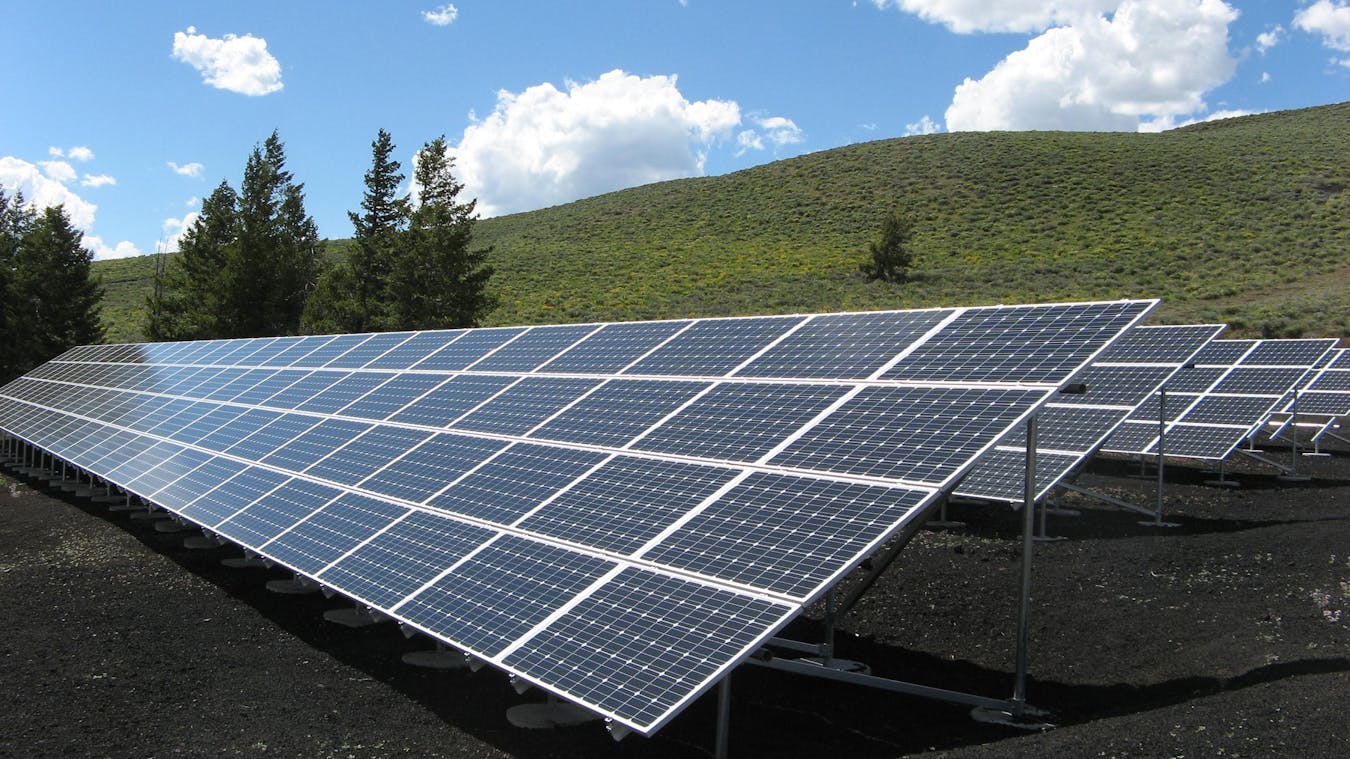
BloombergNEF tracked lithium-ion pack prices through $150 per kilowatt-hour around 2021 to 2022. By mid-2025, global averages approached $115, LFP stationary cells lower. A 50kW solar array with 100kWh of LFP storage replacing a diesel generator at a Lagos cold storage facility pays for itself in two to four years at current financing terms. The customer looks at the monthly diesel bill, looks at the monthly loan payment on a solar-storage system, picks the smaller number. A cold storage operator spending $3,000-plus monthly on diesel does not need a sustainability pitch.

The displacement advances fastest among commercial and light-industrial customers whose daily consumption justifies system capital and whose diesel bills are large enough that the savings matter immediately. Residential adoption is slower because household loads are small and upfront cost relative to income stays high even with recent price declines.

Diesel has no learning curve. Battery manufacturing costs decline annually through scale and process improvement. The cost of burning imported fuel on deteriorating roads tracks oil prices, logistics costs, currency movements. For sub-Saharan fuel importers, all three have trended unfavorably over the past decade.

The generator economy employs millions across the continent: fuel distributors, mechanics, transport drivers, jerrycan vendors. Storage adoption displaces those livelihoods. The cost differential is too large for commercial customers to ignore, and the social dimension of that displacement gets remarkably little discussion in clean energy analysis.

Solar Storage
Solar Storage

Telecom Towers

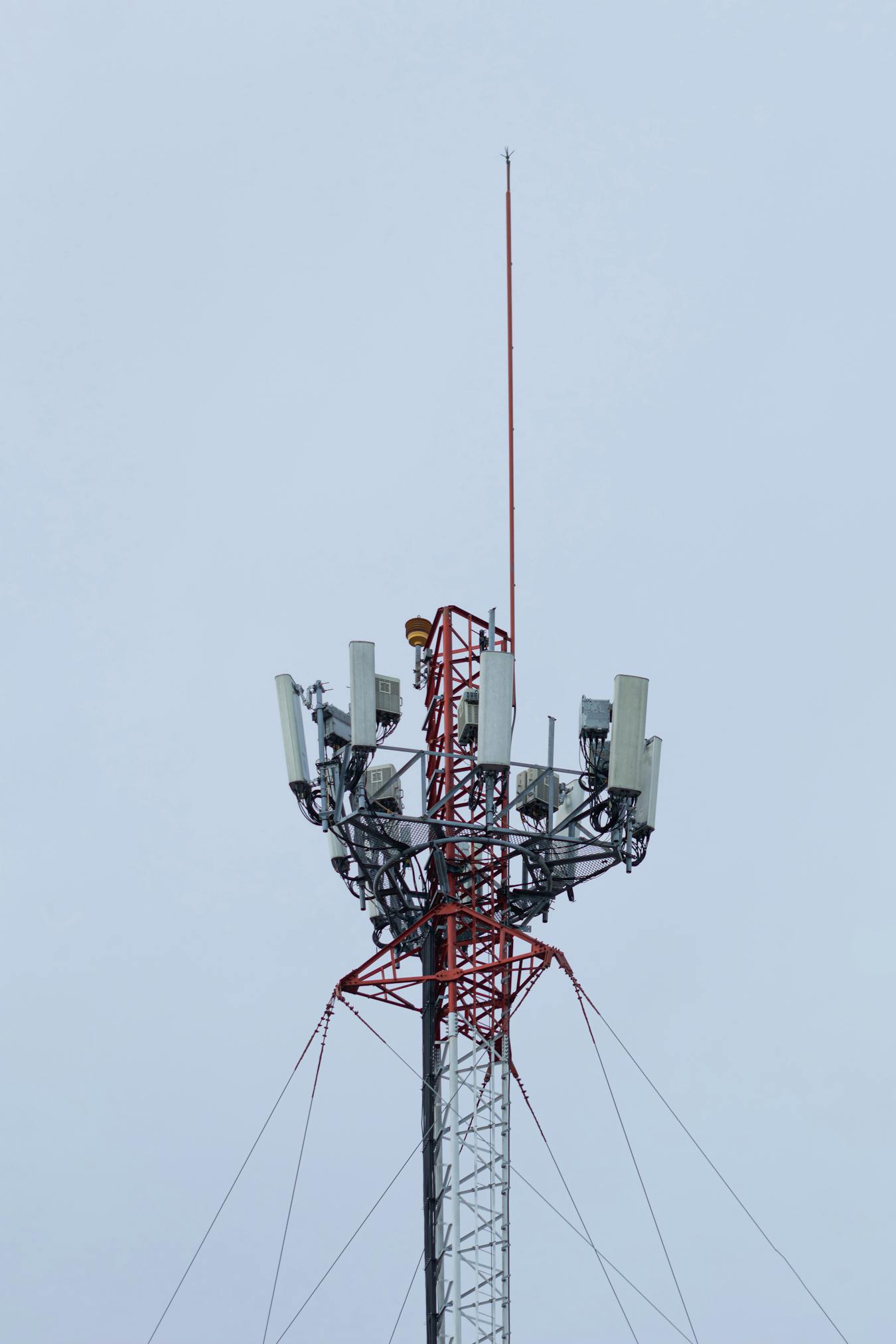
IHS Towers, in its 2023 annual filing, reported approximately 40,000 towers across nine African markets, Nigeria the largest. Helios Towers has published similar energy cost breakdowns for Southern and East Africa. These are SEC and LSE filings.

Diesel theft at Nigerian tower sites runs 15 to 25 percent of total fuel consumption by industry estimates. IHS has invested in underground tanks, electronic monitoring, GPS on tanker trucks, armed guards at some locations. The cost of protecting liquid fuel at thousands of remote sites across countries where enforcement is weak spreads across security, logistics, operations, insurance, and does not consolidate into any single line item.

Telecom Tower
Telecom Tower

Hybridization started accelerating around 2019. Energy-as-a-service companies contract with tower operators to supply power below historical diesel cost, bear capital expense for solar and batteries, take long-term purchase agreements. GSMA's Green Power for Mobile program has tracked the rollout. Tens of thousands of sites partially or fully hybridized by 2024, concentrated in Nigeria, Kenya, Tanzania, Ghana. Cost reductions of 30 to 60 percent per site.

Wood Mackenzie and BloombergNEF track storage by utility-scale and behind-the-meter project pipeline. Telecom tower energy sits in a different research vertical, covered by firms like Analysys Mason. The two analyst communities do not overlap much, which is why a quarter-million towers across a continent with diesel as a top operating expense and tens of thousands of lithium battery installations completed barely registers in how storage market size gets reported.

The supply chain effects of tower hybridization are where the story gets interesting for anyone trying to understand how the broader African storage market develops.

LFP packs for towers come from Chinese manufacturers, mostly CATL, BYD, and second-tier producers. They arrive at Lagos, Mombasa, Dar es Salaam. Before 2019, the warehouses receiving these shipments did not carry lithium cells. The freight forwarders had not processed lithium battery customs documentation. The trucking companies had not moved fragile electrochemical equipment to hilltops at the end of unpaved tracks. Five years of tower hybridization built all of it. A mini-grid developer in northern Nigeria importing LFP cells in 2025 uses the same freight forwarder, the same port agent, the same trucking routes that were established to serve IHS tower sites. This is not because anyone planned a dual-use logistics infrastructure. IHS needed batteries delivered to towers. The delivery routes and relationships now carry other customers' freight too.

Port Logistics
Port Logistics

Sub-Saharan Africa had almost nobody with hands-on lithium battery installation experience in 2018. Five years of tower work created several thousand trained technicians across dozens of countries. They did not sign non-compete agreements. A commercial building owner in Lagos or a mini-grid developer in rural Tanzania hiring for a storage project recruits from this labor pool. The staffing patterns at commercial and industrial storage installers already show this happening.

And field data. Five years of LFP performance monitoring at tower sites across different climates, altitudes, dust exposure levels. Degradation curves at 38°C ambient over 1,200 cycles. Calendar aging during rainy-season weeks with low solar output in Cameroon versus dry-season performance in the Sahel. Performance gaps between Cell Manufacturer A and Cell Manufacturer B running side by side at test installations. Tower energy companies guard this data with varying degrees of openness. Where it circulates, and it does circulate informally among project developers who know the tower energy staff, it feeds directly into battery procurement decisions for non-tower storage projects. A mini-grid developer writing battery supply RFP terms in 2025 has access to African field performance data that did not exist three years ago, because tower companies generated it.

Tower companies set out to cut diesel costs. The logistics network, the trained technicians, the field performance database that the rest of Africa's storage market rides on came as a byproduct.

Lead-Acid

Lead-acid hates heat. This is worth spending time on because the consequences for African battery markets are large and poorly reflected in the standard analytical tools the storage industry uses.

Positive plate corrosion in a lead-acid cell roughly doubles per 8 to 10°C above 25°C. At 35 to 40°C, normal inside a battery enclosure under equatorial sun, a unit rated for 500 cycles at laboratory temperature delivers maybe 200 to 300 before failure. The three-to-four-year lifespan on the box becomes 12 to 18 months in Accra or Kinshasa. Nobody buying a lead-acid battery in a Lagos electronics market believes the printed lifespan figure. They have bought the same battery three times in four years. They know.

LFP maintains rated capacity to about 45°C and delivers 3,000 to 5,000 cycles at 80 percent depth of discharge. A shop owner cycling a backup battery daily spends less over three years on one LFP unit than on repeated lead-acid replacements plus acid damage to nearby equipment and lost business during changeover.

Battery Technology
Battery Technology

Here is what makes this market large in aggregate and invisible in how the storage industry measures itself: it happens entirely in retail. Electronics shops, market stalls, online orders. No procurement tenders. No project pipeline databases. No MW or MWh figures submitted to tracking platforms. The kilowatt-hour volume across millions of annual retail transactions rivals grid-scale procurement pipelines in developed countries, though the comparison is imprecise because the measurement systems have nothing in common.

Most battery industry lifecycle cost models are calibrated on temperate-climate performance data. IRENA and World Bank technical reports on off-grid energy have flagged this as a known limitation. The models understate how fast lead-acid degrades in tropical heat, which means they understate LFP's cost advantage in Africa specifically. The gap between modeled and actual field performance is large enough to change project economics.

Distributors across West and East Africa have learned to sell LFP on lifecycle cost. The pitch resonates because the customer is already frustrated. Years of watching lead-acid batteries die early creates a receptive audience for an alternative that demonstrably lasts.

The customer overlap with diesel displacement is significant and underappreciated. Many of the commercial customers running diesel generators also maintain lead-acid UPS systems as a second backup layer. Converting both to a single integrated solar-plus-LFP system eliminates two cost streams at once, improving payback math beyond what either substitution achieves in isolation. A Lagos shop owner replacing both a generator and a lead-acid UPS with one solar-storage system saves on diesel, saves on lead-acid replacement, and reduces maintenance headaches from two separate systems to one. The bundled economics are compelling enough that some solar-storage installers in Nigeria and Kenya have started marketing specifically to customers who run both generators and lead-acid backup, targeting the combined expense.

Mobile Money

Safaricom reported M-Pesa processed over $314 billion across its markets in fiscal year 2024.

M-KOPA raised $250 million through 2023 and 2024. Household solar-plus-storage deployed across Kenya, Uganda, Nigeria, Ghana on daily mobile money payment plans. d.light, Bboxx, Greenlight Planet, Engie Energy Access at various scales. IFC, European Investment Bank, commercial banks providing capital. Structured as consumer credit, not energy infrastructure.

Mobile Payments
Mobile Payments

Daily or weekly mobile money micro-payments sized to approximate previous spending on kerosene and phone charging. GSM-enabled remote lockout on non-payment. The payment history creates a credit profile for a customer who had no formal financial identity. M-KOPA has publicly discussed using this credit data for smartphone financing and cash loans, which means the solar-storage unit is opening the door to a broader financial relationship for previously unbanked households.

India's UPI is technologically sophisticated but Indian rural electrification proceeded through grid extension under Saubhagya, producing different demand patterns for off-grid finance. Southeast Asian mobile payments serve populations with higher baseline electrification. The overlap of very large unelectrified populations with very high mobile money penetration is specific to sub-Saharan Africa.

Pay-as-you-go covers household systems in the 50 to 400 watt-hour range. Does not reach commercial or industrial customers. The longer-term significance is that credit data from millions of household payment sequences progressively reduces underwriting cost for larger asset categories as the dataset grows.

Lithium

Zimbabwe banned unprocessed lithium ore exports in December 2022. Reuters reported through 2023 and 2024 that enforcement was inconsistent, with concentrate shipments continuing under exemptions. Huayou Cobalt's Arcadia mine started producing in 2023. Sinomine's Bikita Minerals expanded. Ganfeng's Goulamina in Mali holds one of the largest undeveloped hard-rock resources globally by published estimates. DRC exploration around the Manono pegmatite is earlier-stage.

Whether African lithium geology connects to African storage deployment depends on a narrow question: does processing capacity develop on the continent? Concentrate shipped to Chinese refineries benefits African storage only indirectly. Processing within Africa would give local battery assemblers a logistics edge. Zimbabwe wants domestic processing and lacks the water, electricity, and chemical supply infrastructure to support it at present. Huayou and Sinomine's capital allocation decisions carry more weight than government policy statements.

Mining Operations
Mining Operations

Chinese investment in specific African lithium deposits is chemistry-matched. Different spodumene deposits carry different impurity profiles determining which refining pathways and cathode chemistries the output suits. Ganfeng chose Goulamina, Huayou chose Arcadia, based on mineralogical compatibility with their existing processing lines.

The IRA, signed August 2022, and the EU Critical Raw Materials Act, adopted 2024, both incentivize non-Chinese mineral sourcing and have directed Western attention and some capital toward African lithium jurisdictions. Host governments have more concession negotiation leverage than at any recent point. How much converts into domestic processing versus marginally better royalty terms varies by country.

Africa's population trajectory matters here. 1.4 billion today, roughly 2.5 billion by 2050 per UN projections. Chinese battery companies making lithium investments are simultaneously placing consumer market bets. The mineral supply chain and the future customer base occupy the same continent, which intensifies competitive dynamics beyond what pure mineral economics would produce.

Solar

Annual irradiation across most of sub-Saharan Africa runs 1,800 to 2,500 kilowatt-hours per square meter per the World Bank's Global Solar Atlas, versus 900 to 1,300 for Germany. Forty to 80 percent more generation per installed watt. For paired storage, faster payback at any given cell price, partially offsetting higher financing costs.

Solar Irradiation
Solar Irradiation

South Africa

Eskom hit Stage 6 load shedding in 2022 and 2023. CSIR put the GDP cost at about 1.2 percent for 2023. The REIPPPP moved at emergency speed on storage procurement. Nigeria has worse grid reliability, a larger economy, and no equivalent procurement apparatus. Kenya has a better energy regulator and a milder crisis. Ethiopia's Grand Renaissance Dam complicates its storage timeline in ways that depend on seasonal hydrological variability.

Power Grid
Power Grid

Chemistry

LFP dominates African stationary storage. CATL's sodium-ion cells, announced 2021, are in limited production. African procurement teams watch sodium-ion because sodium is locally abundant and the chemistry handles heat. If Chinese production scales enough to push sodium-ion cell costs below $60 per kilowatt-hour, the crossover into the African residential and small-commercial segment accelerates, pushing into lead-acid replacement tiers where LFP pricing still meets resistance. The timeline depends on factory investment decisions in Fujian and Jiangxi provinces.

Cell Chemistry
Cell Chemistry

Manufacturing

Morocco exported roughly $14 billion in vehicles and auto components in 2023 by government figures. Noor-Ouarzazate provides renewable electricity. Battery manufacturers have explored Moroccan facilities for European export access and EU content qualification. Egypt has similar announcements. Competitive cell manufacturing requires capital and process depth neither country has assembled. European export volume might justify the investment. African domestic demand at current levels cannot.

Manufacturing
Manufacturing

Cost of Capital

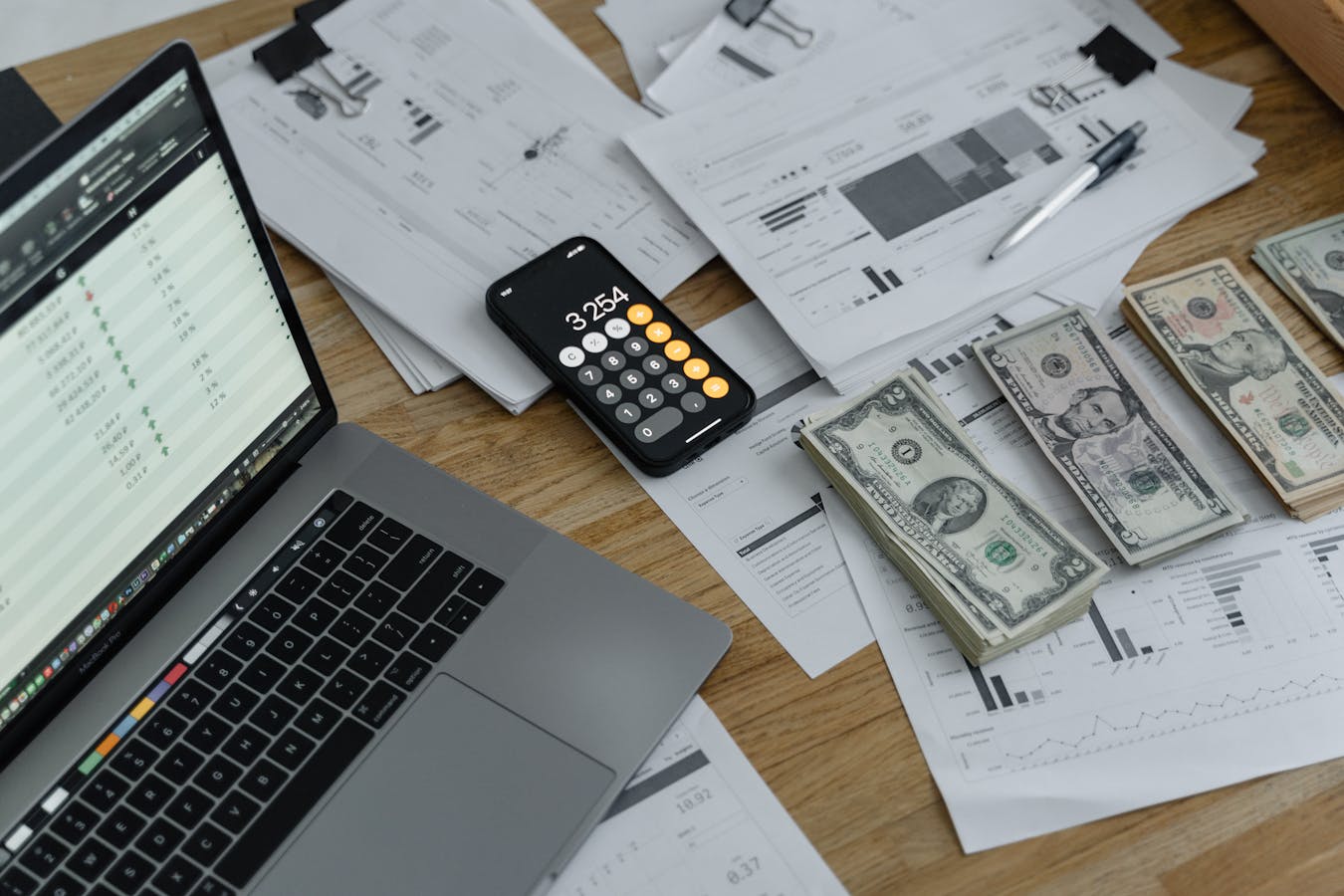
Twelve percent unlevered returns at European rates need 20 to 25 percent at sub-Saharan African rates to clear sovereign risk premiums, currency hedging, lender margins. Projects die in that gap. DFI blended finance is the bridging mechanism. Available volume is well below the pipeline of projects that work technically and commercially and cannot close financing.

Rwanda has an efficient regulatory framework. Nigeria fragments distributed generation regulation across federal and state levels. DRC is opaque. Battery recycling exists nowhere on the continent at scale. Millions of LFP cells entering service through the mid-2020s reach end of life in the early 2030s with no collection infrastructure.

Capital Finance
Capital Finance

The binding constraint on the African storage market is not technology or demand or even logistics. It is the price of money. A Lagos cold storage operator with a $3,500 monthly diesel bill and a quote for a solar-storage system that would cut it to $1,200 still cannot proceed if the financing terms add $2,000 a month in debt service. Every development finance institution active in African energy knows this arithmetic. The volume of concessional capital they deploy has not yet caught up to the volume of projects where the arithmetic works but the financing does not.

Meanwhile the diesel bills keep coming. The batteries keep getting cheaper. The towers keep getting hybridized. The lead-acid keeps failing in the heat. The mobile money networks keep processing payments. And the lithium sits in the ground across Zimbabwe and Mali and the DRC while three geopolitical blocs argue about who gets to process it and where.

Published February 25, 2026 · Energy & Infrastructure Analysis

滚动至顶部