CATL shipped more lithium-ion cells in 2024 than the entire world consumed in 2020. That sentence contains most of what anyone needs to know about the state of global battery pricing, but it does not capture the second and third-order effects, which are where the damage and the opportunity both concentrate.
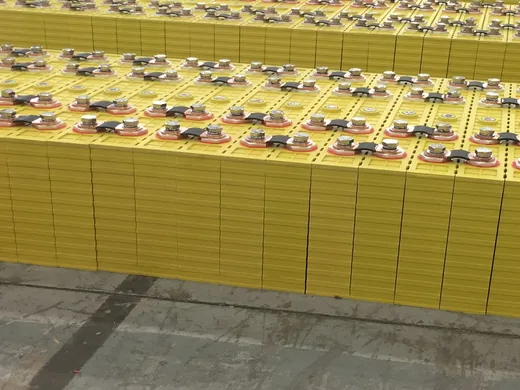
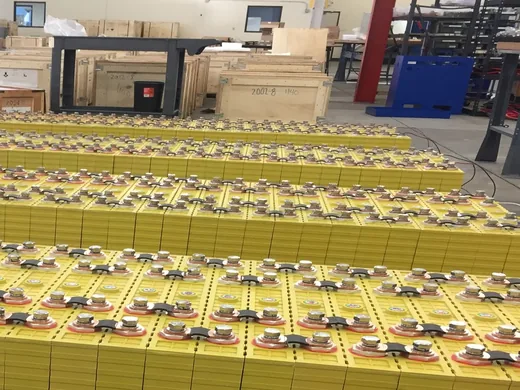
China's installed cell manufacturing capacity passed 2,500 GWh/year by 2025 according to BNEF and the China Automotive Battery Innovation Alliance. Global demand across EVs, grid storage, consumer electronics, everything, was around 1,150 GWh. CATL held utilization above 80%. BYD, which puts its own Blade Battery cells into its own vehicles and sold over 3 million of them in 2024, kept its lines full by selling cars rather than cells. Below those two the utilization picture is grim and getting worse. SVOLT dropped well under 60%. Farasis struggled. The hundred-plus small producers scattered across provincial industrial parks in Jiangxi and Anhui and Sichuan, companies that exist because a local party secretary needed a factory ribbon-cutting to hit a GDP target, many of them are running at 30% or below. They produce cells at a loss to generate enough revenue to service construction debt. They will fail. The industry question is how many years of below-cost cells they spray across global markets before the money runs out.

LFP cell prices went below $40/kWh by early 2025. Wood Mackenzie and Benchmark Mineral Intelligence both tracked this. That number broke things.
Not in the abstract. Specifically.
Northvolt filed Chapter 11 in late 2024. Over $15 billion raised. Contracts with Volkswagen, BMW, Volvo. The European Investment Bank. The Swedish government. The Skellefteå factory never hit output targets, yields were poor, key technical staff departed, management churn was constant. Those are Northvolt-specific failures and they mattered. They would have been survivable at $100/kWh global cell prices. The company would have burned cash, disappointed investors, eventually gotten yields up, and limped toward profitability over three or four painful years. At $40/kWh from Chinese competitors, there was nothing to limp toward. The destination itself had moved.
ACC, the Stellantis-Mercedes-TotalEnergies joint venture, paused construction of its Kaiserslautern gigafactory. Italvolt in Italy never broke ground. Britishvolt in the UK went bankrupt before completing its facility. The European gigafactory buildout was premised on two beliefs: that European automakers would pay a premium for European-made cells, and that subsidies would close whatever cost gap remained. The first belief weakened because automakers themselves were under margin pressure from Chinese EV imports. The second could not keep up with a target that kept dropping. Subsidies were sized against a cost gap estimated in 2021. By 2025 the gap had more than doubled.
SK On lost over $1 billion in its battery division in 2023. Delayed factory construction in Kentucky. Scaled back European expansion. LG Energy Solution cut capex guidance and pushed Arizona timelines back. Samsung SDI fared comparatively better through its BMW supply relationship and premium-segment positioning. All three Korean producers made their large capacity bets in late 2021 and early 2022, when cells were above $120/kWh, EV demand was growing 60% year over year, and supply was genuinely constrained. The scenario that materialized required Chinese provincial governments to behave in ways that looked irrational from Seoul and were entirely rational from the perspective of a party secretary in Yichun whose career advancement depends on the GDP of Jiangxi's lithium industry cluster.
Panasonic has the Tesla Nevada relationship, the Kansas plant, the Toyota partnership through Prime Planet. Captive OEM deals provide volume stability. Tesla's procurement team is not sentimental. The spread between Panasonic cells and Chinese cells is approaching $15-20/kWh. Across tens of millions of cells per year, that is hundreds of millions of dollars annually in potential savings. The conversation inside Tesla about diversifying away from Panasonic may already be happening. From the outside, it is impossible to tell whether it is happening now or happened six months ago. What is possible to tell is that the arithmetic makes it inevitable at some point.
This is the part of the story that gets reported as backdrop when it should be reported as the main event.
CATL's manufacturing cost for LFP cells, estimated by BNEF and Wood Mackenzie and Benchmark, is in the low $30s per kWh. When CATL prices at $38 or $40, it makes money. When a mid-tier competitor matches that price, it hemorrhages cash. CATL has the lowest cost structure, the largest installed base, the deepest patent portfolio, and the strongest balance sheet in the industry. Zeng Yuqun has said publicly and repeatedly that the industry needs consolidation. He is not expressing concern. CATL is the consolidation mechanism. Every quarter that LFP stays below $40, another tier of competitors loses viability and their customers migrate to CATL and BYD. The two companies with the scale to survive distressed pricing are the two companies whose market share grows because of distressed pricing.
BYD operates differently because BYD does not need an external cell customer. BYD mines lithium (through partnerships and equity stakes), refines cathode material, manufactures cells, assembles packs, builds vehicles, and sells them directly to consumers in China and increasingly in Southeast Asia, Latin America, and Europe.
When BYD prices a Seagull at under $10,000 in China, the cell cost embedded in that vehicle reflects a level of vertical integration that no arms-length transaction can reveal because there is no arms-length transaction. The cost is internal transfer pricing. GM cannot replicate this. Volkswagen cannot replicate this. Toyota is working toward something similar through Prime Planet and is years away.
The competitive moat that vertical integration creates becomes wider during an overcapacity crisis. When margins compress across every individual step of the value chain, a company that owns multiple steps captures thin margin at each one and aggregates it into an adequate total. A company that buys cells from a supplier, which bought cathode from another supplier, which bought lithium from yet another supplier, pays a margin at each step. In a normal market, that layered margin structure is a few percentage points of total cost. In a distressed market where margins at each step are near zero or negative, vertical integration becomes the difference between cash generation and cash destruction. CATL and BYD are pulling further ahead of competitors not despite the overcapacity crisis but through it.

Lithium carbonate was above $80,000/tonne in late 2022 and below $10,000 by early 2025. Everyone in the industry knows this. The supply-side explanation is straightforward: Pilbara Minerals, Albemarle, SQM, and others brought new tonnage online. Australian spodumene production expanded. South American brine operations in the Lithium Triangle increased output.
The demand-side explanation gets less attention and matters more for what happens next. Chinese cell factories at 50% utilization bought roughly half the lithium the market had projected. Tianqi Lithium and Ganfeng Lithium, China's two largest lithium companies, both saw revenue fall sharply. The same happened to cobalt suppliers (Glencore cut production guidance on its Mutanda mine), to nickel sulfate producers (Indonesian HPAL plants found fewer buyers than their offtake contracts assumed), to synthetic graphite manufacturers, to electrolyte solvent producers, to PVDF binder companies. Every upstream material sector had built capacity for a demand level that did not arrive.
The lithium price crash killed the development pipeline for new mines. This is the part that will matter in 2028 and 2029.
Junior mining companies in Canada, Argentina, the DRC, and Western Australia that had been developing lithium deposits could not close financing. A hard-rock lithium project with breakeven cost at $12,000-18,000/tonne is uninvestable when lithium trades at $10,000. Projects stalled. Exploration budgets were cut. The lead time for a greenfield lithium mine is five to seven years from development decision to first production. The lead time for a battery gigafactory is 18 to 24 months. When cell demand eventually catches up with supply, and EV penetration and storage deployment make that inevitable, the lithium that should have been coming online to feed those cells will not exist. The investment that should have been made in 2024 and 2025 was killed by the same overcapacity that made cells cheap. This is not speculation about an exotic risk scenario. It is the observable consequence of predictable investment cycle dynamics. The cell industry is eating cheap raw materials today and underfunding the supply that produces tomorrow's raw materials.
Cobalt touches a dimension that industry analysis rarely engages with. The DRC produces about 70% of the world's cobalt. Chinese companies, primarily CMOC and Zhejiang Huayou Cobalt, control much of the Congolese supply chain from mine to refinery. When battery overcapacity reduced cobalt demand and pushed prices down, CMOC's mechanized operations continued at lower margins. The artisanal mining sector, which employs hundreds of thousands of people in Lualaba and Haut-Katanga provinces under conditions that range from precarious to dangerous, contracted. Communities whose entire cash economy depends on cobalt extraction absorbed the downstream pricing consequences of overbuilt factories in Anhui. The human cost of Chinese battery overcapacity reaches places that have no voice in pricing discussions and no presence in analyst reports.

The Chinese solar panel shakeout of 2012-2015 is the precedent that matters here, and it is worth spending time on because the parallels are close enough to be predictive and the differences are instructive.
In 2012, Chinese solar module overcapacity was severe. The European Union imposed anti-dumping tariffs. The US imposed its own. Dozens of Chinese solar manufacturers went bankrupt. Suntech Power, which had been the world's largest module producer, defaulted on bonds and entered restructuring. LDK Solar collapsed. Yingli Green Energy, a one-time industry leader and FIFA World Cup sponsor, spiraled into years of losses and eventual delisting. The carnage was extensive.
The companies that survived, LONGi Green Energy, JA Solar, Trina Solar, JinkoSolar, came out of the shakeout leaner and obsessively focused on cost reduction through manufacturing innovation. LONGi bet on monocrystalline PERC technology when much of the industry was still on multicrystalline, and that bet turned out to be the single most consequential technology decision in solar's history. The survivors drove module prices down by over 80% in the decade after the shakeout. Global solar deployment blew past every IEA forecast. The overcapacity that destroyed companies in 2012-2015 created the conditions for the technology that made solar the cheapest source of electricity in most of the world by 2023.
The battery industry is running the same playbook under compressed timescales. CATL's condensed-matter battery program, targeting energy densities above 500 Wh/kg, has moved through development faster than pre-crisis internal timelines. BYD has iterated cell-to-body integration across vehicle platforms at a pace driven by margin desperation rather than comfortable R&D budgeting. EVE Energy redirected large-format cylindrical cells into energy storage ahead of its original product roadmap because the automotive volume it had planned for did not materialize. High-manganese cathode formulations are in pilot production at several companies on schedules that were pulled forward by 12-18 months.
One difference from solar matters a lot. Solar panels are commodity products where brand is nearly irrelevant and performance differences between top-tier producers are marginal. Batteries are more differentiated.
Cell quality variance, cycle life, safety performance, thermal behavior under abuse conditions, these vary meaningfully between producers and between production runs within the same producer. The solar shakeout produced a commodity market dominated by a few low-cost Chinese giants. The battery shakeout may produce something slightly different: a market dominated by a few Chinese giants that control both the commodity tier (LFP for storage and low-cost vehicles) and the premium tier (high-nickel NMC and next-generation chemistries for performance vehicles and specialty applications). That would leave non-Chinese producers with nowhere to retreat to.
The commercial case for sodium-ion was cost. Sodium is abundant and cheap. A sodium-ion cell at $30/kWh would undercut lithium-ion and open markets in storage, low-cost vehicles in India, backup power in regions without reliable grids.
Then LFP went below $40/kWh and the business case for sodium-ion lost most of its force. HiNa Battery adjusted its commercialization timeline. CATL, which presented sodium-ion plans at its 2021 investor day with considerable fanfare, has deployed the technology at a pace that suggests caution rather than conviction. Several smaller sodium-ion companies have stopped discussing near-term production targets.
Cheap shale gas did something similar to US nuclear power after 2008. Gas prices fell below $3/MMBtu and stayed there for years. At those prices, the multi-billion-dollar capital cost and decade-long construction timeline of a new nuclear plant could not produce electricity at competitive rates. The Vogtle Units 3 and 4 project in Georgia, the only new US nuclear construction in a generation, came in years late and billions over budget. No utility has ordered another. Nuclear technology did not become worse. The competitor became cheaper faster than nuclear could get cheaper, and the investment case collapsed.
Sodium-ion is in that position now. If LFP stabilizes at $45-50/kWh after the weakest Chinese producers exit, sodium-ion will find niches in ultra-low-cost applications and extremely cold climates where its low-temperature performance is advantageous. If LFP stays below $40 for several more years because zombie producers in Jiangxi keep their lines running on provincial-government life support, sodium-ion may become an academic research topic rather than an industrial product.

The storage market has different dynamics from automotive and the overcapacity hit it differently. Worth spending time on.
When automotive demand could not absorb enough cells, Chinese producers redirected into storage. CATL, BYD, EVE Energy, CALB, Hithium, dozens of smaller companies, all entered the storage market simultaneously, all competing on price. Storage procurement is more price-sensitive than automotive. Less brand-conscious. Less encumbered by local content requirements in most markets. An energy developer in the UAE or Chile or the Philippines buying a 200 MWh storage system cares about $/kWh, warranty terms, and bankability. The name on the cell is secondary.
System-level storage costs dropped below $100/kWh in competitive utility-scale procurement by 2024, per S&P Global and CNESA data. Some Chinese domestic projects approached $60/kWh at the system level. These numbers arrived five to seven years ahead of most grid planning models published in 2022. The International Energy Agency's Net Zero scenario assumed storage cost trajectories that had already been exceeded by the time the 2024 World Energy Outlook was published.
China installed over 40 GW of new storage in 2024. Unprotected markets, the Middle East, Southeast Asia, Latin America, parts of Africa, are deploying at prices that make four-hour battery storage competitive with gas peakers on levelized cost and, at the lower end of Chinese pricing, competitive with mid-merit combined cycle gas in some regions. The deployment pace in these markets is faster than any government policy could have achieved through subsidies or mandates alone.
There is a quality dimension here that procurement officers understand and that headline price comparisons do not capture. Chinese cell production generates a distribution of cell quality. The tightest-tolerance, lowest-self-discharge cells go to premium automotive customers. The wider-variance cells, still within specification, get channeled into storage.
When a storage system is quoted at $60/kWh, the cells inside it are from a different point on the quality distribution than the cells that go into a BMW or a Mercedes. The storage cells meet spec. Their long-term degradation trajectory, over the 15-20 year asset life that the financial model assumes, is less predictable because the operational data history is shorter and the cell-to-cell variance is wider. Whether these systems deliver on their modeled lifetime is a question that cannot be answered for years. The buyers know this, or should know this, and many of them are buying anyway because the price difference relative to premium-grade alternatives is large enough to absorb a fair amount of degradation risk and still come out ahead.

The US imposed over 25% tariffs on Chinese cells and structured IRA eligibility to exclude Chinese battery content. The EU launched anti-subsidy investigations. India, Brazil, Turkey, Indonesia, Thailand have measures of their own.
A 25% tariff on a $50/kWh cell adds $12.50. The cheapest non-Chinese alternative is $85-90/kWh. The tariff covers about a third of the gap. The other two-thirds require domestic producers to close it through scale, process optimization, and supply chain localization, things that take years and tens of billions in capital investment. And the Chinese target keeps moving because Chinese producers, under overcapacity-driven survival pressure, are cutting costs faster than protected producers operating in stable domestic markets with guaranteed margins. Running to catch a bus that is accelerating away from you.
Chinese companies are adapting to tariffs faster than tariff policy is adapting to Chinese companies. CATL is building in Hungary and exploring US-adjacent options. BYD has factories or partnerships in Thailand, Indonesia, Brazil, Hungary, Turkey, Uzbekistan. Gotion signed for plants in Morocco and Slovakia. These facilities import Chinese-origin cells and equipment and perform final assembly in a tariff-neutral jurisdiction. The tariff hits "Made in China." It was not designed to hit "Made by Chinese companies in Morocco using Chinese cells, Chinese equipment, and Chinese process engineering." The distinction between country of origin and country of ownership is going to become the central issue in battery trade policy within the next two or three years.
The precedent from US steel tariffs in the early 2000s hangs over the entire battery tariff discussion. Steel tariffs protected US producers from import price competition. US steel producers did not use the protection period to become globally cost-competitive. They used it to survive at existing cost levels. When tariffs were modified or circumvented, the domestic industry had not closed the gap. It had become dependent on continued protection. Whether battery tariffs produce the same outcome or a different one depends on what the protected companies do with the time they are being given, and that is an execution question, not a policy question.
MIIT tightened guidelines for new battery manufacturing investment. Provincial governments have become more cautious after watching locally backed companies enter financial distress. Market-driven consolidation is underway. SVOLT cut its IPO and reduced headcount. Multiple small producers in Jiangxi and Anhui have stopped production or entered restructuring.
Fewer than 20 of the 200-plus current producers will likely survive five years. The survivors will be CATL, BYD, and a second tier including EVE Energy, CALB, and Gotion. These companies will be larger, more vertically integrated, and more technologically capable than the pre-consolidation industry as a whole. The overcapacity period served as a filter. The organisms that passed through it are the ones best adapted to the selection pressure: low cost, high volume, fast iteration, deep integration from raw material to finished product.
Cell prices will stabilize at some point. Not at 2022 levels. The manufacturing innovations that overcapacity forced into existence, cheaper electrode coating processes, more efficient formation protocols, tighter supply chain integration, are permanent. They do not get abandoned when margins recover. Stabilization might land at $45-55/kWh for LFP, $65-80/kWh for high-nickel NMC. In a market where Chinese producers hold a larger share of global capacity and a wider technology lead than they held before the crisis started.

What the battery market looks like in 2030 is being determined right now by three things: how many below-cost cells Chinese zombie producers dump on the market before they die, how fast CATL and BYD absorb the resulting market share, and whether governments in the US and EU use tariff protection to build competitive domestic industries or to subsidize uncompetitive ones indefinitely. Two of those three things are largely outside the control of anyone in Washington or Brussels.
Australia exports spodumene. China refines it. Chinese factories turn it into cells. Chinese companies assemble the cells into storage systems. Those systems ship to the Middle East, Southeast Asia, sometimes back to Australia. The rock leaves Western Australia and comes back as a finished product at a fraction of the weight and a multiple of the value. Whoever finds that arrangement comfortable is not thinking about it carefully enough. Whoever proposes to change it has not yet identified a realistic mechanism for doing so.