What Is Driving Battery Energy Storage Demand in Southeast Asia
Energy & Infrastructure
What Is Driving Battery Energy Storage Demand in Southeast Asia
Long-Form Analysis
Renewable energy growth, falling battery costs, policy support. These three points have become the standard answer for Southeast Asia’s energy storage demand discussion. They apply equally well to Brazil, South Africa, or the Middle East. This article attempts to explain what lies beneath the standard answer: the structural reasons specific to this region that caused battery energy storage demand to accelerate sharply after 2024.
Islands and Diesel
Indonesia has over 17,000 islands. The Philippines has over 7,600. A large number of island communities still rely on diesel generators for electricity. Diesel is shipped out from the main islands on small vessels, and after multiple transfers to reach remote islands, the cost per kilowatt-hour shoots up to $0.35 or even $0.50 and above. During typhoon season, shipping disruptions can leave an island without power for weeks.
The levelized cost of a solar-plus-storage microgrid system is in the $0.15/kWh range. Compared to $0.35 diesel, this is an arithmetic problem. No subsidies needed, no carbon tax, no quota mandates.
Remote island communities across Indonesia and the Philippines still rely on diesel generators shipped over water
PLN (Indonesia’s state electricity company) has a financial structure that adds another layer of push to this. PLN has long maintained cross-subsidized tariffs for remote islands, using profits from Java and Sumatra to cover the losses from supplying outer islands. Every diesel generator is adding to PLN’s annual financial burden. Normally, state-owned utilities resist distributed energy because it means users going off-grid and revenue being lost. The situation on Indonesia’s outer islands is reversed: when users switch to solar-storage microgrids, PLN’s subsidy expenditure actually decreases. On the matter of remote island energy storage, PLN’s corporate interests and policy direction are aligned.
This type of demand has no comparable scenario anywhere else in the world. The energy storage market forecasts from various research institutions for Southeast Asia, how much of this demand they actually capture, nobody’s numbers are very reliable.
Existing capacity forecast models mostly aggregate bottom-up from grid-scale project pipelines. The dispersed deployment of microgrids replacing diesel is hard to capture in these models. This is a segment of demand that is sizable in volume, extremely high in certainty, and statistically blurry.
The Grid
This section takes more space than others because the largest share of Southeast Asia’s energy storage demand is grid-related, and this topic looks so different across countries that it almost cannot be discussed within a single analytical framework.
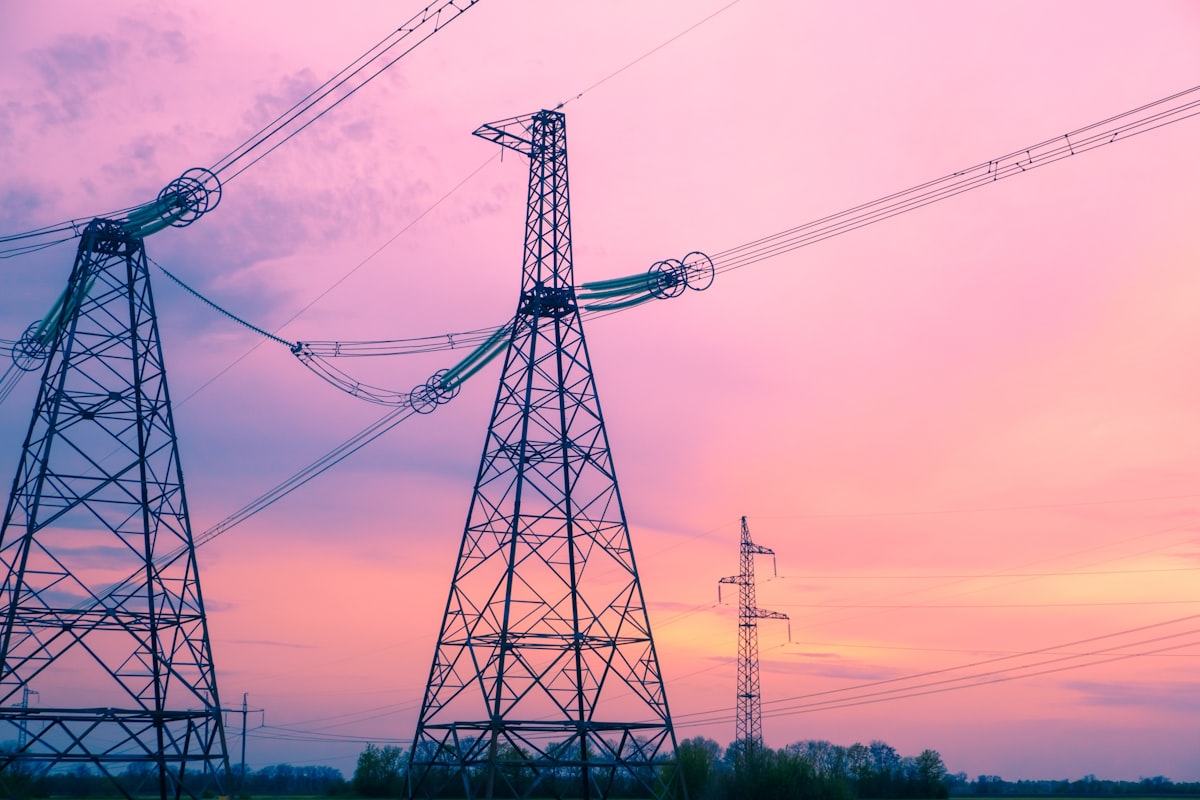
Vietnam first. The story of Vietnam’s 20GW of curtailed renewables has been told to death, so the details won’t be repeated here. The question is why EVN didn’t build the transmission grid ahead of time. EVN simultaneously plays the roles of transmission grid owner, largest generator, and sole retailer. The return on investment for transmission lines is suppressed by state-regulated tariffs, and tariffs are suppressed by social stability objectives. Allocating capital to the transmission grid yields far lower returns than allocating it to power plants. EVN’s behavior is entirely rational within its incentive framework. The transmission grid’s underinvestment is a product of this incentive framework. The Vietnamese government doesn’t lack money to build transmission lines. What EVN lacks is an economic motivation to spend money on them.
Transmission infrastructure investment lags renewable capacity across Southeast Asia’s diverse grid systems
Unless this incentive structure changes, the transmission grid won’t catch up with renewables. The role storage plays in between is to capture excess midday solar power from the south and release it during the evening peak hours in the northern industrial corridor. Transmission line construction takes five to ten years. Energy storage projects can be commissioned in six months. The time scales differ by an order of magnitude. Vietnam’s demand for energy storage is, at its core, demand for a substitute for transmission infrastructure. And the reason transmission infrastructure needs a substitute is that EVN’s incentive structure doesn’t encourage investment in it. This causal chain is considerably more complex, and more accurate, than “renewable energy intermittency needs storage to smooth it out.”
Thailand is an entirely different matter. Grid hardware is fine. The problem lies with the dispatching authority monopolized by EGAT (Electricity Generating Authority of Thailand) and the duck curve brought on by distributed solar. Natural gas units are being forced into large intraday output swings, accelerating wear and increasing gas consumption.
Thailand’s near-total bet on BESS for its storage route requires a few more words. Intuitively, pumped hydro should have significant potential in Thailand, given its mountains and water systems. On the ground: large dam construction faces enormous social resistance in Thailand.
Thai civil society organizations have considerably stronger mobilization capacity on environmental issues than their counterparts in other Southeast Asian countries. Multiple pumped hydro projects were blocked by local communities and environmental groups at the planning stage. This is barely reported in English-language industry media. Fragments appear occasionally in Thai-language outlets. BESS’s dominant position in Thailand is the result of social choice, not technical comparison. Ignoring this context and analyzing Thailand’s storage technology pathway purely from a techno-economic perspective will produce wrong conclusions.
The Philippines is different again. Grid interconnection between Mindanao, the Visayas, and Luzon is very weak. They operate as close to three independent power systems. Mindanao has added considerable solar capacity recently. With total system capacity being small, the same scale of solar output fluctuation causes much larger frequency impacts on Mindanao than on Luzon. Mindanao’s demand for energy storage is first and foremost a physical frequency management problem, entirely different from Vietnam’s “transmission substitute” logic and Thailand’s “duck curve peaking” logic.
Malaysia’s Sabah grid is also a small isolated system facing similar frequency management challenges as Mindanao. Indonesia’s Sulawesi and Kalimantan island grids are in the same situation.
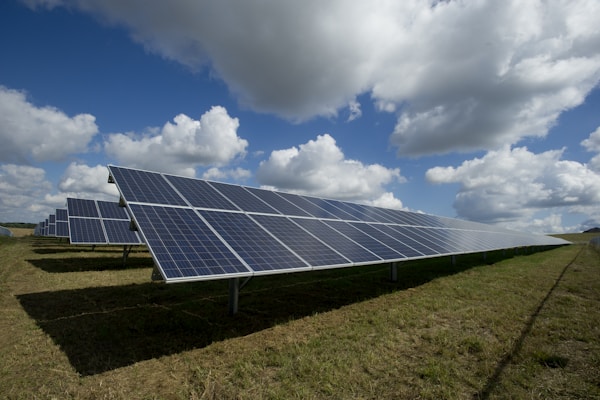
Southeast Asian countries are targeting nearly 50GW of new solar and wind capacity before 2030. In these small isolated systems, every new solar or wind project requires the grid operator to add a corresponding proportion of fast-response frequency regulation storage. No storage, no grid connection. This is mandatory. This type of demand is fine-grained, small in individual scale, dispersed across hundreds of islands and regional grids, and not as easy to track and compile as large grid-scale storage projects. It’s frequently underestimated in macro-level analysis. Add it all up though, and the volume is not small.
Nearly 50GW of new solar and wind capacity is targeted across the region before 2030
Analyzing Southeast Asia’s grid-related storage demand as a homogeneous market loses all of the above information. Each type of grid problem corresponds to different storage demand characteristics: different power-to-energy ratios, different response time requirements, different revenue models, different procurement decision-makers. Doing project development or equipment sales in Southeast Asia’s storage market requires not one regional market report, but five or six country-level grid diagnostics.
Coal
Southeast Asia’s total coal-fired capacity is approximately 106GW, with an average fleet age under 15 years.
On the financial level: investments have not been recouped, and long-term power purchase agreements have locked in prices and volumes. In Indonesia and Vietnam, most coal plants were built with state-owned capital, and their debt is booked under sovereign or quasi-sovereign credit. Early retirement triggers asset write-downs and debt restructuring that directly impacts national credit ratings. The JETP-pledged $15.5 billion for Vietnam and $20 billion for Indonesia have seen implementation progress far below expectations.
On the political level: employment in coal-producing regions, fiscal revenues in localities hosting coal plants, and the role of low electricity prices in supporting export manufacturing competitiveness. The political influence of coal mine owners in Indonesian Kalimantan is not to be underestimated. Announcing explicit coal phase-out timelines is a political no-go zone in these countries.
With an average fleet age under 15 years, Southeast Asia’s 106GW of coal capacity is not going anywhere soon
So what does storage have to do with any of this? Since coal cannot exit in the short term, and renewable energy must continue expanding (international pressure, financing conditions, export carbon tariffs), the two will coexist in the same system for a considerable period. Without storage, the intermittency of high-penetration solar and wind disrupts the operating efficiency of coal units; simultaneously, the low flexibility of coal units constrains the grid integration space for renewables. Storage serves as a buffer between the two, allowing coal to continue running baseload and renewables to continue expanding.
Energy storage demand growth does not require coal retirement as a precondition. In Southeast Asia’s real-world context, the harder coal exit becomes, the longer renewables and coal must coexist, and the greater the demand for storage as the buffer layer between them.
Data Centers
This section is longer than others because the impact of data centers on Southeast Asia’s energy storage demand is unfolding at a speed and intensity that exceeds what the energy industry’s internal discussions have covered.
Singapore suspended new data center construction approvals in 2019, and after partially lifting the moratorium in 2022, maintained extremely strict approval standards. Investment spilled over to Malaysia’s Johor state, Indonesia’s Batam Island, Bangkok, and Chonburi province in Thailand. Malaysia’s data center electricity consumption is expected to grow from 8.5 TWh in 2024 to 68 TWh by 2030.
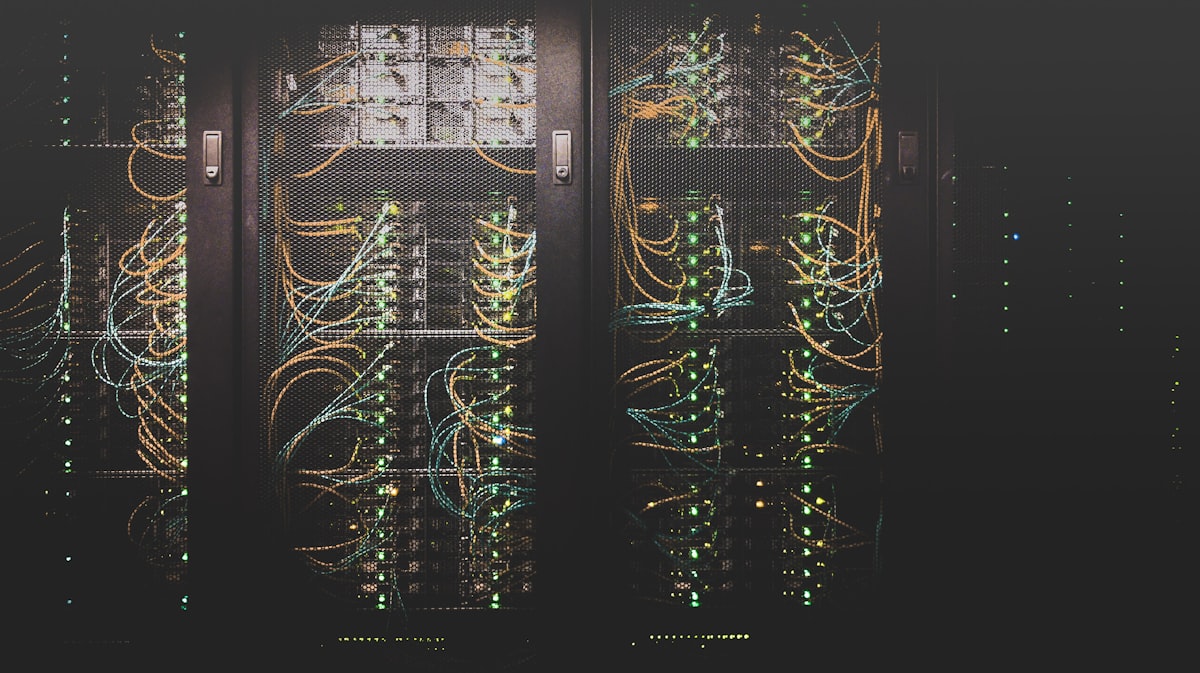
Data centers and factories are not the same species in terms of power requirements. Factories can tolerate occasional voltage dips. Data center server clusters require millisecond-level uninterrupted power supply. Diesel backup generators take 10 to 15 seconds to start. That gap is enough to crash a row of racks. BESS response time is at the millisecond level, filling exactly the vacuum before the diesel generator kicks in. New Tier III and Tier IV data centers have already made BESS standard equipment.
Data center loads demand millisecond-level power continuity that diesel backup cannot provide
Green power compliance pressure layers on top of this. AWS, Azure, and Google Cloud have all committed to 100% renewable energy operations. In 2023, Google’s renewable energy share of total electricity consumption in Southeast Asia was 0.15%. That’s two orders of magnitude away from 100%. Southeast Asia’s green power market is extremely underdeveloped: PPA frameworks are incomplete, green certificate mechanisms are just getting started. Solar-plus-storage systems can provide round-the-clock traceable green power. Storage has already transitioned from “power security equipment” to “ESG compliance infrastructure” for these companies.
Johor’s grid was originally designed for palm oil processing and manufacturing. These industrial loads have day-night fluctuations, seasonality, and are reasonably predictable for grid dispatch purposes. Data center loads are entirely different: 365 days a year, 24 hours a day, nearly constant high-density power consumption, with power quality requirements a full tier above what factories need. When hundreds of megawatts of this special load type flood into a grid designed for a different load profile, grid operators face not just total demand growth but a sudden mutation in load characteristics. The shape of the load curve has changed. Peaking requirements have changed. The calculation logic for reserve capacity has changed.
Data center investment has strong clustering tendencies. After one major cloud provider lands in an industrial park, supporting network operators, content delivery nodes, and disaster recovery centers follow into the same area. Load is not evenly distributed across the national grid. It concentrates heavily at a small number of nodes. Grid stress at these nodes far exceeds the national average. Storage demand at these nodes is dual-layered: the data centers’ own facility-level BESS requirements, plus the frequency regulation and reserve capacity needs arising from load concentration at the grid level.
Malaysia’s Energy Commission began requiring large data center projects to submit energy storage integration plans as part of their grid connection applications in late 2024. Storage has already shifted from a voluntary choice by data center operators to a precondition for grid connection approval, at least in Malaysia. If Johor’s approach is referenced within ASEAN, similar regulatory requirements appearing in other countries is only a matter of time.
Multiple Southeast Asian countries are drafting or tightening data sovereignty regulations. Thailand, Indonesia, Vietnam, and the Philippines are all moving in this direction. Each data sovereignty law means new demand for local data center construction.
Regarding data centers and storage, there is one point where misjudgment easily occurs and it needs to be pulled out separately: many analyses equate data center storage demand with UPS-level (uninterruptible power supply) demand, thinking it’s just a few MWh of backup power. This underestimates it.
When data center operators commit to 100% green power while facing Southeast Asia’s immature green power procurement environment, the storage scale they need goes far beyond UPS level. A 100MW data center park aiming for round-the-clock green power supply might need storage capacity of 200MWh or more. This already falls within the volume range of grid-scale storage projects. Data center storage demand is blurring the boundary between “behind-the-meter storage” and “front-of-meter storage.”
Chinese Overcapacity Spillover
In 2024, Chinese energy storage battery shipments accounted for over 70% of the global total. Domestic tender prices fell below the industry’s breakeven line for multiple consecutive quarters. The price war pushed large numbers of Chinese storage companies overseas.
Chinese storage battery shipments exceeded 70% of global volume in 2024, pushing fierce competition overseas
In 2024, the global average turnkey storage system price dropped 40% from the prior year to $165/kWh. This number lands differently in each Southeast Asian scenario: for diesel microgrids on Philippine islands costing $0.35/kWh, the economics of replacement went from marginal to comfortable; for EGAT’s peaking needs in Thailand, storage solution costs dropped into the competitive range of gas peaking; for buffering north-south power imbalances in Vietnam, the financial threshold for large-scale deployment was lowered. Saying “falling battery costs are driving Southeast Asian storage demand” is not wrong, but the level of crudeness is comparable to saying “water flows downhill, therefore rivers exist.” Cost decline is a necessary condition, not a sufficient explanation.
The three-way competition among Chinese, Korean, and Japanese firms in Southeast Asia’s storage market is worth watching. Samsung SDI and LG Energy Solution have visibly accelerated their moves in the past two years. Fluence, together with Korea’s ACE Engineering, commissioned a 35GWh annual capacity fully automated BESS manufacturing facility in Vietnam’s Bac Giang province. Japan’s Sumitomo Electric and Toshiba are pushing vanadium redox flow batteries and SCiB lithium titanate batteries in the long-duration storage space. The price concessions squeezed out by competition are directly deposited as lower project deployment costs.
There is a friction surface. Chinese storage products’ price advantage is built on domestic overcapacity and government subsidies. Southeast Asian governments have a conflicted attitude toward this dependence: they welcome the project economics improvement from low-cost equipment while worrying about risks from excessive supply chain concentration. Indonesia is pushing local content requirements. Thailand’s BOI offers more favorable tax treatment for storage projects with local production components. These policies increase project costs in the short term and reshape supply chain geography over the long term. Some projects are delayed because local content requirements raise costs. Some projects are advanced because local content brings policy benefits. The relative strength of these two forces fluctuates across countries and time periods.
Indonesia’s nickel ore export ban has drawn battery materials investment onshore, reshaping downstream economics
Indonesia’s nickel supply chain has its own independent logic in this context. Indonesia implemented a nickel ore export ban in 2020 to keep smelting and processing onshore, attracting Chinese, Korean, and Japanese battery materials companies to build processing facilities. With battery upstream and midstream capacity landing in Indonesia, downstream storage system integration and local deployment gained cost advantages. The Indonesian government needs to expand the domestic application market to provide scale economies for local manufacturing. This means Indonesia’s storage installation volumes receive additional push from industrial policy, and power demand models’ capacity forecasts represent only the lower bound. PLN’s planned 50MW solar-plus-storage project in the new capital Nusantara serves both energy and industrial showcase functions.
Vietnam’s Circular No. 62
Most ASEAN countries’ electricity markets still operate in a vertically integrated or limited-reform state, lacking independent ancillary services markets, capacity markets, or spot markets. The frequency regulation, voltage regulation, spinning reserve, and black start services that storage can provide have no pricing channel. The only revenue source for storage projects is the energy charge calculated per unit of electricity discharged. A tool that can do ten things simultaneously, but only one of them can be exchanged for money.
Vietnam’s Circular No. 62 took effect in January 2026, introducing a dual revenue structure of capacity charge and energy charge. The capacity charge pays for storage’s standby capability. Project cash flows thereby shift from highly unpredictable to predictable. Banks are willing to accept predictable cash flows as loan repayment security. They are not willing to accept revenues that fluctuate depending on dispatch frequency. Project financing logic changes accordingly.
ASEAN countries have a strong tendency toward peer referencing in energy policy. The Philippines’ WESM has operated for years and has the technical preconditions to be the most likely to follow up with some form of storage capacity compensation. Thailand’s ERC is studying rules for storage participation in electricity markets. Indonesia’s PLN is running BESS pilots at multiple sites.
It should be noted that Circular No. 62 only took effect in January 2026. The first batch of projects signed under this framework probably won’t be commissioned until 2027. Until then, all discussions about it carry a speculative element.
If the first batch of projects’ revenue data validates the framework’s bankability, the spillover effect will be fast. If they encounter execution-level obstacles, such as delayed capacity charge settlements, unclear dispatch priority, or EVN operationally undermining the actual received amount of capacity payments, the spillover effect will be discounted. In Vietnam’s power sector, the gap between policy text and implementation reality has never been small. The degree to which this framework delivers on its paper promises is the single variable most worth tracking for Southeast Asia’s storage market over the next two years.
On cross-border power trade’s storage demand, briefly: when two grids connect via tie-lines, one side’s frequency disturbances propagate to the other. Singapore plans to import 4GW of low-carbon power by 2035. Laos is exporting hydropower to Thailand and Vietnam. Indonesia and Malaysia’s Sabah and Sarawak have cross-border transmission plans. Safe operation of these interconnection projects all requires storage at the interconnection nodes. Singapore’s 200MW/285MWh storage facility on Jurong Island serves frequency buffering as one of its functions. This demand segment is currently small in volume. The growth direction is certain. Singapore, as the strongest driver of ASEAN grid interconnection, shows no signs of slowing down. Note it down, come back and check in five years.
Closing
All of these driving forces stacked up at unusually high density within the 2024 to 2026 window. Whether this is a series of independent events that happened to coincide or whether there is a shared deep cause at work can be debated. One pervasive tension does exist: the high-speed growth of Southeast Asian economies (electricity demand growing over 6% annually) and the tightening of international climate finance conditions (JETP, carbon border tariffs). Every specific driving force can be traced back to some manifestation of this tension. The extent of Chinese storage overcapacity, the AI-driven data center investment wave, the spillover from Singapore’s moratorium, each of these also has its own independent causal chain. Assigning a precise causal attribution ratio is not possible. The evidence isn’t sufficient.
What can be assessed is the weight of institutional variables. Technology is ready. Costs are low enough. Demand is strong enough. What is currently bottlenecking Southeast Asia’s storage market is the institutional side: the pace of electricity market reform, the design quality of storage revenue frameworks, and the speed of cross-border interconnection. After Vietnam’s Circular No. 62, which country follows next, what the framework design quality looks like, and how well execution goes, these are the indicators for judging the growth tempo of Southeast Asia’s storage market.
Southeast Asia’s institutional reform speed frequently falls short of expectations. Energy sector institutional reform is even slower, because it involves the interest structures of state-owned power utilities, the social contract around regulated tariffs, and the friction costs of cross-ministerial coordination. Being conservative rather than optimistic about this market’s growth trajectory has a lower probability of being wrong. Looking back ten years, the analysts who made aggressive forecasts for Southeast Asia’s renewable energy market were almost all early on their timing. Storage will most likely follow a similar pattern: the direction is right, the speed will be slower than most predictions.