CBAM's definitive phase started January 1, 2026. Certificates priced against the EU ETS allowance must be purchased for embedded emissions in covered imports. Current scope: cement, iron and steel, aluminium, fertilizers, electricity, hydrogen. Lithium-ion cells are not covered. On December 17, 2025, the Commission published a draft regulation adding about 180 downstream steel- and aluminium-intensive products from January 2028. Organic chemicals and polymers are under discussion for later rounds.
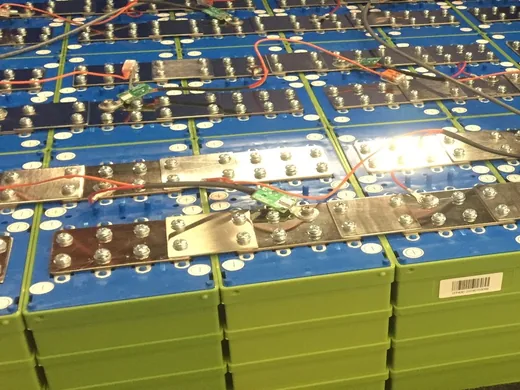
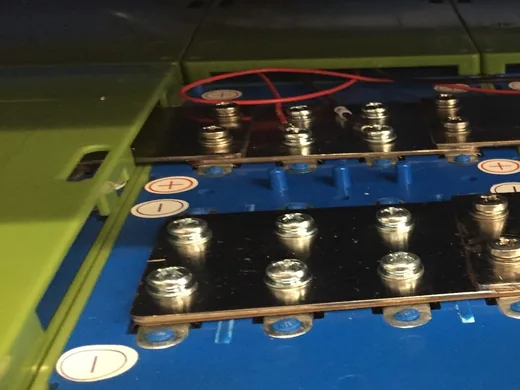
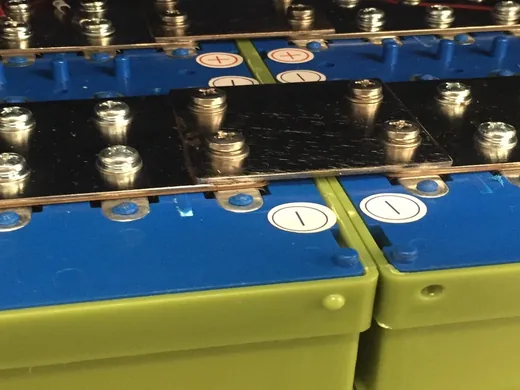
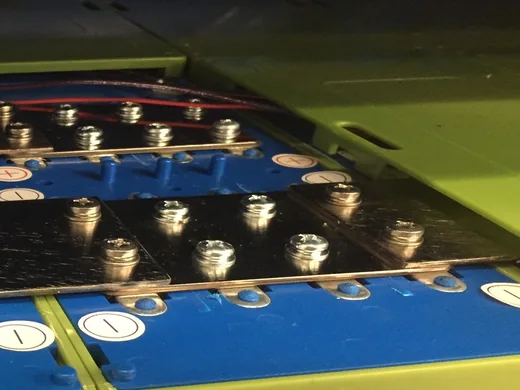
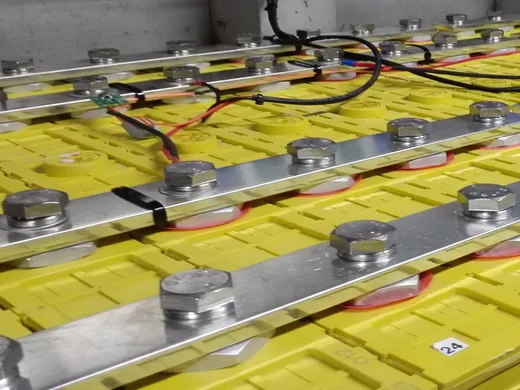
The aluminium and steel inside a battery pack are already covered. A prismatic LFP cell has about 300 grams of aluminium in the casing, 12-micron aluminium foil as cathode current collector, aluminium busbars. In a CTP architecture the pack enclosure adds more. About 20 kg of aluminium per 60 kWh pack, plus steel in cooling plates and structural parts. Certificate obligations on these materials exist today for any pack crossing the EU border. The per-pack cost at current ETS prices around 65 to 70 euros per tonne CO₂ is modest. The compliance infrastructure engagement it forces on importers is worth more than the cost itself, because it means battery supply chains are already inside the CBAM reporting system before scope formally reaches cells.
Meanwhile, on a parallel track that almost nobody in the CBAM discussion pays enough attention to, DG GROW has been building the EU Battery Regulation. Mandatory carbon footprint declarations for EV batteries. Performance class labels by 2028. Binding maximum thresholds by 2031, above which a battery cannot be sold in Europe regardless of price. The carbon accounting methodology is PEF-based lifecycle assessment, cradle to grave, completely different from CBAM's process-boundary emission calculation that DG TAXUD designed. Different system boundaries. Different allocation rules. Different upstream scoping. Two instruments converging on the same target through incompatible measurement frameworks. Eurobat and RECHARGE have been flagging the dual compliance cost. The Commission acknowledges the problem in the institutional sense of the word, which means it appears in meeting minutes without generating implementing acts.

The rest of this article is about the specific points where CBAM's methodology collides with battery supply chain realities in ways that most published analysis has failed to examine.
Unbundled renewable energy certificates are worthless under CBAM. The implementing regulation lists three acceptable pathways for a foreign producer to claim lower indirect emissions: on-site renewable generation, a direct wire to a dedicated renewable source bypassing the grid, or a PPA with bundled energy attribute certificates. That is the full list. Unbundled I-RECs purchased on the open market are excluded.
This wipes out the decarbonization accounting strategy of a large fraction of Chinese battery material producers. The I-REC market has been selling certificates to Chinese industrial buyers for years on the premise that they demonstrate renewable electricity consumption. Under the GHG Protocol's market-based Scope 2 methodology, they do. Under CBAM, they do not. A synthetic graphite producer in Shanxi who bought I-RECs from a solar installation in Qinghai gets assessed at the Shanxi provincial grid emission factor, full coal penalty, no discount.
The damage extends beyond CBAM. Companies have been building Battery Regulation carbon footprint estimates using the GHG Protocol market-based method, which accepts I-RECs. When CBAM scope expands to battery materials, the same facility's electricity would be assessed under CBAM's methodology, which rejects them. A supplier could have a Battery Regulation declaration showing moderate emissions and simultaneously face a much higher CBAM number, same factory, same year, two different regulatory answers. The Commission knows about this divergence.
What makes this operationally severe is the timeline to fix it. Switching from unbundled RECs to a qualifying PPA requires a contractual relationship with a specific generator, and in many cases the physical construction of dedicated renewable capacity.
Chinese provinces vary enormously in how accessible this is. Sichuan and Yunnan have relatively functional direct-transaction electricity markets because their hydropower surplus created a commercial rationale for bilateral industrial supply contracts years ago. Provincial pilot programs in Guangdong and Zhejiang have opened some PPA pathways. Inner Mongolia, Hebei, Shandong, Shanxi, where a large share of anode graphitization and cathode calcination capacity sits, have grid companies that retain dispatch authority over industrial loads and thin regulatory infrastructure for direct industrial PPAs. A graphitization operator in Datong trying to secure a qualifying PPA faces a fundamentally different institutional landscape than a cathode producer in Leshan. The geography of Chinese electricity reform maps onto battery material production geography in a way that concentrates the problem where the highest-emission production happens.
Companies that recognized this in 2024 and started restructuring electricity procurement have a multi-year head start over those still counting I-RECs. That gap will show up in CBAM costs when scope expands.

Hungary. Over $13 billion in battery manufacturing investment committed. CATL in Debrecen, the largest single greenfield FDI in Hungarian history, 221 hectares of former farmland. BYD in Szeged. Samsung SDI in Göd since 2017. SK Innovation in Komárom. Production inside the EU avoids CBAM. The Battery Regulation does not care about trade routes. It reads the carbon footprint number. Hungary's grid runs around 250 gCO₂/kWh, natural gas heavy. Sweden is below 50. Spain and Portugal are pushing below 150 on solar deployment. A cell assembled in Debrecen accumulates Hungarian grid carbon in its mandatory footprint declaration, compounded by whatever emissions ride in with the imported cathode and anode materials. By 2031, cells above the maximum threshold are banned.
The investment thesis for Hungarian battery factories was built before the Battery Regulation existed. Samsung SDI chose Göd in 2017. CBAM was a discussion paper. The regulatory landscape shifted around commitments already sunk into the ground. CATL's Arnstadt facility in Thuringia procures green electricity and has been marketed as net-zero. Debrecen, planned at much higher capacity, has no comparable clean electricity arrangement. Phase II construction was reported suspended. BYD's Szeged plant reportedly delaying mass production and running below capacity. Stated reasons: soft EV demand, which is real. Grid carbon intensity is not mentioned publicly by either company.
Hungary's energy policy trajectory does not suggest rapid grid decarbonization. The Paks II nuclear expansion, if completed on schedule, would help. Nuclear construction schedules in Europe are not known for reliability.
Sichuan's seasonal problem. LFP cathode production clusters there because of hydropower. Annual average grid intensity below 200 gCO₂/kWh in some estimates. Sichuan's reservoirs follow the monsoon. June through October, hydro is abundant. November through March, output drops and the province pulls coal-fired generation from neighbors. The marginal emission factor for industrial loads in a Sichuan February could be double or triple the July figure depending on that year's hydrology.
The Commission has not specified temporal resolution for grid emission factors in potential future battery material CBAM coverage. Annual averaging gives Sichuan producers summer hydro credit diluted across twelve months. Monthly or quarterly matching would mean winter cathode production carries assessed emissions comparable to coal-belt provinces. A cathode producer scheduling European-destined runs for summer and diverting winter output to domestic or Southeast Asian markets would be making a rational response. Whether procurement teams at European OEMs have started asking about production month in supplier qualification is not publicly visible but follows obviously from the regulatory logic.

Anode graphite. Acheson furnaces, about 3,000°C, two to three week cycles, above 12,000 kWh per tonne for battery-grade synthetic graphite. China holds about 97 percent of global output, according to Benchmark Mineral Intelligence. Production concentrated in Inner Mongolia, Shanxi, parts of Sichuan.
On Inner Mongolia's grid at roughly 850 gCO₂/kWh, graphitization electricity alone puts over 10 tonnes CO₂ on each tonne of finished anode material. Add calcination, milling, coating, upstream coke production: 25 to 35 tonnes CO₂ per tonne total, based on combining published Chinese academic energy intensity data (Dai et al. 2019, Sun et al. 2020 in Journal of Cleaner Production and related work) with National Bureau of Statistics provincial grid factors. Wide uncertainty band, but the order of magnitude is solid. At 70 euros per tonne ETS price, that is roughly 1,750 to 2,450 euros of potential CBAM cost per tonne. An EV battery uses 50 to 80 kg of anode material. Per-pack exposure from graphite: 100 to 200 euros.
Kilogram for kilogram, synthetic graphite from a coal-grid facility is more carbon-intensive than NMC811 cathode material, more carbon-intensive than LFP cathode material, more carbon-intensive than most materials in the battery bill of materials. The industry conversation about battery carbon footprint is fixated on cathode chemistry: NMC versus LFP, Indonesian nickel versus Canadian nickel, DRC cobalt ethics. Cathode has more commercial variation, more competitive dynamics between chemistries, more conference presentations. Cathode is where the ESG narrative lives. Anode is graphite. Synthetic or natural, some silicon blended at the margins, fewer competitive narratives to sustain analyst coverage.
The companies with the highest exposure, Chinese synthetic graphite producers concentrated in coal-belt provinces, have zero incentive to make this a public discussion topic. European regulators working on CBAM scope expansion are proceeding through the product list starting with downstream steel and aluminium goods. Battery materials are further out. By the time the regulatory conversation reaches anode materials, the producers who invested early in alternative graphitization energy, or shifted sourcing to natural graphite, or pushed silicon-dominant anode R&D forward, will hold positions that late movers cannot replicate on the timeline that matters.
Natural graphite avoids the graphitization furnace entirely. Large carbon advantage. Purification uses hydrofluoric acid in most commercial processes.
Supply concentrated in Mozambique (Syrah Resources' Balama mine is the largest non-Chinese source), Madagascar, China. Ore characteristics vary by deposit: flake size distribution, carbon purity, crystallinity all differ, and processing parameters are not interchangeable. Switching from synthetic to natural graphite requires reformulating the anode recipe and requalifying the cell, which takes 12 to 18 months minimum through automotive validation cycles. Silicon-carbon composite anodes bring metallurgical-grade silicon into the equation. Energy-intensive smelting. Major production in Xinjiang (coal-heavy grid) and Yunnan (cleaner, hydropower). Current commercial blends are 5 to 10 percent silicon by weight. The trajectory is toward higher silicon loading as swelling and cycle life problems get engineered down, and as silicon content rises, its embedded carbon contribution becomes more material at the cell level.

China's export controls. MOFCOM, October 9, 2025, effective November 8. Covered: lithium-ion batteries above 300 Wh/kg, high-compaction LFP cathode (above 2.5 g/cm³ compacted density, above 156 mAh/g specific capacity), ternary cathode precursors, lithium-rich manganese cathode materials, artificial graphite anode materials and blends, and the manufacturing equipment for all of the above. Winding machines. Lamination machines. Liquid injection machines. Capacity cabinets. Roller kilns. Graphitization furnaces. Granulation reactors. Export requires a MOFCOM license.
DGAP (German Council on Foreign Relations) published Memo No. 54 in December 2025 mapping the institutional architecture of the licensing process. Provincial commerce departments administer it. The same departments designate high-tech firms for government support. Provincial science and technology departments consulted in the process simultaneously manage talent recruitment programs. The licensing review sits inside the bureaucracy that administers China's broader technology strategy.
After the October 2023 natural graphite export controls, Benchmark Mineral Intelligence tracked shipment patterns. India and US destinations saw two to three month delays. South Korean shipments cleared faster. Bilateral political relationships appeared to influence processing speed.
CBAM pushes battery material production toward the EU and toward clean-grid jurisdictions. China's export controls restrict transfer of the equipment and process technology needed to build that production capacity. Four of the five largest battery equipment suppliers globally are Chinese. Wuxi Lead Intelligent Equipment, the world's number one, sells to CATL, BYD, LG Energy Solution, Samsung SDI, Panasonic, SK On. Their machines sit in factories on every continent.
CATL building in Debrecen ships CATL equipment from China to a CATL facility. Technology stays inside the corporate group. No licensing ambiguity. A European startup building cathode capacity, or a Korean company expanding anode production in Europe, needs its Chinese equipment supplier to apply for a MOFCOM license. The supplier submits business scope, sales history, key customer information, and an end-user certificate. MOFCOM evaluates on a discretionary basis. Timeline opaque.
Chinese battery manufacturers are the entities best positioned to build CBAM-compliant production inside the EU because they hold the technology, carry it within their corporate structure, and face no licensing friction on intra-firm equipment transfers. European and Korean companies trying to build independent capacity confront both CBAM-driven location requirements and Chinese technology access constraints at the same time. CBAM, by driving production toward Europe, increases demand for the specific equipment that MOFCOM has placed under license. The DGAP analysis concluded that China views battery technology transfer as an economic security matter. The practical effect is that CBAM's incentive structure and China's export control architecture, taken together, favor the expansion of Chinese-owned production inside Europe over the development of European-owned production using Chinese technology. Neither set of policymakers designed for this outcome explicitly. It emerged from the intersection.

Verification. Default values under CBAM when verified facility-level data is unavailable: average intensity of the worst-performing 10 percent of installations in the exporting country, or EU benchmarks, whichever is higher.
A battery cell's supply chain touches five or six countries across three or four transformation stages. Getting verified data from an HPAL nickel plant in Sulawesi, a pCAM plant in Hubei, a graphitization subcontractor in Inner Mongolia running 1990s-era Acheson furnaces, an electrolyte plant in Guangdong, a cell assembly line in Changsha. Some of these facilities have never hosted a European verification body. Some lack the metering granularity that CBAM demands.
Default values will dominate imported battery material assessments for years after scope expands. Producers with clean operations and poor documentation get assessed at inflated rates. Producers with professional compliance departments and middling emissions look better on paper. The verification infrastructure gap between European reporting standards and the institutional capacity of battery material suppliers in China, Indonesia, and the DRC could take until the early 2030s to close for the broad supply chain. During that period, CBAM costs for battery materials will reflect administrative readiness as much as carbon performance.
This matters specifically because it interacts with the I-REC problem described above. A Chinese producer who both lacks qualifying PPAs (so gets assessed at full grid factor for indirect emissions) and lacks verified facility-level data (so defaults to the worst-performer benchmark for direct emissions) faces a double penalty. The REC problem inflates the indirect emission number. The verification gap inflates the direct emission number. Both problems are solvable, but both take years, and they compound.
Recycled materials. Hydrometallurgical recovery of battery metals consumes a fraction of primary production energy. No graphitization furnace for recycled graphite. No mining for recycled copper. If CBAM credits recycled content at lower embedded intensity when scope reaches battery materials, European recyclers gain an advantage that grows as ETS prices rise. Meaningful volumes of end-of-life EV batteries start arriving in the late 2020s as the 2018-2022 deployment cohort retires. Before 2030, the recycling story is about capacity building. After 2030, it is about volume.
Indirect emissions. CBAM currently prices them only for cement and fertilizers. Extension under consultation, no expansion before 2027. Battery manufacturing is electricity-dominated: formation and aging, electrode drying, NMP recovery, clean room HVAC. A 40 GWh gigafactory uses around 500 GWh per year.
When indirect emission pricing reaches battery products, grid carbon intensity becomes a direct production cost input. The differential between a Nordic cell and a Chinese cell translates to roughly 1.5 to 2.5 euros per kWh of CBAM cost at current ETS prices, for a 75 kWh pack over 100 euros. These are rough estimates sensitive to factory-specific electricity-to-capacity ratios, which vary with cell chemistry, formation protocols, and process efficiency.
Dry electrode processing, if it matures commercially, reduces electrode manufacturing electricity consumption by 40 to 50 percent by eliminating the NMP drying step. This helps coal-grid producers more in absolute CO₂ terms because each kWh saved removes more carbon on a dirty grid. CBAM was designed to reward clean energy infrastructure. A process technology that partially erodes the clean-grid advantage is a policy complication. Tesla acquired Maxwell Technologies in 2019 for this technology. Pilot lines exist at multiple companies. Commercial-scale deployment has not arrived.

The dual compliance problem. PEF lifecycle assessment for the Battery Regulation covers cradle to grave: materials extraction, manufacturing, transport, use phase, end of life. CBAM's process-boundary calculation covers the installation level. A cell importer builds two separate data sets, two methodologies, for two regulations measuring overlapping but not identical realities. A cell could score well on one and poorly on the other depending on where its carbon concentrates in the lifecycle. Clean manufacturing electricity with dirty upstream mining: low CBAM, high Battery Regulation number. Reverse configuration: the opposite result.
DG TAXUD and DG GROW have different mandates, different stakeholder communities, different timelines. The bureaucratic incentives to compromise methodology for the other directorate's convenience are weak. Harmonized implementing acts would require cross-DG coordination at a level that the Commission achieves occasionally but not routinely. Companies are planning for parallel tracks and absorbing the overhead.
The specific scenario that concerns battery industry compliance teams most: a cell that satisfies the Battery Regulation's maximum carbon footprint threshold (because its use-phase credit in a clean grid market offsets upstream emissions in the lifecycle calculation) while simultaneously triggering high CBAM costs (because the manufacturing-phase embedded emissions are assessed at the installation level without lifecycle offsets). Under CBAM, there is no use-phase credit. There is no offset mechanism. The embedded emissions at production are what they are. A cell manufacturer who optimized for the Battery Regulation lifecycle number could be caught off guard by a CBAM number that strips away the lifecycle framing and prices only the factory gate emissions.
Whether this scenario materializes depends on the specific threshold values and scope definitions in implementing acts still being drafted. The regulatory risk is real enough that several major European OEM procurement departments have started requiring suppliers to provide both lifecycle and process-boundary emission data in parallel, even before CBAM formally covers cells. Volkswagen's battery procurement specifications now include carbon footprint requirements that reference both regulatory frameworks. BMW's iFactory concept includes energy source documentation requirements that anticipate both CBAM and Battery Regulation compliance. These OEM-level requirements are propagating upstream through the supply chain faster than the regulations themselves.
The verification timeline problem, stated more sharply. CBAM's incentive structure assumes verified facility-level data becomes the norm and default values are a transitional penalty. For steel, cement, aluminium, the production processes are well understood, metering technology is mature, facilities are large enough to justify verification investment. Battery material supply chains are longer, more chemically complex, more dispersed, and more dependent on small and medium suppliers.
The gap between when CBAM reaches battery materials and when the global supply chain can produce reliable verified data could be five years or more. During that period, default values inflated by the worst-performer benchmark will dominate, creating trade cost distortions driven by institutional capacity differences between jurisdictions rather than by actual carbon performance differences between producers.
Investing in MRV capacity building in supplier countries is the obvious response. European Commission development finance instruments, EU trade facilitation programs, bilateral technical assistance to producing countries' environmental agencies. Whether these programs will be designed and funded at a scale matching the verification gap is a political question that depends on how much weight the battery supply chain receives in overall CBAM implementation budgets. Given the number of sectors now inside or approaching CBAM scope, battery materials are competing with steel, aluminium, cement, chemicals, and polymers for the same institutional attention and the same verification infrastructure funding. The battery industry does not have the lobbying weight in Brussels that the steel or chemical industries have built over decades.
The aluminium already in scope today. The unbundled REC invalidity. The Hungarian grid trap. Sichuan seasonality. Synthetic graphite carbon intensity. China's export control intersection. Verification timelines. Recycling advantages emerging slowly. Indirect emissions pending. Dual compliance friction between CBAM and Battery Regulation. These are not separate issues. They layer. A Chinese cell manufacturer exporting to Europe faces the REC problem and the verification gap and the indirect emission exposure and the export control asymmetry simultaneously. A Hungarian gigafactory avoids CBAM but walks into the Battery Regulation's grid intensity sensitivity. A European startup trying to build domestic capacity runs into Chinese equipment licensing and high capital costs. Each company's exposure is a specific combination of these overlapping pressures, and the combinations that look manageable in a spreadsheet become operationally grinding when they all need to be addressed within the same compliance and investment cycle.
Embedded carbon is entering the battery industry's competitive equation as a cost, as a market access condition, and as a procurement variable that OEM purchasing teams are starting to score alongside defect rates and delivery reliability. The shift from sustainability reporting metric to procurement input is happening now, unevenly, faster at the OEMs than at the material suppliers. That gap between buyer expectations and supplier readiness is where commercial friction will concentrate through the late 2020s.