

Industrial Application Processors
Application Processors and SoCs for Industrial Use
An application processor runs a full operating system on an industrial device, the step up from a microcontroller for designs that need Linux and the software stack on top of it. Choosing one for industrial use turns first on how long the part stays on the market. A product that ships for ten years needs a processor it can still buy in year six, with Linux support kept current and the surrounding memory and power parts as easy to source as the processor. Performance is the specification that ages fastest, and a part chosen on benchmarks alone is often the one that reaches end-of-life while the product still needs it.
Where the MPU line gets drawn
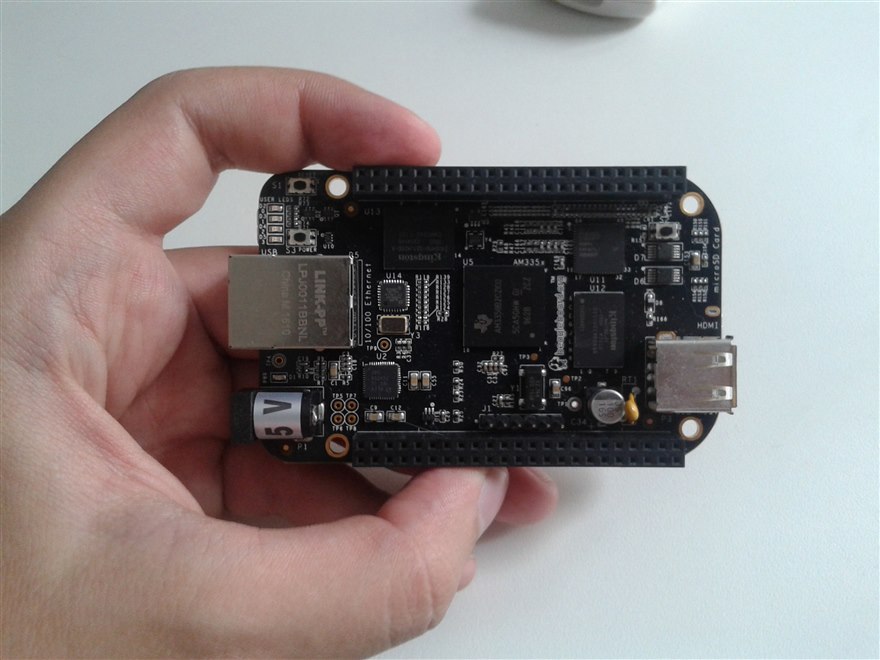
The split between a microcontroller and an application processor is a change in kind. An MPU runs a full operating system and needs external DRAM and flash to hold it, where an MCU lives inside its own on-chip memory and runs no kernel at all. Crossing that line changes what the board is. The place a design has to cross it is the thing to pin down before any part reaches a shortlist, because the answer reshapes the schematic, the bring-up, and the procurement at once. Where the MCU-to-MPU crossover point sits is the first question to settle, and a fair number of designs answer it by staying on the near side.
Once a design is on the MPU side, the part count jumps. The processor wants a DRAM device matched to its controller and an eMMC or NAND to boot from and store to. It wants a power sequence that brings the rails up in the order the silicon demands, and a layout that treats the DDR bus as the timing-critical path it is. Sizing the DDR and flash for a Linux-capable MPU is its own piece of engineering, and getting it wrong shows up as a board that boots on the bench and falls over once it is warm and loaded. The boot path adds constraints of its own, since the processor’s ROM reads the first stage from the source its fuses or boot pins select. If that source holds no image the ROM recognises, the board halts in download mode, well short of its bootloader. The processor itself is one line on the BOM; the trouble is in everything it pulls in around it.
That cost is reason enough to ask whether the job needs an MPU at all.
Plenty of designs that reach for Linux could stay on a microcontroller and skip the entire apparatus. When the load is a control loop with a small display, or a sensor node running a model it can hold in on-chip memory, running the model on a single MCU keeps the entire thing on one chip with one part to source. The pull toward an MPU often has little to do with the load. It is the operating system a team already knows and would rather keep. Naming that pull honestly is what saves a board from a DDR layout it never needed.
When the work genuinely is Linux work, a rich graphical interface or a network stack with real services on it, the MPU is worth its complexity. It is the design in the middle that tends to go wrong, where the load could go either way and the team picks the processor because the demo ran on one. On those boards the cost shows up later, since the board pays for an MPU to carry a load an MCU would have held with fewer parts and less power.
The Western parts built for a long industrial life
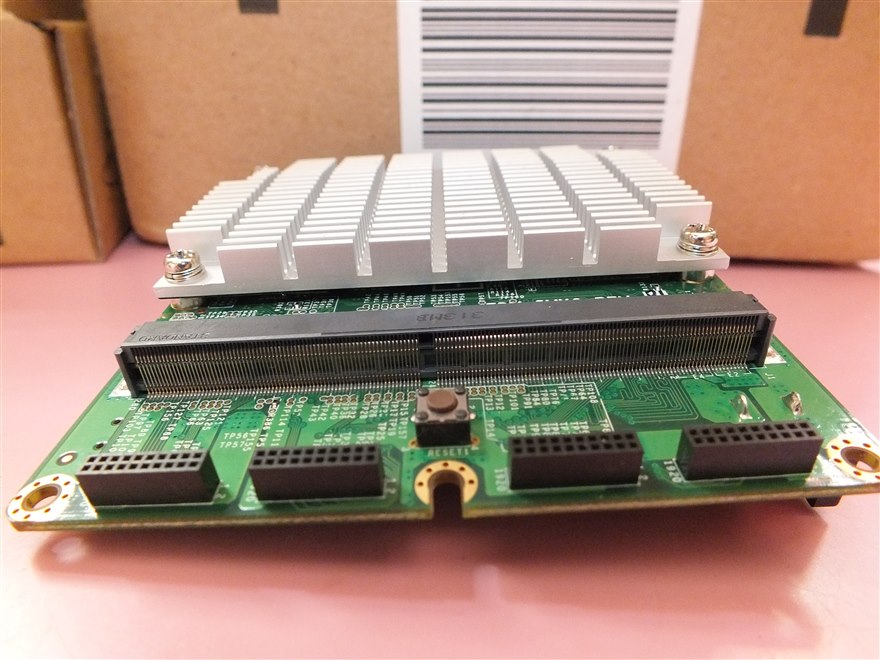
For a Western industrial design, the NXP i.MX family is the default first look, and it has held that spot long enough that a lot of running production sits on it. The current capability tier, the NXP i.MX 8 and i.MX 9 for industrial work, runs from the i.MX 8 with its GPU and several cores up into the i.MX 9, where the family splits between the i.MX 95 with full 3D graphics and the lower-power i.MX 91 and 93 that leave the GPU out. For an industrial buyer the draw is the line itself. NXP keeps it in long production and documents each change along the way, the kind of commitment a ten-year product is built on. A deep bench of module makers builds the i.MX onto a system-on-module, so a team can buy the hard DDR layout already proven and drop a known-good block onto a simpler carrier board.
Underneath the headline parts sits a quieter favorite. The i.MX 6ULL is modest on paper and chosen for a different reason, which is that NXP put it on a long-term supply program, so its supply longevity is the feature that keeps it on new designs years after faster parts arrived. A product that ships in low volume for a decade wants a supply letter in hand, and the 6ULL reads as a part picked by people who have lived through an end-of-life notice before.
For a team coming up from a microcontroller, ST offers a shorter path. The STM32MP1 dual-core MPU pairs a Cortex-A running Linux with a Cortex-M that behaves like the STM32 the team already ships, so the real-time code moves across with its habits intact. TI answers the same real-time-plus-Linux brief from another angle: the TI Sitara AM6, in its use cases and sourcing, covers designs that need lockstep cores or deterministic networking next to an application processor. Both parts let a team carry its existing real-time code across, which is often the reason they win the slot.
What these parts share is a paper trail an industrial buyer can lean on. There is a published longevity commitment, and a change-notification process that warns before a die or a fab moves. There is an errata history thick enough to show the part has been through volume. A buyer can read that sheet and see which silicon bugs surfaced and got fixed in production, a record a brand-new part cannot show yet. That paper trail is part of what the buyer pays for, and it is why the same gigahertz costs more here than on a consumer SoC.
The China-sourced SoCs and what they cost
The China-designed SoCs come at the same jobs from a different angle, with stronger headline specs for the money and a fuller stock position. Allwinner sits in the industrial conversation through parts like the Allwinner A40i and T507 in industrial use, which carry extended-temperature grades and longer supply commitments than the company’s consumer line. Rockchip reaches designers largely through boards, and the boards built around the Rockchip RK3566 and RK3568 have become a common way to get a Linux-capable platform running without laying out a processor from scratch. At the top, the stock and pricing of the Rockchip RK3588 track a part that delivers application-processor performance at a price the Western parts do not reach.
The headline specs are real, and they are the easy half of the comparison. The software is the half that carries the real cost. A Western industrial MPU tends to ship with a board support package whose changes flow upstream into the mainline Linux kernel over time, so a product can track the kernel’s own maintenance for years, and a security fix arrives through a channel someone else keeps open. A large share of the China-sourced parts ship on a vendor kernel, a fork pinned at the version that was current when the chip launched and maintained by the vendor on their own schedule, in their own tree. On a board that ships next quarter and gets replaced in two years, that costs nothing, and the BOM saving is pure gain. An industrial product meant to run and stay patched for ten meets the vendor kernel differently: it becomes a liability the BOM never prints, since the team either stays frozen on an old kernel with the exposure that brings, or takes on forward-porting the vendor’s patches itself, a standing cost that has to be staffed for the life of the product. The documentation runs the same way, full and candid on the parts with the longer industrial record, thinner and sometimes locked behind an NDA on the newer ones, which slows the bring-up the price was supposed to fund. The honest way to read a China-sourced SoC is to price the silicon and the software as two separate things, then weigh the BOM saving against the kernel-maintenance burden it brings. Read that way, the cheaper part is sometimes still the right call, on a shorter-lived product or one with the staff to carry a kernel of its own, and sometimes the saving is spent again several times over in the maintenance years.
None of that argues against the China-sourced parts. The point is to count the entire cost, since the part that looks cheapest in the schematic review can be the expensive one by the third year of a product’s service life.
Sourcing is half the decision
On an industrial processor, the sourcing decision and the engineering decision run together. Before a part reaches the shortlist, vetting its supply longevity decides whether it can carry a product that has to ship for years, and a published longevity program or a long-term-supply letter is what carries weight at this stage. The parts without that promise can still suit a short-lived product, and matching the part’s supply horizon to the product’s is the call that keeps a design clear of a forced redesign mid-life. When a discontinuation notice does land, the window on a last-time-buy is rarely long enough to qualify a replacement in calm conditions, so the work of lining up a second source is a design-in task, done while there is still time to settle on one.
The range runs further at both ends than one shortlist shows. Above the application processors sit the communication-grade parts, and the NXP Layerscape, used beyond networking, turns up in industrial designs that need its throughput for reasons that have nothing to do with a line card. Older designs pull the other way: a long-lived product still leans on legacy platforms, where sourcing the obsolete TI DM3730 and OMAP is a live task for an installed base that cannot requalify a new processor cheaply. Keeping those old designs running is where an independent distributor matters, holding stock of parts the original vendor has moved past and tracing the supply on the ones still in production.
Making the call
Pick for the years the part has to last, and fit the performance inside that. It makes for a short list, which on an industrial design is the point.