Op Amp Selection
Op Amps by the Parameters That Matter
An operational amplifier is a high-gain analog building block that sits at the front of a signal chain and scales, buffers, or filters a small voltage before it reaches a converter. The catalog runs to tens of thousands of parts that all perform the same textbook function, so the selection never turns on what an op amp does. It turns on a handful of error parameters that decide how much of its own mistake the part adds to the signal, and the right choice is the lowest-cost part whose errors stay under what the measurement can tolerate.
The parameters that separate one part from the next
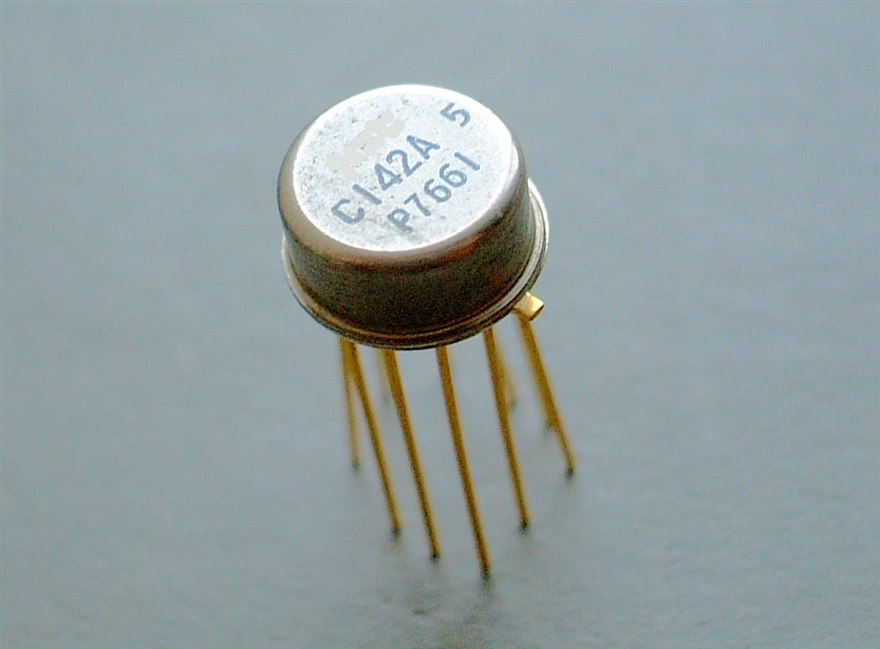
The starting point is a short list of error terms, and learning to read them is the whole of what the op amp specs that matter in selection are about. Input offset voltage is the small error the part shows when its inputs are equal; it sets the floor on a DC measurement. A general-purpose part might hold a few millivolts of offset and a precision one a few microvolts, a gap of roughly three orders of magnitude that decides whether a low-level signal is readable or lost under the part’s own error before it ever reaches the gain stage. Offset drift is how that error moves with temperature, and on a precision design it matters more than the offset itself, because a fixed offset can be trimmed out while a drifting one cannot. How offset drift affects product accuracy is the question that decides whether a measurement holds across the temperature range the product ships into. A part with a few microvolts per degree of drift can swing its reading by a visible amount over an industrial temperature span, which is fine for a rough monitor and ruinous for a calibrated instrument.
Noise is the next term, and it splits into voltage noise and current noise that matter differently depending on the source impedance the amplifier sees. A low-impedance source makes voltage noise the term to watch; a high-impedance one lets current noise dominate, so the same part can be quiet in one circuit and noisy in another. Input bias current sits alongside, since on a high-impedance source it turns into an offset voltage of its own across the source resistance. That is the line that separates a CMOS-input part, with bias current in the picoamps, from a bipolar one that may run a thousand times higher, and it decides which technology a high-impedance sensor can use at all. Bandwidth, expressed as gain-bandwidth product, sets how much gain the part still delivers at the frequency of interest, and asking for op amps for a bandwidth upgrade is a routine move when a faster signal outruns the part already in the socket.
None of these shows up in the part’s name.
The family label tells you the function and almost nothing about the grade, so two parts that both say op amp on the package can sit orders of magnitude apart on offset, drift, and noise, at prices that differ by as much. Reading the second page of the datasheet is the actual selection work, and it is where a part earns its place or loses it. The headline gain-bandwidth and the package are the easy half; the offset, the drift, the noise density, and the bias current are where two parts at the same price pull apart, and they are the numbers a hurried selection skips and a careful one starts from.
Where each grade of part earns its place
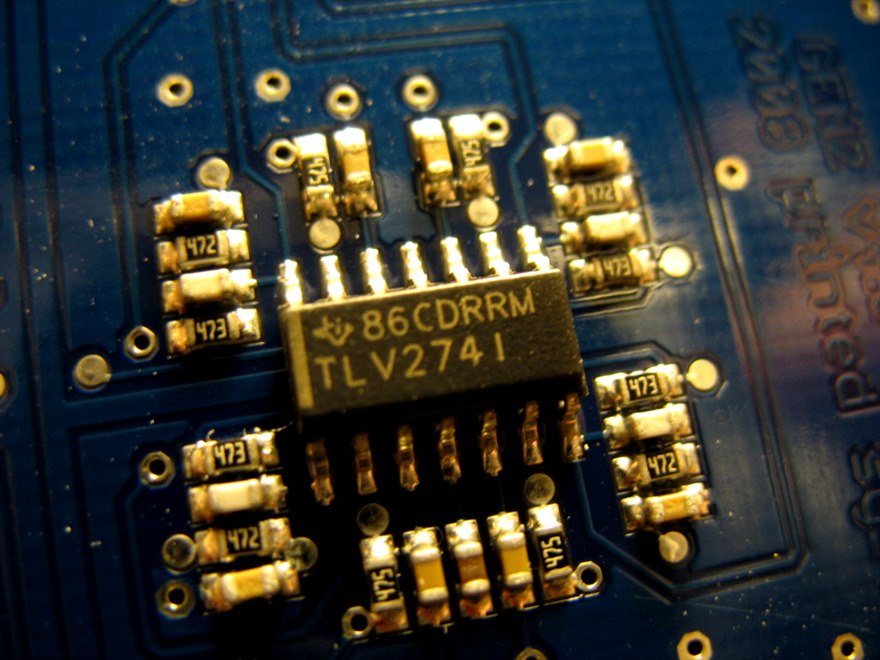
The bulk of op amp sockets ask for little, and a general-purpose part fills them. Knowing the TI general-purpose op amps to keep in stock covers the everyday buffering and gain that a great many boards need, and the classic bipolar parts still hold much of that work, which is the reason the LM358 and LM324 stay in service decades after launch. Where the budget is tight and the supply is a single rail, a part like the Microchip MCP6001 on a single 5V supply covers the job, and understanding where the low-cost TI TLV9001 suffices keeps a design from paying for precision it never uses. These parts cost cents and ship in the millions, so the saving from picking one over a precision part shows up directly in the build cost of a high-volume product.
Precision is a different tier, bought only where the measurement needs it. The cost drivers in ADI LT precision op amps are the trimmed offset and the low drift that a sensor front end leans on, and for the lowest drift of all, a zero-drift architecture earns its keep, which is what TI OPA189 zero-drift op amp applications are built around. Some jobs need a specialised topology rather than a better general part: amplifying a small difference riding on a large common-mode voltage is the instrumentation-amplifier job that ADI LT1167 instrumentation amp applications cover, where a standard op amp would let the common-mode signal through. The instrumentation amplifier earns its cost through high common-mode rejection and a gain set by one resistor, the combination a bridge or a current-shunt reading depends on, and it is the part to reach for when the wanted signal is small and the unwanted one riding under it is large.
Speed is its own axis crossing all of these grades. A high-speed amplifier with wide bandwidth and a fast slew rate suits a video line or a fast pulse, and it draws more current and asks for more care in layout to stay stable, so it is chosen where the signal moves fast and avoided where it does not. A part picked for bandwidth it never uses costs power and board area for nothing.
Package and channel count round out the choice. The same die comes as a single, dual, or quad amplifier, and a quad shares the supply current and the board area across four channels, which a multi-stage filter or a multi-sensor front end puts to use. The package then sets how close the part sits to the signal it serves, which on a sensitive front end is part of keeping the noise down.
The skill is matching the grade to the need, since a precision part dropped into an everyday socket spends money the design never needed, and a cheap part put where the reading has to be trusted quietly costs accuracy instead.
The parameters that bite during bring-up
Some op amp parameters do not show up in the headline numbers and surface only when the board is built. Output swing is the common one, since a part that cannot drive its output close to the rails clips a signal that a true rail-to-rail part would pass, and the limits of rail-to-rail op amp output swing are easy to overlook on a single-supply design until the waveform flattens at the top. The data sheet quotes the swing into a stated load, and a heavier load pulls it further from the rail, so the number on the page is the best case and not the one the board sees. The input side carries the same trap, since a part advertised as rail-to-rail on the output may not be on the input, and the two are read separately before a single-supply design commits to one.
A part can also meet every static spec on the page and still oscillate once it is in the actual circuit. How op amp selection drives oscillation comes down to the part’s phase margin against the load capacitance and the feedback network around it, and a fast part driving a capacitive load is the classic case that rings or oscillates where a slower one would have sat quiet. A long cable on the output or a scope probe on the wrong node can be enough to tip a marginal design over, which is why the load is read as part of the choice and not left to the bench. The fix lives in the selection as much as the compensation, since a part chosen with margin for its load saves the rework a marginal one forces later.
Input common-mode range is the third of these quiet limits. A part whose inputs cannot reach the rail it works near misbehaves when a single-supply circuit pushes them toward ground, so a design that assumes the inputs span the full supply can read wrong at the bottom of the range. The datasheet states the range, and on a single supply it is read against the lowest voltage the inputs will in practice see.
How op amps get chosen and sourced
Op amps run long production lives, so a part designed in years ago is often still the right answer and still in volume supply, which makes the catalog deep and the selection a matter of matching error terms to a budget. The trap in sourcing one is the pin-compatible substitute that shares the footprint and the function while carrying different offset, noise, or drive, so a swap made on the package alone can move a measurement or fail to drive a load. An independent distributor that carries the amplifier lines across the general-purpose and precision grades is where a design finds both the specified part and a substitute whose error terms have been read, alongside its pinout.
The deep catalog is a help and a hazard at once. A part designed decades ago that still ships means a long-lived product rarely faces a forced redesign, and it also means a search by function alone returns hundreds of candidates that look interchangeable on the first page and diverge on the second. Narrowing that list is the selection work, and it goes faster when the supplier can pull the close neighbours of a known part and show where each one sits on offset, noise, and drive. The op amp sits at the front of the work of turning a sensor reading into a clean signal, the broader job the sensors and the signal chain carry, so the part chosen here sets the ceiling on everything measured downstream. No converter, no firmware, and no calibration recovers a signal the first amplifier already buried in its own offset and noise, which is why the front-end op amp is chosen before the parts behind it.
The judgment that fits
Pick the cheapest op amp whose offset, drift, noise, bandwidth, and output swing all clear what the signal needs, and spend on precision only where the measurement returns it. The twelve pages below take those parameters one at a time.