Best Lithium Battery Solutions for India’s Telecom and Solar Markets
Energy & Infrastructure
Best Lithium Battery Solutions for India’s Telecom and Solar Markets
Long-Form Analysis
Lithium batteries fail early in India. The telecom sector replaces packs at year three or four that should last to year eight or nine. Solar storage systems derate within two monsoon seasons. Post-mortem reports attribute these failures to cell quality. The attribution is wrong in the majority of cases, and the Indian battery industry keeps spending money on better cells when the failures originate in the equipment the cells are connected to, the air the enclosures breathe, and the twelve-cent conformal coating that was not applied to the BMS board.
India’s tower fleet replaces lithium packs at year four that are rated to last to year nine — the failure is in the system around the cell, not the cell itself
Charging Destroys More Batteries in India Than Heat Does
Every Indian telecom tower runs a rectifier designed for lead-acid. Vertiv, Delta, Eltek, Huawei units. Float charge at roughly 54V on a 48V bus. Lead-acid needs this. Lead-acid sulfates without it.
Lithium cells held at high SOC undergo accelerated SEI growth on the graphite anode. The electrolyte decomposes at the anode surface, locking lithium into a passivation layer that thickens irreversibly. Every molecule of lithium consumed by the SEI is permanently lost from cycling. The rate depends on temperature exponentially. At 45°C internal cell temperature, which is a normal condition inside a tower battery cabinet in the UP or Rajasthan plains from April through June, SEI grows three to four times faster than at 25°C. A cell held near full SOC at that temperature for three years will cross the 80% capacity threshold well ahead of any reasonable service life expectation.
A charge controller between the rectifier and the pack, holding SOC in a partial band during grid-available periods, extends lifespan by years. The hardware exists. It costs a fraction of the pack. It is absent from most Indian telecom lithium deployments because the rectifier belongs to the tower operator and the battery is procured separately, often by a different entity, and the charge controller falls in the crack between the two contracts. Neither party’s scope includes it. When the battery dies early, the failure report says cell degradation. Nobody writes “float charge from a lead-acid rectifier aged the cells at four times the expected rate because nobody owned the charge algorithm.”
Indus Towers and some other private towercos have moved to performance-based battery contracts. Vendor guarantees capacity retention. Vendor pays for early replacement. Under that model, vendors install charge controllers immediately, because the vendor’s margin depends on the pack lasting. BSNL and TCIL still use L1 bidding on equipment specifications. The specification covers cell capacity, cycle life, operating temperature range. It does not mention charge management. The lowest-price compliant bid wins. The lowest-price compliant bid does not include a charge controller.
The cost of this across India’s tower fleet, replacing packs at year four instead of year nine across tens of thousands of sites, runs to hundreds of crores in hardware, logistics, and technician dispatch. All of it traceable to a missing component that would have cost a small percentage of the pack price.
This is where the majority of value is created or destroyed in Indian telecom lithium. Everything else, the cell brand, the BMS model, the enclosure rating, is secondary. Articles that give equal space to charging and to, say, BIS certification procedures are allocating attention in proportion to how many topics exist rather than in proportion to where the money goes. The charge management problem deserves most of the discussion. It is going to get most of the discussion here.
The electrochemistry is worth going one level deeper because the mechanism explains why the Indian climate makes float charging specifically catastrophic rather than merely suboptimal. SEI growth rate follows an Arrhenius-type temperature dependency. Arrhenius curves are exponential, meaning small temperature increases produce disproportionate rate increases. Between 25°C and 35°C the acceleration is noticeable. Between 35°C and 45°C it becomes severe. Indian telecom sites do not sit at a steady 45°C. They cycle: 30°C at night, 48°C in the afternoon. The battery charges when grid power arrives, which in many Indian states means unpredictable windows at any hour. If the grid shows up at 2pm when the cabinet is at peak internal temperature, the rectifier rams the battery to full SOC at the worst possible thermal moment. A charge controller with temperature awareness would reduce the SOC ceiling during high-temperature periods. Almost none of the deployed controllers, even the ones that exist, implement temperature-adaptive SOC limits. They use fixed windows. Fixed windows at 80% ceiling are vastly better than float charging. Temperature-adaptive ceilings would be better still. The industry has not gotten to this conversation yet because it is still fighting about whether to install charge controllers at all.
One more layer. The rectifiers themselves vary in how they behave when a charge controller intercepts their output. Some rectifiers have firmware that detects a load impedance change when a charge controller modifies the charge profile and interprets it as a fault condition, triggering an alarm or even shutting down. Delta’s DPC series handles external charge controllers reasonably well. Older Emerson (now Vertiv) units can be temperamental. Field integration of charge controllers requires compatibility testing with the specific rectifier model on site, which adds complexity. Tower operators running twelve different rectifier models across their fleet face a matrix of compatibility issues that discourages blanket deployment of aftermarket charge controllers. This is a practical barrier that does not appear in discussions framed at the level of “just install a charge controller.”
Rectifiers built for lead-acid chemistry continue to drive lithium packs to float charge — a procurement gap that no party in the contract chain currently owns
Temperature, Dust, Water
Thermal management gets treated as a single topic. It is at least three different topics that happen to involve the same physical quantity.
Dust at air-cooled telecom sites. Filter media clogs. Airflow drops. Cells overheat or the BMS derates. The fix is filter maintenance. The problem is that filter replacement intervals in Indian dust environments are shorter than maintenance visit cycles at most tower sites. Differential pressure sensors across the filter bank can trigger alerts. Cheap, effective, not standard.
Thermal interface pad degradation at liquid-cooled utility-scale sites. TIM pads between cells and cold plates crack under thermal cycling over years. Air gaps form. Thermal resistance jumps. Individual cells run hotter, age faster, become bottleneck cells. Detectable only with per-cell temperature trending over months. Module-level averages hide it.
Condensation at humid coastal sites. Nighttime temperature drops condense moisture inside sealed enclosures. BMS circuit boards corrode at the sensing traces. Voltage readings drift by tens of millivolts. Chronic imbalance develops without alarm triggers. Conformal coating per IPC-CC-830B prevents it. Costs almost nothing per board.
These three failure modes have nothing in common except that temperature is involved. Solving one does not help with the others. A system designed for Rajasthan desert conditions, with oversized air cooling and heavy filtration, will still suffer condensation corrosion if deployed on the Odisha coast without conformal coating. A liquid-cooled container with excellent TIM specification for a solar farm in Karnataka will still overheat if the air intake filter on its HVAC unit clogs with agricultural dust during harvest season in the surrounding fields.
The procurement implications are site-specific, which conflicts with how Indian telecom procurement works. Tenders specify a single battery system for deployment across hundreds or thousands of tower sites in geographically diverse regions. A system optimized for desert heat underperforms in coastal humidity. A system designed for coastal conditions is over-specified and overpriced for dry inland sites. Fleet-wide uniformity in specification is operationally convenient and technically wrong. Some private operators have started tiering their battery specifications by climate zone. Government procurement has not.
Dust, thermal cycling, and coastal condensation represent three distinct failure modes — a battery specified for one Indian climate zone will underperform in another
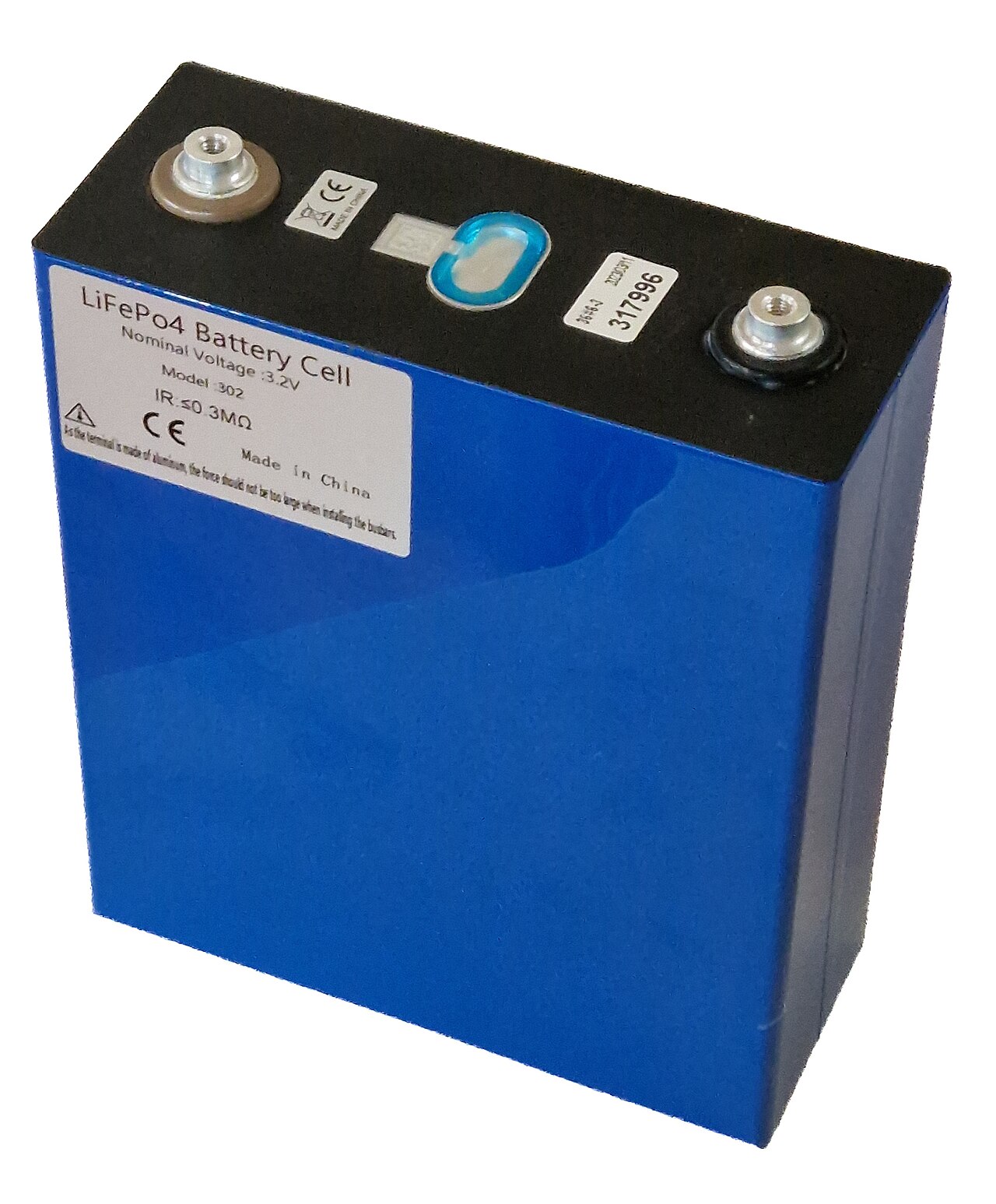
LFP
This is settled for Indian stationary storage and does not need extended argument.
LFP’s flat discharge curve gives telecom rectifiers more usable energy before the low-voltage disconnect trips. A 5 kWh LFP pack on a 48V bus delivers perhaps 4.5 kWh before LVDS. An NMC pack of the same nameplate rating delivers perhaps 3.8 kWh because of the steeper voltage slope. Procurement compared on nameplate kWh misses this completely.
LFP handles partial-SOC cycling at high temperature better than NMC. Indian solar storage operates in PSOC almost continuously. The olivine cathode tolerates it. NMC’s layered oxide at 40°C and above does not tolerate it as well.
NMC for space-constrained rooftop systems in Bangalore, Pune, Shillong, where temperatures are moderate. That covers maybe 10 to 15% of deployments.
Cell Grading and the Procurement Specification Gap
Cell manufacturers sort production by parametric tightness. Automotive gets the narrowest band. India’s price pressure pushes some assemblers toward wide-tolerance or mixed lots.
The metric: standard deviation of capacity and DCIR across cells in a delivered pack. Below 1.5% on capacity, below 3% on DCIR. Above that, the BMS cannot balance its way out of the mismatch by year three.
Indian telecom tenders do not ask for this data. They reference IS 16046 for safety and specify cell-level minimums for capacity and cycle life. Performance characterization at the pack assembly level, where grading quality is determined, sits outside what procurement evaluates.
This connects directly to the L1 problem. L1 bidding selects for cost reduction in everything the tender does not score. Conformal coating, charge controllers, cell grading rigor, thermal management sizing margin, BMS sensor count. All omittable. All omitted when the bid margin is thin. The vendor who includes them bids higher and loses.
Changing the evaluation criteria requires domain expertise in battery systems engineering within the procurement organization. BSNL and TCIL procurement teams evaluate against documented specifications. They do what their process requires. The process requires the wrong things.
Cell grading quality is determined at pack assembly level — Indian telecom tenders specify cell-level minimums but do not ask for capacity or DCIR standard deviation data
Solar Segments and the C&I Tariff Shift
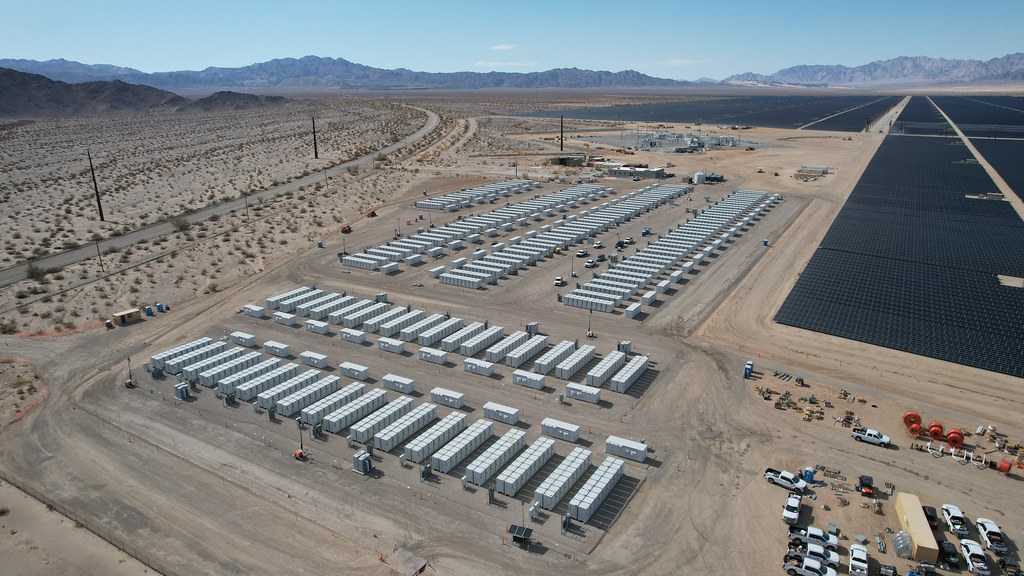
Utility-scale solar-plus-storage is containerized LFP, liquid cooled, DC-coupled, CEA grid code compliant. Standardized enough that there is not much differentiation discussion to have at the technology level.
The C&I segment is where things are less settled and more interesting.
Industrial demand charges in states like Maharashtra and Tamil Nadu, assessed on 15-minute peak intervals, can make up 30 to 45% of the electricity bill. Storage that shaves those peaks has clear economics. The engineering is site-specific: fast discharge, high C-rate, BMS response under a minute, capacity sized to each customer’s load shape. A cold storage operation with compressor-driven spikes looks nothing like a steel rolling mill. Generic C&I storage products miss the load profile in both cases.
Multiple state electricity regulatory commissions are implementing time-of-day pricing for C&I consumers following Forum of Regulators recommendations. When ToD ratios exceed 2:1 or 3:1, the storage value proposition pivots from demand shaving to energy arbitrage. Different cycling depth, different duration, different financial model. Companies building C&I platforms solely around demand charge reduction are building for a tariff structure in transition. The control architecture needs to accommodate both value streams from the start.
Residential storage exists in UP, Bihar, Jharkhand. Competes against lead-acid inverter systems. Lithium wins on technology. Lead-acid wins on distribution reach and consumer financing.
Utility-scale solar-plus-storage is standardized around containerized LFP; the C&I segment is where load-profile specificity determines whether the economics work
Second-Life Cells
Retired EV packs from China, 70 to 80% remaining capacity, growing supply through the late 2020s. Pricing well below new cells. For shallow-cycling telecom backup, the remaining life works.
Grading requires EIS and multi-rate capacity testing. Voltage checks cannot distinguish healthy-but-aged cells from cells with lithium plating or cathode cracking. IEC 63330 provides a framework. BIS has not defined a certification pathway for second-life cells separate from IS 16046.
The grading infrastructure does not exist at scale in India. Building it is a different business from battery assembly. It requires electrochemical testing equipment and expertise. Whoever builds it will control access to a supply stream whose volume is about to grow sharply while Indian demand for low-cost stationary storage grows in parallel.
BMS Firmware at Indian Temperatures
Most BMS SOC estimation uses lookup tables from 25°C cell characterization. At 45°C, the OCV-SOC curve shifts in shape, internal resistance follows non-linear dependencies, self-discharge rises fast enough that coulomb counting drifts between recalibration events. SOC estimates carry systematic error in hot Indian environments. Charge management decisions based on those estimates are consistently slightly off. Over thousands of cycles, slight persistent error in the same direction compounds into measurable excess degradation.
If a BMS vendor cannot show lookup tables and impedance models generated from cell data at 45°C and 50°C, the firmware was calibrated for a climate the battery will not operate in.
BMS SOC firmware calibrated at 25°C introduces systematic estimation error across India’s operating temperature range — compounding over thousands of cycles into measurable degradation
BIS, ALMM
Each cell model needs separate BIS certification under IS 16046. NABL-accredited labs. Variable queue times. Six to twelve months per model. ALMM adds a layer for grid-connected solar equipment. Both certifications shape market structure by favoring vendors with approvals in hand.