How Lithium Battery Microgrids Are Replacing Diesel Generators in Africa
Energy & Infrastructure
How Lithium Battery Microgrids Are Replacing Diesel Generators in Africa
February 26, 2026
More than 600 million people in sub-Saharan Africa lack reliable electricity access. Diesel generators filled that gap for decades, serving as the power lifeline for hospitals, telecom towers, schools, and small factories. Lithium battery microgrids are now dismantling that arrangement, faster than most industry observers predicted three years ago.
The economics
Currency depreciation across Africa has accelerated the economic case for solar-storage systems
Why the sudden acceleration in the past two to three years? To answer that, start with China.
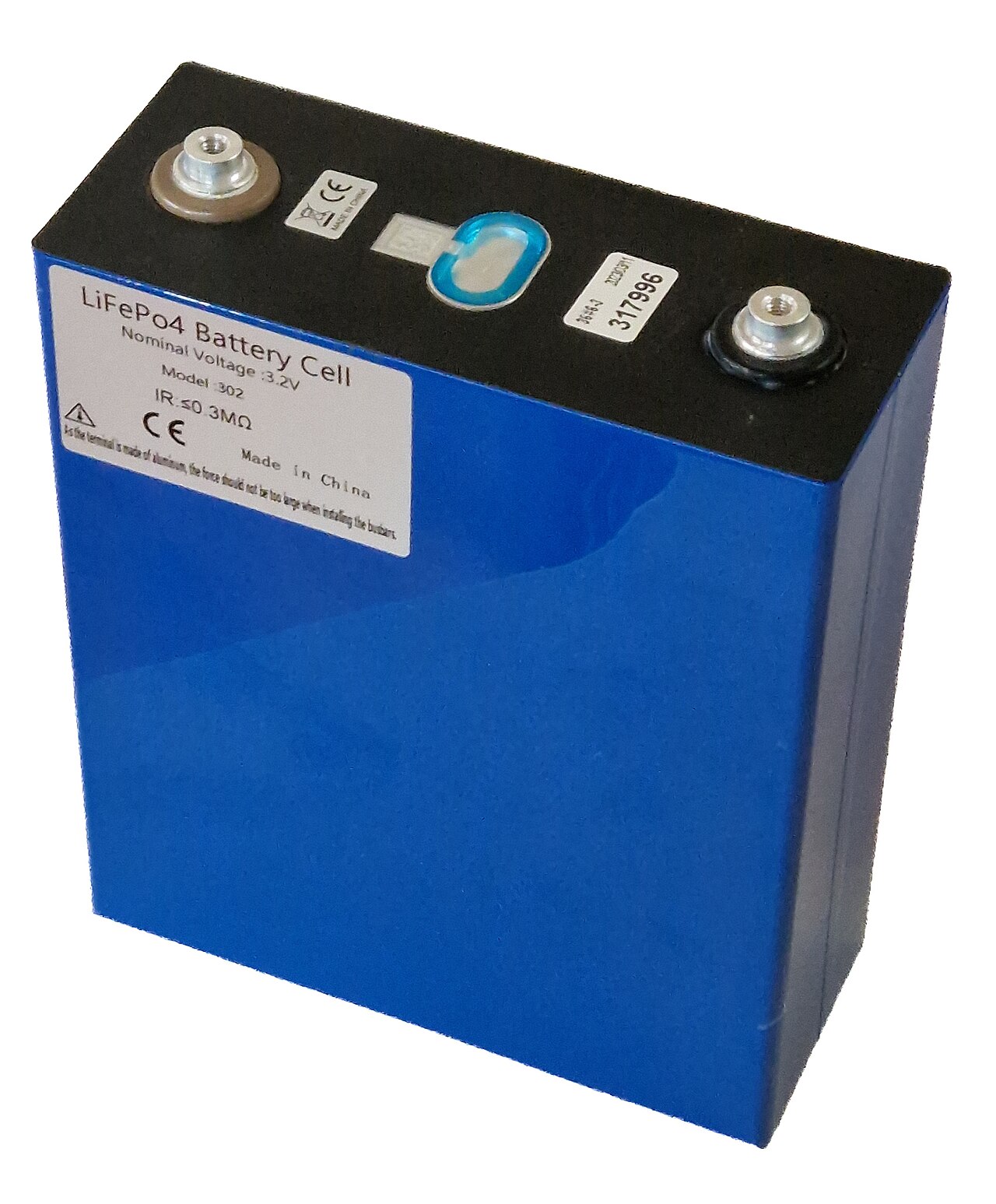
Between 2021 and 2023, CATL, BYD, and a large cohort of second-tier manufacturers completed an extremely aggressive round of lithium iron phosphate battery capacity expansion. The bet was on continued high-speed growth in China’s domestic EV and energy storage markets. Growth fell short of expectations. With capacity piling up, the price war spread from the domestic market to overseas. BNEF data shows LFP pack prices falling from over $150 per kilowatt-hour in early 2022 to under $70 by 2024.
The African microgrid market is small in total volume. It does have several characteristics that make Chinese manufacturers willing to compete at razor-thin or even negative margins: customers have no brand loyalty, procurement decisions are fast, certification barriers are low. The number circulating in industry conference hallways is that battery pack quotes for African microgrid developers are 20% to 30% below concurrent European market prices. This price gap is a byproduct of China’s internal industrial shakeout. How long it lasts depends on when second- and third-tier manufacturers exit and capacity contracts. If supply-side consolidation happens within the next two to three years, this procurement window will narrow. The battery costs that the African microgrid industry currently enjoys carry a cyclical dividend component and cannot be fully modeled as a long-term structural trend. This assessment is debated within the industry. Some argue that LFP capacity expansion has irreversibly lowered the global price floor and it will not bounce back.
The LCOE crossover numbers themselves are nothing new. African diesel generation runs $0.35 to $0.50 per kilowatt-hour, exceeding $1 in inland areas with poor logistics. Solar-plus-storage microgrids have come down to the $0.15 to $0.30 range. Nearly every industry report cites this data set.
There is an input assumption problem with this data set. The diesel price used is typically the port-landed cost. In remote African locations, the end-user price paid is two to three times the port price.
Take Nigeria as an example. Diesel shipped from Lagos port to rural areas in Niger State or Borno State passes through multiple transshipment points, with each handler adding margin. The diesel unit price actually paid by a telecom tower operator in Adamawa State diverges from the Lagos landed price by enough to change the entire LCOE calculation. Rerun the model with end-user prices and the crossover point moves forward by three to five years. In many regions, the economic preconditions for replacement were already in place. The industry’s standard measurement framework just had not reflected that fact.
Currency depreciation is amplifying this trend. The Nigerian naira went from roughly 380 per dollar in 2020 to over 1,500 per dollar by 2024. The Ghanaian cedi and Kenyan shilling also experienced significant depreciation. Diesel is priced in dollars. Every round of local currency depreciation automatically raises the local-currency cost of diesel, even if international oil prices do not move. Lithium battery microgrid costs are incurred once during the construction phase, with almost no foreign exchange expenditure thereafter. For a Lagos factory owner who has been battered by naira depreciation for four years, eliminating a dollar-denominated recurring operating expense is something whose appeal does not require an LCOE model to justify. You can feel it intuitively.
Diesel theft
This section warrants extra space because its impact on diesel generation’s total cost of ownership is in the 20% to 30% range, yet it is virtually absent from formal industry literature.
The conservative estimate is that 20% to 30% of diesel supplied to African telecom base stations is stolen during transport and on-site storage. This is a widely cited rule-of-thumb figure within the industry, sourced mainly from fragments of internal audit data at several large tower companies and informal sharing by telecom operators at closed-door industry meetings. No rigorous third-party statistics exist, because no one has the incentive to produce them. Quantify the problem, and you have to assign accountability. Assign accountability, and you are picking fights with an entire chain of locally connected people along the supply chain.
Diesel supply chains across sub-Saharan Africa face systemic losses at every node
The structure of the theft chain looks roughly like this. At the transport stage, drivers siphon diesel en route and sell it to roadside filling stations or directly to farmers. Metering devices on fuel trucks can be modified to mask the shortfall. At the on-site storage stage, base station guards coordinate with outside parties to siphon fuel, or manipulate registered intake volumes. At the management layer, regional logistics supervisors are fully aware that losses in their area far exceed normal levels and choose to look the other way in exchange for supply chain stability and personal benefit. A telecom company’s base station operations team in a given Nigerian state may have people embedded in this grey chain at every level from regional manager down to frontline driver. Rooting it out means replacing the entire regional supply chain management team. The replacements, facing the same structural environment, will most likely regenerate the same grey networks within two to three years. So many telecom operators’ response strategy is not “crack down on diesel theft.” It is “switch to a power supply that does not depend on diesel.” This is an important background factor behind the faster-than-expected penetration of lithium battery solar-storage systems in African telecom base stations. In the investment return calculations for solar-storage systems, what is written on paper is “fuel cost savings.” What is actually included is “grey loss elimination.”
The early failure of lead-acid batteries in African off-grid energy storage is also connected to theft. Lead-acid batteries have an active scrap lead recycling market. Stolen batteries are dismantled and the lead ingots sold. Lithium batteries in rural Africa currently have no comparable disassembly-to-cash pathway.
Telecom towers and anchor loads
Telecom base stations provide the anchor revenue for microgrid economicsSolar-storage systems are replacing diesel at off-grid tower sites
The fundraising narrative for African microgrids usually starts with “lighting up a village.” That narrative works well in pitch decks aimed at DFIs and impact investors. It is not the commercial starting point for this industry. The starting point is telecom base stations.
Of the more than 250,000 telecom base stations in sub-Saharan Africa, a large number rely on diesel for power. IHS Towers, American Tower, and operators like MTN and Airtel face a dollar-denominated, recurring cash outflow on diesel at each off-grid site, accounting for 40% to 60% of operating expenditure. The commercial motivation for switching to solar-storage here is one thing only: cost. Not decarbonization. Not ESG scores. Not something to put in a sustainability report. Cost.
Base station loads are regular, power consumption is stable, peaks are predictable. The concept of anchor load in the African microgrid industry is almost synonymous with “telecom base station.” A base station’s electricity demand provides the microgrid with a predictable baseline revenue stream, on top of which surplus power can be extended to surrounding communities. Among member companies of AMDA (the African Minigrid Developers Association), site selection strategies have converged on the same logic: first lock in an anchor load customer, usually a base station, water pumping station, or small processing enterprise, then draw a service radius around it. PowerGen’s (later merged into a larger entity) early project layout in Tanzania followed this approach. Husk Power Systems’ expansion in Nigeria traces a similar path.
Pure residential microgrid projects without anchor loads consistently underperform their business plan projections financially. This is an open secret within the industry. The reason is straightforward: in the absence of historical data, rural residential electricity demand growth rates, willingness to pay, and ability to pay are extremely difficult to model. A village’s electricity potential can be overestimated by a factor of three or underestimated by a factor of two, and both are common. Designing a system around a known anchor reduces financing difficulty and engineering complexity simultaneously.
The problem with this model is customer concentration. If 60% of a microgrid’s revenue comes from a single base station, and the tower company adjusts its base station layout, consolidates sites, or switches suppliers, the project’s revenue foundation shifts. This risk typically appears only as a paragraph of standard boilerplate language on page three of the risk factors section in project financing documents.
Population distribution
Dispersed settlement patterns make centralized grid extension economically unviable across much of rural Africa
This section is kept short because the logic is not complicated. Urbanization in East Asia and Europe is highly concentrated. In Africa, large populations are distributed in scattered settlements of a few hundred to a few thousand people, separated by tens of kilometers. Laying distribution lines for this pattern costs tens of thousands of dollars per kilometer, with extremely low electricity volumes at the end of the line. The economic logic of centralized grids breaks down at this population density. Microgrids bypass the transmission and distribution line entirely: generate on site, store on site, consume on site. Modularity lets them match the growth rhythm of a village. Scaling up means adding a few solar panels and battery modules, not scrapping old equipment. Maintenance relies on remote monitoring. Local staff need basic electrical safety knowledge. Waiting months for a diesel generator spare part is not an exaggeration in rural Africa.
Electricity use behavior
Solar-storage microgrids flip “supply follows demand” into “demand follows supply.” Solar output peaks around midday, storage capacity is limited, and the ideal operating window for high-power activities is dictated by the irradiance curve. The grain mill changes its operating hours. Farmers run water pumps at noon instead of evening. Cold storage operators complete pre-cooling before 2 PM. The same hardware placed in different electricity-use cultures produces very different financial returns. Some projects are technically sound and commercially unviable, stuck on exactly this point.
Zombie projects
A significant number of microgrid projects in the industry are technically operational, counted as “successfully deployed” in statistical reports, and financially dependent entirely on external subsidies. Such projects appear in the portfolios of major programs including the World Bank’s Nigeria Electrification Project (NEP) and KOSAP (Kenya Off-Grid Solar Access Project). The projects are indeed supplying power. Communities are indeed consuming electricity. Calling them “failures” would be inaccurate. Saying they prove the commercial viability of microgrids would also be inaccurate. What they prove is that technology can operate as long as someone keeps paying.
When an industry report cites “X megawatts of microgrid capacity deployed in sub-Saharan Africa,” that number blends projects that are financially self-sustaining through user payments with projects that are entirely dependent on grants. These two categories of projects have entirely different implications, yet they are added together and reported as one figure.
Why does no one make the distinction? Developers need their project lists to raise the next round. DFIs and climate funds need success stories to report back to their funders. Host country governments need electrification progress numbers to present at COP summits. Along this chain, honestly labeling a project as “not yet commercially sustainable” does not serve anyone’s short-term interest. Label it, and the next tranche of money gets harder to secure.
This ambiguity at the data level may do more long-term damage to the industry than high-temperature degradation and recycling challenges combined. Commercial capital entering the African microgrid space relies on trust in industry data. If several successive cohorts of investors encounter project-level financial realities that do not match industry aggregate data, the time needed to repair that trust erosion will be long.
High temperatures do affect battery life. LFP battery cycle life data is based on 25°C standard test conditions. Equatorial Africa sees ambient temperatures of 35 to 45°C year-round. Usable cycle counts may be only 70% to 80% of rated values. Thermal management systems help and add system cost. In the African market, the thermal management budget is often the first item cut. Cut it and degradation accelerates, replacement cycles shorten, lifecycle cost actually goes up. This loop is not discussed enough within the industry.
End-of-life battery recycling is also a problem that needs advance planning. Africa currently has almost no scaled lithium battery second-life utilization or recycling and dismantling capacity. Battery packs being deployed now will begin retiring in 8 to 15 years. Responsibility for retired batteries typically falls on whoever holds the asset after the original investor has exited.
The inertia of the existing diesel supply chain also exists. Import, storage, and distribution systems have been running for decades. Microgrid expansion compresses profit margins at every node along the chain. Resistance takes the form of high tariffs on imported solar panels and lithium batteries, and delays in microgrid operating license approvals. Nigeria’s microgrid licensing process is clear on paper. In practice it can be dragged out until developers lose patience.
After selling electricity
Value-added services layered onto electricity supply are reshaping microgrid business models
Some microgrid operators are experimenting with layering value-added services on top of electricity supply. BBOXX in the DRC offers not just off-grid solar kits and also bundled products including televisions and internet access. Husk Power Systems provides rice milling services at some of its Nigerian sites. Cold storage rental, Wi-Fi hotspots, electric tricycle charging: these add-on businesses are being tested by different operators in different ways.
The logic resembles the early evolution of the telecom industry: access first, services second. Economic activity growth driven by microgrids increases electricity consumption and community payment capacity, which in turn improves microgrid financial performance. In peri-urban areas of weak-grid regions, another dynamic is unfolding. Higher-paying users switch to microgrids first. Average payment capacity among customers remaining with the state utility declines. The cross-subsidy structure erodes. Grid electricity prices come under upward pressure. More users leave the grid. Both Eskom in South Africa and the distribution companies (DisCos) in Nigeria are already feeling this pressure. This touches on the political question of whether electricity supply in Africa is a public service or a market commodity.
Leapfrogging
Distributed energy architecture is following the path mobile communications blazed two decades ago
Africa skipped fixed-line telephones and went straight into mobile communications at the start of the 21st century. The energy transition underway is structurally similar to that telecom leapfrog: distributed architecture replacing centralized architecture, terminal equipment costs falling continuously, prepaid models solving the payment barrier. The potential impact of the energy leapfrog is larger than the telecom one, because electricity is the foundational layer supporting all economic activity.
Diesel generators will not disappear from Africa in the short term. As the primary power source for off-grid communities, replacement is accelerating. Cheaper batteries mean more deployment, more deployment steepens the learning curve, steeper learning curves mean cheaper batteries. Wider microgrid coverage means more active local economies, better project financials, easier financing. The diesel supply chain’s interest groups can use tariffs and licensing barriers to slow things down by a few years. They cannot block the direction.
How far and how fast this replacement ultimately goes has a bottleneck outside of technology: the credibility of industry data. Commercial capital allocation depends on data. When data is contaminated by zombie projects, allocation efficiency drops. If AMDA or some third-party body could establish a project-level financial health grading system, openly distinguishing commercially sustainable projects from subsidy-dependent ones, the improvement to the industry’s financing environment might be greater than any single technological advance. There is currently no sign that this will happen soon.