Behind the 82% Tariff Wall, What Are the Koreans Scrambling For
LG Energy Solution released its 2025 annual report at the end of January. I sat there thinking for a good while after reading through it.
The company's 2025 revenue fell 7.6%, but operating profit more than doubled, up 133.9%. Put these two numbers together and there's only one explanation: EV battery volumes were shrinking, but energy storage batteries carry much higher margins, propping up overall profit. The energy storage backlog reached 140 GWh, with a 2026 new order target of over 90 GWh. LG declared it would capture half the US energy storage market.
I think that target is overblown. More on that later.
First, the backdrop of this collective Korean pivot to energy storage. Nothing that follows makes sense without understanding this.
The Policy Vacuum
Last July the US signed the OBBBA Act, making a very clean policy split: consumer-side EV tax credits were cut, while manufacturing and investment tax credits for energy storage systems were kept in place through 2033. At the same time, the combined tariff on Chinese lithium batteries sits at roughly 82%, wiping out the price advantage of Chinese LFP cells in the US.
Stack these two policy changes together and the effect is clear: a massive vacuum suddenly appeared in the US energy storage market. Demand is growing fast, Chinese products can't get in, and there are eight years of subsidy certainty for making storage. A year ago the three Korean companies treated LFP as a Chinese business. Now they're all fighting to get in.

FEOC is worth mentioning too; it's more critical than tariffs. Starting in 2026, to qualify for tax credits on energy storage projects, the share of battery materials sourced from non-FEOC entities (roughly understood as suppliers without specific equity or management ties to China) needs to hit 55%, rising to 75% after 2029. Korean companies building factories in the US with non-Chinese supply chains meet this requirement automatically. Chinese companies, even routing through Southeast Asia, will struggle to pass under strict scrutiny. Tariffs can be negotiated and adjusted, but FEOC standards will most likely only get stricter. This is a more lasting barrier than tariffs.
LG Energy Solution
Back to LG.
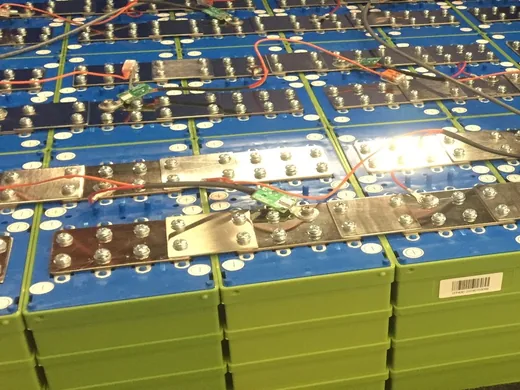
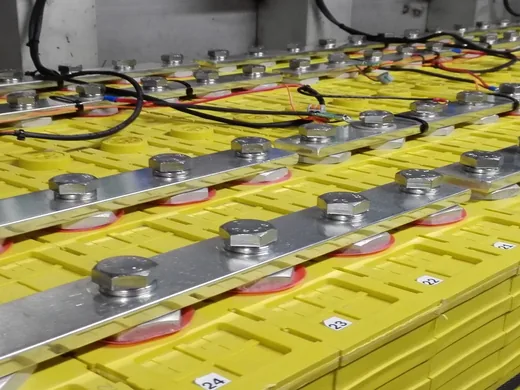
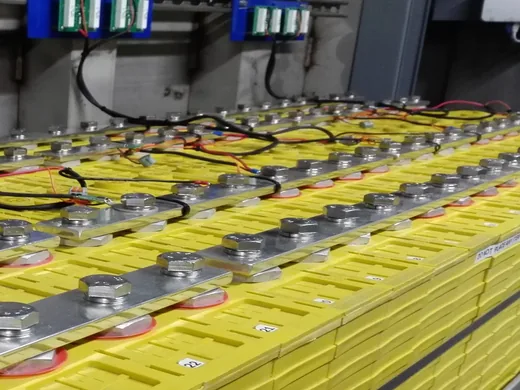
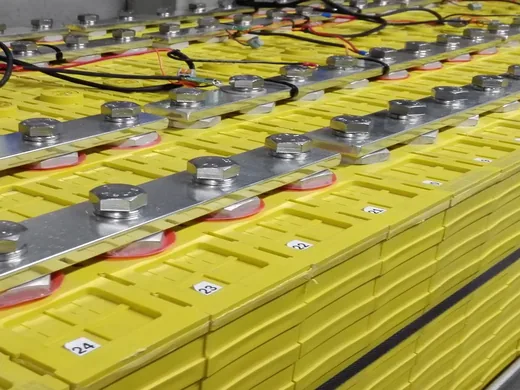
It is currently the only one among the three Korean companies that's shipping LFP energy storage cells at scale in North America. The Michigan Holland plant is the core base, converted from NMC EV lines. THE ELEC reported last December that the Lansing plant is also preparing to open LFP storage lines. That plant was fully acquired from GM by LG for about $2.1 billion, and it also makes EV batteries for Toyota. Some lines in Poland have been converted as well.
THE ELEC original: https://www.thelec.net/news/articleView.html?idxno=5505
CFO Lee Chang-sil said on the earnings call that line conversions wouldn't incur significant new costs. What he really means is: EVs aren't selling, lines are sitting idle, converting to storage is essentially reactivating capex that's already been spent. Smart in the short term. But whether this "EV-line-to-storage" approach is sustainable long-term is a question I want to unpack.

On February 3rd, LG ES Vertech signed a 5 GWh US supply contract with Qcells. Energy-Storage.News covered this. In the same report, LG claimed it could capture half of US energy storage demand by 2026.
My reasons for thinking this target is overly optimistic are right there in the same article: by the end of 2026, the US could see roughly 10% overcapacity in FEOC-compliant batteries. LG isn't the only one producing or about to produce LFP cells on US soil. AESC, SK Battery America, and Samsung SDI are all ramping capacity. With all four expanding simultaneously, one company wanting to take half while the other three just accept that allocation isn't going to fly.
LG's first-mover advantage is real. Samsung SDI's Indiana line is still being converted. SK On's Georgia line won't ship until the second half of this year. For roughly six months to a year, Korean peers can't compete head-on with LG. But after that window, everyone's capacity comes online, and then it's about customer relationships, cost, and delivery capability. A price war will most likely emerge around 2027.
There's another understated but noteworthy detail in LG's annual report: the company is expanding its UPS and BBU product lines. Both are for data center backup power. I didn't see specific order numbers, but LG listed it as a 2026 business priority. AI data centers have extremely high uninterruptible power requirements; a few seconds of downtime at a large data center could mean millions of dollars in losses. LFP storage systems, with their long cycle life and low thermal runaway risk, are a reasonable fit for this use case. I can't gauge the scale of this demand right now, but my gut says it'll be bigger than most people expect.
Samsung SDI
My current take on this company: good hand, playing it slowly.
Last November, Korea Herald reported that Tesla ESS division executives flew to Korea to negotiate a supply agreement with Samsung SDI. Reportedly a three-year contract, supplying roughly 10 GWh of LFP cells per year for Megapack, valued at approximately $2.1 billion total. Samsung SDI's official response was "not yet finalized." Electrek also picked up the story.
Korea Herald: https://www.koreaherald.com/article/10608634
Nearly three months later, still no official announcement. For comparison, LG's contract with Tesla was signed last July.

I don't have inside information on why this hasn't landed, but my guess is it's related to Samsung SDI's capacity structure in the US. It doesn't have a wholly owned factory there. The Indiana one is a joint venture with Stellantis. Stellantis's own EV sales have been poor the past couple of years, with factory utilization dropping below 50%, which is how Samsung SDI got the opening to squeeze in storage lines. But a JV factory means any changes to production lines, how much, how fast, all require negotiation with Stellantis. LG has full ownership control at both Holland and Lansing in Michigan, making its own calls. This gap in execution speed matters a lot in a time-sensitive market.
That said, Samsung SDI occupies a position no one else can substitute. Multiple sources indicate it's currently the only non-Chinese manufacturer making prismatic LFP cells. Prismatic cells are the dominant form factor in energy storage systems. LG currently makes pouch LFP; it's planning prismatic products but hasn't reached mass production. SK On is also on the pouch path. If a US energy storage developer wants prismatic LFP and needs FEOC compliance, Samsung SDI is literally the only option right now.
How much that scarcity is worth depends on how the prismatic vs. pouch share plays out in storage. I'm personally inclined to think prismatic will remain the mainstream choice for the next few years, but I've also seen plenty of people argue that once pouch costs come down, pouch will gradually gain share. So I could be wrong on this.
Samsung SDI's plan is to reach 30 GWh of US ESS capacity by end of 2026, with its core product being a 263Ah prismatic LFP cell. If the Tesla contract goes through, the Indiana factory immediately gets a stable, high-volume offtake. If it doesn't, Samsung SDI will need to spend far more effort developing other customers, and its customer base in the US storage market is clearly not as deep as LG's.
SK On
SK On signed a deal with Flatiron Energy last September, officially entering the storage game.
Flatiron is a US company focused on utility-scale energy storage development, with projects mainly in the New England region. The contract runs from 2026 to 2030, with a framework ceiling of 7.2 GWh. It starts with 1 GWh of containerized LFP storage for a Massachusetts project, with deliveries beginning in the second half of this year. Production is at the SK Battery America plant in Commerce, Georgia, carving out part of existing EV lines to convert to LFP. The contract is valued at approximately $1.5 billion according to pv magazine USA.

This volume is nowhere near LG's 200+ GWh order visibility. It's an entry ticket. Whether SK On can scale in storage depends on how many new customers it can sign over the next year or two. Flatiron has a decent project pipeline in New England; for instance, in January this year ISO New England approved its 300 MW / 1,200 MWh indoor storage project in Boston. If SK On can deepen this customer relationship, there's potential for follow-on volume.
One thing I'm particularly watching with SK On is its MOU signed last July with Korean materials company L&F for LFP cathode material supply. Cathode material is the biggest cost component in LFP cell production. Whoever can lock in cheaper and more stable cathode supply has a cost advantage. LG mentioned in its annual report sourcing cathode material from Indonesian suppliers. Samsung SDI's material sourcing is largely opaque in public information.
There's not enough public information on upstream material positioning to make a call right now, but I have a nagging sense this might be where the real winners and losers are decided in a year or two. Cell manufacturing processes are broadly similar across companies, capacity is expanding rapidly everywhere, and ultimately what determines cost competitiveness may not be the battery-making step but the material-buying step.
The Tesla Variable
Tesla plays a unique role in all of this. It's simultaneously the biggest customer for these Korean companies and building its own cell capacity.
LG signed a deal to supply Tesla with 20 GWh of LFP storage cells per year, with talks to increase to 30 GWh. Samsung SDI is negotiating 10 GWh per year. If all of this lands, Korean companies would be supplying Tesla 40 GWh annually. Tesla itself has an LFP production line in Nevada, estimated to produce around 7 GWh this year. Megapack is one of the few Tesla business lines where demand outstrips supply in recent years. The problem isn't a lack of orders but a lack of cells.

Tesla previously sourced all its storage cells from CATL and BYD. After the 82% tariff, that supply chain became untenable on cost. Tesla's CFO said last year that the tariff impact on the energy business was "disproportionate," with tariff costs in Q3 alone running approximately $400 million. So Tesla's pivot to Korean suppliers was forced by tariffs, not some proactive strategic choice.
What caught my attention is what Musk said on the latest earnings call. He said 2026 is a big capex year, with LFP expansion, in-house cathode production, and lithium refining all in the investment plan. Tesla doesn't intend to rely on external cell suppliers long-term; it's building its own capacity. The big contracts the Korean companies are signing now are partly because Tesla's own lines haven't scaled yet and it needs external supply to bridge the gap. Once Tesla's in-house production ramps up, what happens when these contracts expire is an open question. Volumes could shrink. The pricing negotiation balance could tip toward Tesla.
LG is in a somewhat better position. Beyond Tesla, it has Qcells and a batch of storage developer customers, so it won't be squeezed by a single large client. If Samsung SDI is mainly relying on that one big Tesla contract to fill its capacity utilization, its future negotiating position will be rather passive.
The Unasked Question
Finally, a question I've turned over in my head several times.
All three Korean companies are doing the same thing right now: converting EV lines to storage lines. EVs aren't selling, lines are idle, converting to storage saves money and is fast. The logic checks out. But line conversion isn't just slapping on a new label. It requires swapping equipment, adjusting process parameters, and redoing customer certifications.

What if the US EV market recovers in two or three years? What if new subsidy policies come through? What if some automaker suddenly places a big order? Can these converted lines be switched back? How long would it take, how much would it cost? Would customer certifications need to start from scratch?
I went through all three companies' annual reports and public statements. Not a single one discussed this question. Maybe they've all concluded that storage market growth is large enough that converting lines back won't be necessary. Maybe that's right. But the fact that nobody's raising this issue makes me uneasy. Battery factories are heavy-asset businesses. A single production line is an investment of tens of millions to hundreds of millions of dollars. Line flexibility and reversibility should be an important consideration in capex decisions. At least at the level of public information, I haven't seen any of them put this question on the table.
Whether I'm overthinking it or they're avoiding the question, I'm not sure either.
References
- LG annual report original: https://news.lgensol.com/company-news/press-releases/4550/
- Korea Herald on Samsung SDI and Tesla negotiations: https://www.koreaherald.com/article/10608634
- Electrek on Samsung SDI and Tesla agreement: https://electrek.co/2025/11/03/tesla-tsla-reportedly-secures-massive-2-1-billion-battery-deal-with-samsung-sdi-but-not-for-its-cars/
- SK On and Flatiron contract: https://www.energy-storage.news/sk-on-signs-7-2gwh-deal-to-supply-us-made-lfp-batteries-to-flatiron-energy-development/
- LG storage target and overcapacity warning: https://www.energy-storage.news/lg-energy-solution-targets-90gwh-battery-orders-us-energy-storage-market-in-2026/
- THE ELEC on LG Lansing plant: https://www.thelec.net/news/articleView.html?idxno=5505